




India’s embroidery tradition is among the most extraordinary in the world — encompassing hundreds of distinct regional styles including Lucknowi chikankari, Kashmiri crewel work, Gujarati mirror work, Phulkari from Punjab, Kantha from Bengal, Zardozi gold thread work from Delhi, and Parsi gara embroidery — each representing centuries of refined craft knowledge that commands premium appreciation both domestically and internationally. In 2026, embroidery as a business exists simultaneously as traditional craft, modern fashion industry supply chain service, home décor production, and export-oriented artisan enterprise — creating multiple distinct entry points with different capital requirements, market dynamics, and profitability profiles. Whether an embroidery business is profitable in India in 2026 requires matching the right business format to the right market opportunity rather than treating embroidery as a single undifferentiated business category.
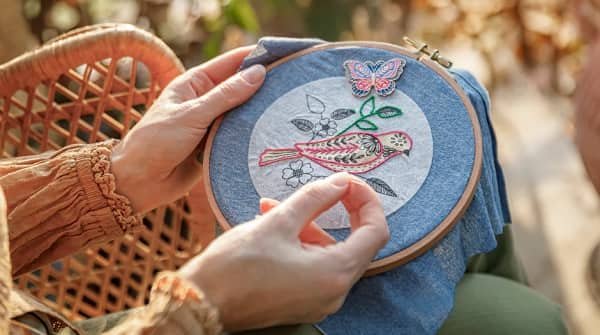
The Indian Embroidery Market Landscape
India’s domestic fashion market generates enormous embroidery demand — bridal wear, occasion wear, ethnic fashion, corporate gifting with embroidered items, and home furnishing embroidery collectively consume millions of embroidered fabric metres and finished products annually. The export market adds international demand from fashion brands, home textile importers, and ethnic wear retailers in the US, UK, UAE, and European Union who source Indian embroidery for its craft quality, cultural authenticity, and cost competitiveness relative to equivalent European artisan work. The intersection of traditional craft and modern fashion has created a thriving market where both handmade artisan embroidery and computer-aided machine embroidery find distinct profitable niches.
Embroidery Business Key Financial Parameters
| Parameter | Home-Based Hand Embroidery | Machine Embroidery Unit | Embroidery Design Studio | Export-Oriented Craft Unit |
| Capital investment | ₹20,000–1 lakh | ₹2 lakh–20 lakh | ₹1 lakh–8 lakh | ₹5 lakh–50 lakh |
| Equipment cost | Minimal — frames, needles, threads | ₹1.5 lakh–12 lakh per machine | Computer + digitising software ₹80,000–3 lakh | Mixed hand and machine |
| Single piece production time — hand | 4–40 hours depending on complexity | 30 minutes–4 hours machine | Design creation 2–8 hours | Varies |
| Revenue per piece — consumer market | ₹500–15,000 | ₹300–5,000 | ₹1,000–20,000 | ₹500–25,000 |
| Revenue per piece — bridal/export | ₹5,000–2 lakh | ₹2,000–30,000 | ₹5,000–50,000 | ₹2,000–1 lakh |
| Monthly production capacity — solo | 5–20 pieces | 100–500 pieces | 20–80 designs | 30–200 pieces |
| Monthly revenue potential | ₹20,000–3 lakh | ₹1.5 lakh–15 lakh | ₹80,000–8 lakh | ₹1 lakh–20 lakh |
| Gross profit margin | 55–75% | 45–65% | 60–78% | 50–70% |
| Net profit margin | 35–60% | 25–45% | 40–65% | 28–50% |
| Platform selling options | Instagram, Etsy, Amazon | B2B garment manufacturers | Freelance platforms, fashion brands | Export buyers, trade fairs |
| Break-even period | 1–4 months | 12–24 months | 3–12 months | 12–36 months |
Profitability Drivers and Market Opportunities
Bridal and Occasion Wear Premium Market: India’s ₹1 lakh crore plus bridal wear market is the most lucrative application for premium hand embroidery — bridal lehengas, sherwanis, sarees, and dupattas with traditional embroidery work command prices that make embroidery the highest value-adding element in garment production. A bridal lehenga with 200 hours of skilled Zardozi embroidery work sells for ₹1.5-5 lakh — with embroidery labour representing ₹20,000-80,000 of total value, generating excellent returns on skilled artisan time. Embroidery units that develop supply relationships with bridal boutiques and designer labels secure consistent premium orders that sustain yearround production at strong margins.
Machine Embroidery Commercial Applications: Computerised embroidery machines — which execute digitised designs automatically on garments, bags, corporate uniforms, and promotional merchandise — serve a large and growing commercial market requiring fast turnaround and consistent quality that hand embroidery cannot deliver economically. Corporate uniform embroidery, sports team personalisation, school uniform branding, and promotional merchandise embroidery represent stable commercial revenue streams with repeat business potential. A single multi-head embroidery machine handling corporate orders can generate ₹2-5 lakh monthly with 25-40% net margins once order volume reaches break-even utilisation.
Digital Design and Digitising Services: Embroidery digitising — converting artwork and logos into machine-readable embroidery programme files — is a high-margin remote service business that requires only a computer, digitising software, and design expertise. Indian embroidery digitisers serve clients globally — garment manufacturers, promotional product companies, and embroidery machine operators in the US, Australia, and Europe — earning ₹500-5,000 per design file created. The fully remote, zero-inventory character of this service makes it one of the most capital-efficient embroidery business formats available.
Export Market Access Through Digital Platforms: Etsy, Artisera, and Amazon Handmade provide Indian embroidery artisans and small producers with direct access to international buyers who actively seek authentic Indian craft work and are willing to pay prices that domestic buyers rarely match. A hand-embroidered wall hanging selling for ₹1,500 in the Indian market commands $35-60 on Etsy — converting the same production time into 2-4 times the revenue. Building an Etsy shop with strong product photography, authentic craft storytelling, and consistent quality management has generated significant export income for numerous Indian embroidery entrepreneurs.
Skill Development and Artisan Network Building
The embroidery business’s most critical resource is skilled artisan labour — and building, training, and retaining a productive artisan team is simultaneously the most important and most challenging aspect of scaling an embroidery enterprise. Connecting with government skill development programmes — the Craftsmen Training Scheme, handloom and handicraft development corporations, and NSDC certified embroidery training programmes — provides access to trained artisans and training infrastructure that individual businesses cannot efficiently build independently. Artisan cooperatives and self-help group networks in craft clusters around Lucknow, Surat, Kolkata, and Kashmir provide skilled labour access alongside the cultural authenticity that premium buyers value.
Embroidery vs Alternative Textile and Craft Businesses
| Parameter | Embroidery | Block Printing | Weaving | Garment Tailoring |
| Startup capital | Very low to moderate | Low | Moderate to high | Low to moderate |
| Skill requirement | High — craft expertise | Moderate | High | Moderate |
| Export potential | Very high | High | High | Moderate |
| Bridal market premium | Very high | Moderate | High | High |
| Machine automation option | Yes — computerised embroidery | Limited | Yes — power loom | Limited |
| Online platform suitability | Excellent | Excellent | Good | Moderate |
| Gross margin | 55–78% | 50–70% | 45–65% | 45–65% |
| Net profit margin | 35–65% | 30–55% | 25–50% | 25–50% |
Embroidery business is highly profitable in India for practitioners who develop genuine craft expertise, build premium bridal and fashion brand client relationships, leverage export platforms for international pricing, and invest in digitising capabilities for machine embroidery commercial market access. The combination of India’s cultural craft heritage, international demand for authentic embroidery, and diverse format options creates multiple profitable paths for entrepreneurs at every capital level.