



Goat farming holds a uniquely accessible and consistently profitable position in India’s agricultural economy — combining low initial capital requirements, rapid reproductive cycles, strong and growing meat demand, valuable byproducts including milk, skin, and fibre, and remarkably resilient animals that thrive across India’s diverse climatic conditions from Rajasthan’s arid plains to Kerala’s humid highlands. Goats are often called the poor man’s cow in agricultural communities — but this understates the genuine commercial potential that modern, scientifically managed goat farming represents for entrepreneurs willing to invest in breed selection, nutrition management, veterinary care, and market development. Whether goat farming and trading is profitable in India in 2026 requires understanding the distinct income streams, investment requirements, and management practices that separate profitable operations from subsistence-level goat keeping.
India’s Goat Industry Landscape
India has the world’s second-largest goat population — maintaining over 150 million goats across every state and union territory. Goat meat — locally called mutton in common usage despite being technically chevon — is the preferred red meat across most Indian communities, commanding premium prices over sheep mutton in many regional markets and significantly above chicken on a per-kg basis. Eid-ul-Adha creates an extraordinary demand concentration — millions of goats are purchased for sacrifice across India during the festival, generating the highest goat prices of the year and creating enormous temporary demand that organised farming operations can specifically plan for.
Beyond meat, goat milk is gaining recognition as a nutritionally superior and more digestible alternative to cow milk — particularly for lactose-sensitive consumers and infant nutrition — creating a premium dairy market for high-producing dairy goat breeds.
Goat Farming Business Key Financial Parameters
| Parameter | Small Farm (20–50 Goats) | Medium Farm (100–300 Goats) | Large Commercial Farm (500+ Goats) | Goat Trading Business |
| Capital investment | ₹1.5 lakh–5 lakh | ₹8 lakh–30 lakh | ₹30 lakh–1.5 crore | ₹2 lakh–20 lakh |
| Cost per breeding doe | ₹3,000–8,000 | ₹2,800–7,000 (bulk) | ₹2,500–6,500 | Not applicable |
| Kidding rate | 1.5–2.0 kids per doe per year | Same | Same | Not applicable |
| Meat goat sale price — per kg live weight | ₹200–350 | ₹190–330 | ₹180–310 | ₹220–380 |
| Average live weight at sale | 25–40 kg per animal | Same | Same | Varies by age |
| Revenue per animal sold | ₹5,000–14,000 | ₹4,750–13,200 | ₹4,500–12,400 | ₹1,000–5,000 margin |
| Feed cost per animal monthly | ₹400–700 | ₹350–620 | ₹300–550 | Not applicable |
| Veterinary cost per animal annually | ₹300–600 | ₹250–500 | ₹200–450 | Not applicable |
| Annual revenue — medium farm | ₹15 lakh–60 lakh | ₹15 lakh–60 lakh | ₹70 lakh–3 crore | ₹5 lakh–50 lakh |
| Net profit margin | 20–35% | 22–40% | 25–45% | 8–18% trading |
| Break-even period | 2–4 years | 2–4 years | 3–5 years | 6–18 months |
| Government subsidy access | NABARD, state schemes | NABARD | NABARD + NLM | Limited |
Why Goat Farming Generates Consistent Profitability
Rapid Reproductive Cycle: Goats reach sexual maturity at 7-10 months and have a gestation period of approximately 150 days — producing 1.5-2 kids per doe per year with twin births common in productive breeds. This rapid reproductive rate allows flock expansion from initial investment stock within 2-3 years without additional capital for animal purchase — generating compound growth in farm asset value and annual production that few livestock enterprises match. A medium farm starting with 100 does can theoretically grow to 200-250 productive animals within two years purely through internal flock growth — doubling revenue-generating capacity from the same foundational investment.
Multiple Income Streams: Profitable goat farms generate income from multiple simultaneous sources — meat sales from young male kids and culled does, milk sales from high-producing dairy breeds, breeding stock sales to other farmers establishing or expanding operations, skin and hide sales to leather processors, and manure sales for organic farming that collectively improve overall farm revenue per animal beyond what single-product analysis suggests. Farms that develop milk processing capabilities — producing goat milk paneer, yogurt, and soap — add value-added revenue streams with margins of 40-60% that raw milk sales cannot generate.
Strong Cultural and Religious Demand: Goat meat’s presence in virtually every Indian regional cuisine — biryani, curry, kebabs, and roasted preparations — combined with its significance in festival and religious sacrifice creates demand that is simultaneously cultural, habitual, and celebration-driven across every calendar season. This demand stability, concentrated during Eid, Eid-ul-Adha, Bakrid, and regional festivals, provides revenue predictability that commodity livestock farming in single-product categories cannot match.
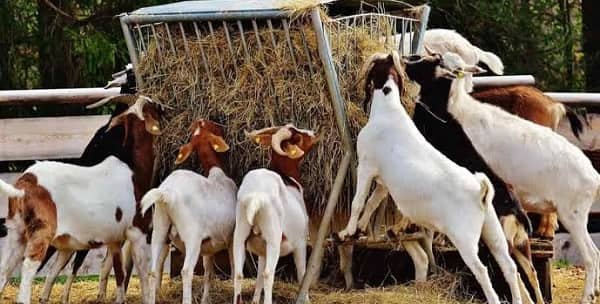
Breed Selection for Market Positioning: India’s diverse goat breed portfolio — Boer for meat production, Sirohi and Barbari for dual-purpose meat and milk, Beetal for large body weight, Jamunapari for premium milk production, and Black Bengal for adaptation to eastern climates — allows farmers to select breeds specifically optimised for their regional market demand and agro-climatic conditions. Farmers who invest in superior breeding genetics — selecting proven high-production males for herd improvement — consistently achieve productivity levels above national averages that translate directly into superior farm economics.
Management Practices That Determine Profitability
Disease prevention is the most critical management factor in goat farming profitability — Foot and Mouth Disease, Goat Plague, enterotoxemia, and internal parasite loads collectively represent the primary causes of mortality and productivity loss that separate profitable farms from struggling ones. Vaccination calendars, deworming protocols, clean water provision, proper ventilation in housing, and biosecurity measures preventing disease introduction from purchased animals require consistent implementation rather than reactive treatment after disease manifestation.
Nutrition management during key production phases — late pregnancy, early lactation, and pre-sale growth period — determines birth weight, kid survival, milk production, and market weight achievement timelines that directly impact revenue per animal. Farmers who invest in quality feed formulation and monitor body condition scoring throughout production cycles achieve significantly better productivity than those providing uniform undifferentiated feeding throughout the year.
Government Support and Financing
NABARD provides capital investment subsidy of 25-33% for goat farming projects through commercial banks under the Animal Husbandry Infrastructure Development Fund — reducing effective capital requirements for new entrants significantly. State animal husbandry departments offer breed distribution programmes providing subsidised or free breeding quality bucks, vaccination services at subsidised rates, and technical training programmes that improve management practices. The National Livestock Mission provides additional support for commercial goat farming development in designated districts.
Goat Business vs Alternative Livestock Businesses
| Parameter | Goat Farming | Sheep Farming | Pig Farming | Rabbit Farming |
| Initial capital | Low to moderate | Moderate | Moderate | Very low |
| Reproductive rate | Very high — twins common | Moderate | Very high — large litters | Extremely high |
| Market demand | Very high — cultural preference | Moderate | Regional — strong pockets | Limited |
| Climatic adaptability | Excellent — all regions | Moderate | Moderate | Moderate |
| Government support | Strong — NABARD, NLM | Moderate | Limited | Limited |
| Net profit margin | 20–45% | 18–38% | 22–45% | 25–50% |
| Disease risk | Moderate | Moderate | Moderate | Low |
| Festival demand concentration | Very high — Eid | Moderate | Low | None |
Goat business is consistently profitable in India for farmers who invest in superior breed genetics, implement systematic disease prevention protocols, develop multiple income streams from meat, milk, and breeding stock sales, and plan production timing to capture premium Eid-ul-Adha market pricing through advance stocking and management for sale-ready animals at peak demand periods.