



Shiba Inu has had one of the most remarkable trajectories of any cryptocurrency in history — launched anonymously in August 2020 by a pseudonymous developer with no venture funding, no private sale, and an explicit positioning as a “Dogecoin killer” community experiment, it delivered a staggering 54,505% gain in its first full year of trading, reaching an all-time high of $0.00008616 in October 2021 with a market capitalisation that briefly exceeded $34 billion. That history alone explains why SHIB continues to attract retail investor attention years later, and why the question of whether it remains a good investment in 2026 deserves serious, honest examination rather than either fan enthusiasm or reflexive dismissal.
The short answer: SHIB is a high-risk, highly speculative asset whose investment case has evolved meaningfully since its meme-coin origins, but whose core structural challenge — an almost incomprehensibly large token supply — continues to constrain realistic price appreciation potential regardless of ecosystem development.
What Is Shiba Inu (SHIB)?
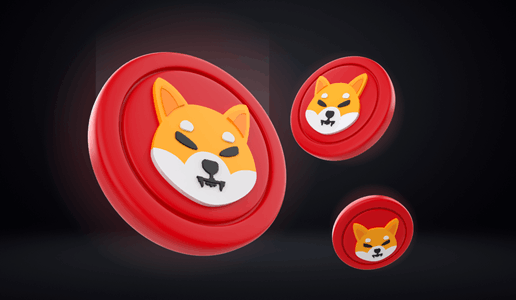
SHIB is an ERC-20 token built on the Ethereum blockchain, created by the pseudonymous developer “Ryoshi” as a community-owned alternative to Dogecoin. Half of the original total supply of one quadrillion tokens was sent to Ethereum co-founder Vitalik Buterin, who subsequently burned the vast majority of his holdings, reducing the effective circulating supply to approximately 589 trillion tokens — still an extraordinarily large number that fundamentally shapes everything about SHIB’s price dynamics.
What distinguishes SHIB from a pure meme coin in 2026 is its expanding ecosystem. ShibaSwap functions as the project’s decentralised exchange, allowing token swaps and a “Bury” staking function for passive rewards. Shibarium, a Layer-2 scaling solution, has reportedly surpassed 270 million wallet addresses and continues development toward an even more advanced “Shib Alpha Layer” (L3) infrastructure incorporating privacy features through fully homomorphic encryption (FHE) technology. The project has also pursued integrations including payment utility through OnePay and exploratory AI-focused partnerships.
The Token Supply Problem
Before any other analysis, SHIB’s circulating supply of approximately 589 trillion tokens must be understood as the single most important constraint on the investment case. To put this in perspective: for SHIB to reach even $1 per token, the network’s total market capitalisation would need to reach approximately $589.5 trillion — a figure roughly 19 times larger than the entire United States GDP and 27 times larger than the combined market capitalisation of the “Magnificent Seven” technology stocks. This is not a stretch target; it is mathematically disconnected from any plausible scenario in global financial markets.
The project’s burn mechanism — permanently removing tokens from circulation by sending them to inaccessible wallet addresses — exists specifically to address this supply problem, but its current pace has proven insufficient to meaningfully shift the calculus. Even during periods of dramatically elevated burn activity (including a documented 53,000% spike in burn rate during one period in 2026), the price has frequently failed to react positively, illustrating that burns at the current scale remove a negligible fraction of the enormous outstanding supply.
SHIB’s Price Performance Through 2026
SHIB has traded through 2026 in a generally consolidating, technically weak pattern. Price levels through the first half of the year ranged broadly between approximately $0.0000042 and $0.0000066, with the asset experiencing significant short-term volatility within that band, including notable drawdowns of 8% to over 24% across various weekly and monthly periods. Technical indicators through much of 2026 have shown bearish signals on both daily and weekly timeframes, with key moving averages trending downward and resistance levels capping recovery attempts.
Market capitalisation has fluctuated in the $2.4 billion to $3.1 billion range during this period — substantial in absolute terms, reflecting genuine ongoing investor capital commitment to the asset, but a significant decline from SHIB’s 2021 peak market capitalisation above $34 billion.
Regulatory and Institutional Developments
Some genuinely notable developments have occurred around SHIB’s regulatory standing in 2026. US regulatory clarification has classified SHIB as a digital commodity rather than a security, reducing a meaningful source of legal uncertainty that had weighed on institutional engagement with the asset. Japan’s financial regulator has reportedly added SHIB to its “Green List,” placing it alongside Bitcoin and Ethereum for streamlined exchange listing procedures in that jurisdiction — a notable vote of regulatory confidence relative to most altcoins.
On the institutional side, platforms including Robinhood and eToro have continued to support SHIB trading, and the U.S. Marshals Service holds approximately 54 billion SHIB tokens (from prior asset seizures), a detail frequently cited as evidence of the asset’s mainstream financial system presence, though this holding represents a government custody position rather than an institutional investment endorsement.
The Bull Case for SHIB
The case for SHIB resting on more than pure speculation centres on several genuine developments. The Shibarium ecosystem’s wallet address growth, while not equivalent to active daily usage, demonstrates infrastructure adoption beyond the original meme coin concept. The project’s burn mechanism, while currently insufficient at scale, represents at least a structural attempt to address the supply problem that distinguishes SHIB from purely inflationary meme tokens. Regulatory clarity in major jurisdictions reduces legal risk that has historically constrained institutional capital from engaging with meme-origin assets. And SHIB’s multi-layered technical infrastructure (ShibaSwap, Shibarium, planned L3 capability) creates what some analysts describe as a competitive “moat” relative to newer, purely speculative meme coins that lack any comparable technical foundation.
The Bear Case for SHIB
The case against SHIB is built on more fundamental structural concerns. The enormous token supply requires genuinely extraordinary demand growth to produce meaningful sustained price appreciation — burns at current rates make a negligible dent in this supply overhang. Whale concentration remains high, with documented instances of hundreds of billions of tokens moving to exchanges in single events, signalling potential distribution intent that can rapidly reverse any price rally. SHIB’s price has shown strong correlation with broader meme coin sentiment and Bitcoin’s price action, meaning it offers limited genuine diversification value within a crypto portfolio and tends to be among the first assets liquidated during periods of risk-off market sentiment or macroeconomic stress. And despite years of ecosystem development announcements, on-chain adoption metrics for actual utility usage (as opposed to speculative trading) remain modest relative to the token’s market capitalisation, a gap that has persisted across multiple development cycles.
Realistic Price Expectations
Credible analytical sources converge on a notably more measured set of expectations for SHIB than the explosive returns of 2021. Base-case scenarios for 2026 generally model SHIB trading within a fraction-of-a-cent range broadly consistent with where it has spent much of its recent trading history. Longer-range projections toward 2030, contingent on sustained burn momentum and genuine Shibarium adoption, suggest a realistic target range in the $0.00005 to $0.0001 area in optimistic scenarios — still requiring roughly an order-of-magnitude appreciation from typical 2026 trading levels, and still representing a small fraction of a cent rather than the dramatic multi-cent or dollar-level targets sometimes circulated in less rigorous online discussions.
Any price prediction claiming specific dollar-level or even multi-cent targets for SHIB should be treated with extreme skepticism given the mathematical reality of the token’s circulating supply.
Who, If Anyone, Should Consider SHIB?
SHIB might hold narrow appeal for crypto investors specifically seeking high-beta exposure to retail-driven meme coin sentiment cycles, who understand and accept the token supply mathematics constraining realistic appreciation, who want to track Shibarium’s genuine ecosystem development as a specific catalyst, and who allocate only capital they can fully afford to lose. It is unsuitable for investors seeking capital preservation, for crypto beginners without the experience to evaluate tokenomics critically, and for anyone treating SHIB as a primary rather than small speculative satellite position within a broader portfolio.
The Honest Assessment
SHIB in 2026 represents a more technically developed and more regulatorily de-risked asset than the pure meme coin it was at launch, with genuine infrastructure (Shibarium, ShibaSwap) and improving institutional accessibility. But its core investment constraint — an almost incomprehensibly large token supply that burns at current rates cannot meaningfully reduce — remains unchanged and continues to cap realistic price appreciation scenarios well below the multiples that drove its legendary 2021 performance. SHIB sits in the high-risk, high-speculation category of cryptocurrency investments, suitable only for capital genuinely earmarked for total-loss-tolerant speculation, not for investors seeking reliable returns or capital preservation.
FAQs
Q1. Can Shiba Inu realistically reach $1?
A: No. With approximately 589 trillion tokens in circulation, a $1 SHIB price would require a total network market capitalisation of roughly $589.5 trillion — nearly 19 times the entire US GDP and far beyond any plausible scenario in global financial markets. This outcome is mathematically implausible regardless of any ecosystem development or burn activity.
Q2. What is Shibarium and does it matter for SHIB’s value?
A: Shibarium is SHIB’s Layer-2 scaling network designed to enable faster, cheaper transactions and broader ecosystem utility beyond pure speculation. It has reportedly surpassed 270 million wallet addresses, but genuine on-chain adoption metrics for active usage remain modest relative to SHIB’s market capitalisation. Sustained, measurable Shibarium adoption is one of the few credible catalysts that could meaningfully support SHIB’s price over time.
Q3. Does the SHIB token burn mechanism actually reduce supply meaningfully?
A: At current burn rates, no, not meaningfully. Even during periods of dramatically elevated burn activity (including documented spikes of tens of thousands of percent in burn rate), the absolute number of tokens removed remains negligible relative to the approximately 589 trillion token circulating supply, limiting the burn mechanism’s practical impact on scarcity and price.
Q4. Is SHIB a better investment than newer meme coins like Bonk or Pepe?
A: SHIB offers more developed technical infrastructure (ShibaSwap, Shibarium, planned L3 capability) compared to most newer meme coins, which can provide somewhat more fundamental support beyond pure sentiment-driven trading. However, all meme coins, including SHIB, remain highly speculative assets whose price action is heavily influenced by retail sentiment cycles rather than conventional fundamental valuation metrics.
Q5. How much of my portfolio should I allocate to SHIB or similar meme coins?
A: Financial advisors and risk-conscious crypto analysts generally recommend that highly speculative assets like SHIB represent only a very small percentage of an investor’s total portfolio — capital that the investor can genuinely afford to lose entirely without affecting their financial stability. SHIB should never represent a primary investment holding or a substitute for diversified, fundamentals-based investment strategies.