



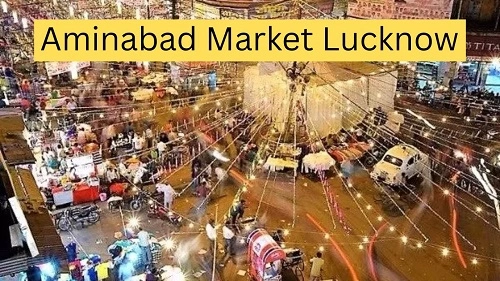
In the City of Nawabs, Aminabad Market is what Chandni Chowk is to Delhi—a living, breathing symbol of old-world commerce. One of the oldest and busiest markets in Uttar Pradesh, Aminabad has been trading continuously since the Nawabi era.
This market is a full sensory journey. The scent of traditional ittar mixes with sizzling kebabs. Hand-embroidered Chikankari hangs beside stacks of books. Narrow lanes open into sudden courtyards packed with shoppers. Aminabad isn’t neat or quiet—it’s congested, loud, and deeply charming.
Made up of smaller pockets like Gadbadjhala and Pratap Market, Aminabad sells everything from safety pins to bridal trousseaus. For locals, it’s daily life. For visitors, it’s Lucknow in its rawest form.
Aminabad Market Quick Details at a Glance
| Detail | Information |
| Location | Aminabad, Central Lucknow |
| Established | Late 18th century (Nawabi era) |
| Famous For | Chikankari garments, juttis, Awadhi food |
| Nearest Metro | Hussain Ganj (Red Line) / Charbagh |
| Nearest Bus Stop | Kaiserbagh Bus Station |
| Best Time to Visit | 12:00 PM – 8:00 PM |
| Closed On | Thursday (main shops shut) |
A Short History of Aminabad Market
Aminabad traces its roots to the late 1700s during the reign of Asaf-ud-Daula. The area was later formally developed and named after Amin-ud-Daula, Prime Minister to Nasir-ud-Din Haider, in the 1840s.
What began as gardens with small trading stalls slowly evolved into Lucknow’s main commercial heart. Poets, freedom fighters, and Awadhi nobility once walked these same lanes. Many shops here are still run by families who’ve occupied the same spots for generations.
Despite modernization around it, Aminabad has held on to its heritage—visible in its old façades, narrow corridors, and community-run businesses.
What You Can Shop Here
Aminabad feels like several markets stitched together.
1. Chikankari & Zardozi
This is one of the best places in India for authentic Lucknowi Chikan work. Look for hand embroidery on cotton or georgette for the finest quality.
2. Gadbadjhala
A famous sub-market inside Aminabad. Tiny lanes packed with bangles, imitation jewelry, hair accessories, and bridal trinkets—perfect for budget wedding shopping.
3. Footwear (Juttis & Nagrai Shoes)
Rows of shops sell traditional leather footwear and embellished juttis that pair beautifully with ethnic wear.
4. Book Market
One of North India’s largest wholesale book zones. Academic texts, exam guides, and even Urdu poetry are available at discounted rates.
5. Ittar & Cosmetics
Several old stores specialize in non-alcoholic perfumes, attars, and locally made cosmetics.
Thursday twist: While most permanent shops stay closed on Thursdays, a massive footpath bazaar takes over the streets, offering surprising bargains on everyday items.
Nearest Metro Station and Bus Stand
Cars struggle inside Aminabad’s tight lanes, so public transport works best.
- Metro: Hussain Ganj Metro Station is closest (about 1.8 km). A 10-minute e-rickshaw ride drops you at the main square.
Charbagh Metro Station is another option. - Railway: Lucknow Charbagh Railway Station and Lucknow Junction are both around 3 km away.
- Bus: Kaiserbagh Bus Station is just 1 km from Aminabad.
Shared autos and e-rickshaws are the real lifeline inside the market.
Nearby Places to Explore
You’re surrounded by Lucknow’s cultural landmarks:
- Tunday Kababi – Famous for Galouti Kebabs, right inside Aminabad.
- Prakash Ki Kulfi – Known for Kesar Pista Kulfi Falooda.
- Bara Imambara & Rumi Darwaza – Iconic Nawabi architecture, about 3–4 km away.
- Hazratganj – For a more modern shopping break.
Best Time to Visit
- Afternoons (2 PM – 5 PM): Less chaotic than evenings.
- Festivals (Eid / Diwali): Beautifully decorated, but extremely crowded.
- Avoid Thursdays: Unless you specifically want the footpath market experience.
Comfortable shoes are essential.
Conclusion
Aminabad Market Lucknow isn’t just a shopping destination—it’s the living heart of the city’s Nawabi heritage.
Here, tradition refuses to disappear. You still feel tehzeeb in the way shopkeepers speak, in the embroidery on kurtas, and in the slow aroma of kebabs drifting through centuries-old lanes.
It demands patience and energy—but rewards you with stories, flavors, and craftsmanship no modern mall can offer.
Messy. Historic. Soulful.
Aminabad doesn’t sell Lucknow—it is Lucknow.