




Agriculture in India is changing quickly. Many farmers and small entrepreneurs are now looking beyond traditional crops like rice and wheat. High-value crops such as mushrooms are gaining attention because they require less land and can generate better income in a shorter time.
Mushrooms are widely used in restaurants, hotels, and households. With the growth of healthy eating habits and vegetarian diets, the demand for mushrooms has increased in many Indian cities. Because of this rising demand, many people are considering mushroom farming as a business opportunity. Let’s analyse whether the mushroom business is profitable in India or not.
Growing Demand for Mushrooms
The demand for mushrooms in India has grown steadily over the last decade. Earlier, mushrooms were mostly consumed in big cities or luxury hotels. Today, they are commonly used in home cooking, restaurants, fast food outlets, and packaged food products.
Mushrooms are popular because they are rich in protein, vitamins, minerals, and antioxidants. Many people consider them a healthy alternative to meat. As awareness about nutrition increases, more consumers are adding mushrooms to their daily diet.
Urban areas such as Delhi, Mumbai, Bengaluru, Hyderabad, and Pune already have strong demand. At the same time, demand is slowly expanding into smaller cities and towns as well.
The food industry also uses mushrooms in soups, pizzas, noodles, burgers, and ready-to-eat meals. This wide usage ensures that mushroom producers often find multiple buyers in the market.
Low Land Requirement
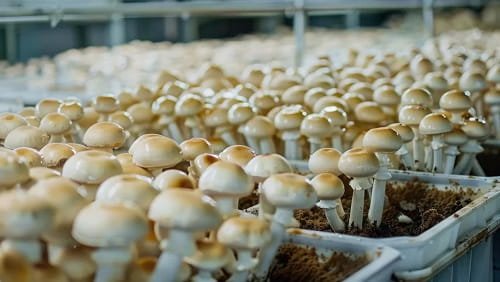
One major advantage of the mushroom business is that it does not require large farmland. Mushrooms can be grown indoors in controlled environments such as small rooms, sheds, or specially designed growing units.
Unlike traditional crops, mushroom cultivation is done in trays or bags filled with organic material like straw, compost, or agricultural waste. Because of this vertical farming method, farmers can grow a large quantity of mushrooms in a limited space.
This makes mushroom farming attractive for people who have small land areas or even unused rooms. Many entrepreneurs start mushroom cultivation in their backyard, basement, or small rented spaces.
The low land requirement makes the business accessible to small farmers and beginners.
Short Production Cycle
Another important factor that increases profitability is the short growing cycle of mushrooms. Many varieties of mushrooms can be harvested within 25 to 40 days after planting.
This means farmers can produce multiple batches in a year, generating frequent income compared to seasonal crops that are harvested only once or twice annually.
Some popular mushroom varieties cultivated in India include:
- Button mushrooms
- Oyster mushrooms
- Milky mushrooms
- Shiitake mushrooms
Among these, oyster mushrooms are often recommended for beginners because they are easier to grow and require lower investment.
Because of the quick production cycle, farmers can recover their investment relatively fast if the crop is managed properly.
Profit Potential in Mushroom Farming
Mushroom farming can offer attractive profit margins when done on a commercial scale. The cost of production mainly includes spawn (mushroom seeds), raw materials like straw or compost, labor, and basic infrastructure.
Once the mushrooms are harvested, they can be sold in local vegetable markets, supermarkets, hotels, restaurants, or food processing companies.
Fresh mushrooms usually sell at higher prices compared to many vegetables. In urban markets, mushrooms often fetch a good price because of strong demand from restaurants and health-conscious consumers.
In addition to selling fresh mushrooms, farmers can also increase profits by selling dried mushrooms, mushroom powder, or processed mushroom products. These value-added products have a longer shelf life and can be sold in packaged form.
Some entrepreneurs even supply mushrooms directly to restaurants or grocery stores through regular contracts, which provides steady income.
Low Investment for Small Setup
Compared to many other agricultural businesses, mushroom farming can be started with relatively low investment. A small-scale mushroom unit may only require a basic growing room, racks, humidity control, and proper ventilation.
For beginners, oyster mushroom cultivation is often considered the easiest option because it does not require highly controlled temperature conditions. This reduces infrastructure costs.
Basic training programs for mushroom cultivation are also available through agricultural universities, government institutions, and farming organizations. These programs help new farmers learn proper techniques for growing mushrooms successfully.
Because of the manageable startup cost, mushroom farming is becoming popular among young entrepreneurs and small farmers.
Government Support and Training
The Indian government and agricultural institutions actively promote mushroom cultivation as part of modern farming practices. Several schemes and training programs are available to support new farmers.
Agricultural universities, Krishi Vigyan Kendras (KVKs), and horticulture departments regularly conduct workshops and training sessions on mushroom farming.
In some states, farmers may also receive subsidies or financial assistance for setting up mushroom cultivation units. These initiatives help reduce the initial financial burden and encourage more people to enter the business.
Such support systems make mushroom farming more accessible for beginners who want to start small and expand gradually.
Challenges in the Mushroom Business
Despite its advantages, the mushroom business also comes with certain challenges. One of the main issues is the short shelf life of fresh mushrooms. Mushrooms must be sold quickly after harvesting because they spoil faster than many vegetables.
This means farmers must have a reliable distribution system or nearby market to sell their produce.
Temperature and humidity control are also important for successful mushroom cultivation. If the growing environment is not maintained properly, the crop can be affected by diseases or poor growth.
Another challenge is market awareness. In some rural areas, consumers are still not very familiar with mushrooms, which may limit demand. Farmers may need to focus on supplying urban markets where consumption is higher.
Proper training and planning are therefore essential for avoiding these challenges.
Opportunities for New Entrepreneurs
The mushroom industry in India still has a lot of growth potential. As health awareness increases and vegetarian diets become more popular, mushroom consumption is expected to rise further.
Entrepreneurs can explore several opportunities in this field, such as:
- Fresh mushroom farming
- Organic mushroom cultivation
- Dried mushroom production
- Mushroom powder for health supplements
- Packaged mushroom products
Online grocery platforms and modern retail stores are also creating new sales channels for mushroom producers.
With the right marketing strategy and consistent quality, small mushroom farms can gradually expand into larger commercial businesses.
Conclusion
Mushroom farming is emerging as an attractive agricultural business in India because of its low land requirement, short production cycle, and increasing market demand. Mushrooms are widely used in households, restaurants, and the food industry, which creates steady opportunities for farmers.
Although the business requires proper knowledge, temperature control, and quick marketing due to the short shelf life of mushrooms, careful planning can help overcome these challenges.
Entrepreneurs who focus on quality production, efficient distribution, and value-added products often find mushroom farming to be a profitable and sustainable business opportunity in India.