



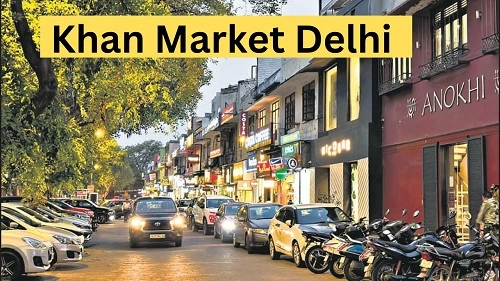
Set quietly in the heart of New Delhi, Khan Market feels different from Delhi’s louder shopping hubs. It’s upscale, yes—but also personal. Tree-lined lanes. Independent bookstores. Cafés where people linger. Tailors who’ve known families for decades.
What started as a modest rehabilitation market after Partition is now India’s most expensive retail street. Still, it hasn’t lost its soul. Locals come here to browse books, meet friends, or enjoy a slow evening walk. Visitors come for the vibe. Everyone leaves with a story.
Here’s a complete guide with the latest facts and a few insider details.
Khan Market Quick Details
| Detail | Information |
| Location | Central New Delhi |
| Established | Early 1950s |
| Named After | Khan Abdul Jabbar Khan (Dr. Khan Sahib) |
| Famous For | Cafés, boutiques, bookstores, premium brands |
| Nearest Metro | Khan Market Metro Station (Violet Line) |
| Nearest Major Bus Stop | Sujan Singh Park / India Gate routes |
| Global Retail Rank | Around 24th (2025/26) |
| Average Rent | Approx. $223 per sq ft annually |
| Best Time to Visit | 4:00 PM – 9:00 PM |
Naming Origin (Small but Important Detail)
Many people casually link the market’s name to Frontier Gandhi. But Khan Market is actually named after Khan Abdul Jabbar Khan, also known as Dr. Khan Sahib.
He was the Chief Minister of the North-West Frontier Province and played a key role in helping refugees who later settled and established businesses here after Partition. That humanitarian effort is what gave birth to Khan Market.
So while it looks premium today, its roots are deeply human.
A Short History of Khan Market
Built in the early 1950s, Khan Market was originally meant to support displaced families starting over in Delhi. Small shops sold daily essentials. Nothing fancy.
Then embassies arrived nearby. Well-to-do neighborhoods grew around it. Slowly, international brands and gourmet cafés followed.
Fast forward to today: according to the latest 2025/26 report by Cushman & Wakefield, Khan Market remains India’s most expensive retail high street and ranks around 24th globally. Rental prices hover near $223 per square foot annually—a figure that surprises most first-time visitors.
Yet the layout remains simple. No giant malls. Just a U-shaped market and a quieter inner loop.
What You Can Shop Here
Khan Market rewards slow exploration.
1. Fashion & Lifestyle
Expect curated boutiques, footwear stores, accessories, and a mix of Indian designers with global labels. Quality matters more than quantity here.
2. Legendary Bookstores
Two names stand out: Bahrisons Booksellers and Faqir Chand Bookstore.
These aren’t just shops—they’re landmarks. Both have been around since the early days and remain favorites among readers, students, and diplomats alike.
3. The “Middle Circle” (Insider Tip)
Most visitors stick to the outer U-shaped road. But the narrow inner lanes—known locally as the Middle Circle—hide some of the best tailors, quirky stationery shops, and tiny specialty stores. It’s quieter, more local, and worth wandering through.
4. Cafés & Restaurants
From classic Indian meals to Italian, Asian, and dessert cafés, Khan Market is one of Delhi’s most loved food zones. Evenings here feel relaxed, not rushed.
Khan Market Nearest Metro Station and Bus Stand
Reaching Khan Market is easy. The closest stop is Khan Market Metro Station on the Violet Line. Exit the station, walk a minute, and you’re inside the market.
Several DTC buses also stop near Sujan Singh Park and along Mathura Road—both a short walk away. Cabs and autos know the place instantly.
Khan Market Nearby Places to Explore
You can easily pair Khan Market with nearby landmarks:
- Lodhi Gardens – Peaceful green lawns and historic tombs, perfect for unwinding.
- India Gate – Beautiful after sunset, just minutes away.
- Jawaharlal Nehru Stadium – A handy nearby landmark.
Khan Market Best Time to Visit
Late afternoon to evening works best. Around 4 PM, shops open fully and cafés start buzzing. Weekdays are calmer. Weekends get busy.
Winter evenings are especially pleasant. Summers can be hot, but shaded lanes help.
Conclusion
Khan Market is more than a luxury shopping street. It’s a living piece of Delhi’s history—born from refugee resilience, shaped by decades of change, and now standing among the world’s priciest retail destinations.
Come for the cafés. Stay for the bookstores. Wander into the Middle Circle. And remember that behind every polished storefront is a story that began over seventy years ago.