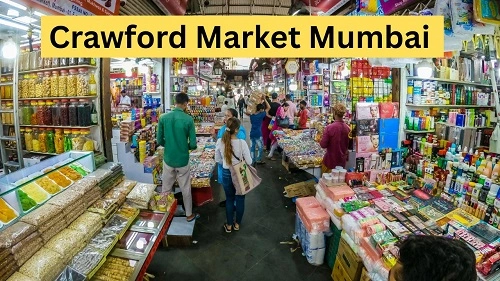
Deep inside South Mumbai’s old commercial quarter, Crawford Market still runs on muscle memory. Porters move on instinct. Vendors shout prices without looking up. Buyers weave through tight lanes like they’ve done it all their lives. It’s loud, layered, and wonderfully unpolished.
Officially known as Mahatma Jyotiba Phule Mandai, most locals continue to call it Crawford Market. Built in the British era, this market has supplied Mumbai for more than 150 years—everything from Alphonso mangoes to imported chocolates, festival décor to wholesale spices.
It isn’t a tourist attraction in the usual sense. It’s working Mumbai. And once you step inside, you feel that energy immediately.
Here’s the updated and complete guide.
Crawford Market Mumbai Quick Details
| Detail | Information |
| Official Name | Mahatma Jyotiba Phule Mandai |
| Location | South Mumbai |
| Established | 1869 |
| Famous For | Imported chocolates, spices, Alphonso mangoes, home décor |
| Nearest Railway | CSMT (Central & Harbour Lines) – ~10 min walk |
| Nearest Metro | CSMT Metro Station or Kalbadevi Station (Aqua Line 3) |
| Best Time | 11:00 AM for full variety; 8:00 AM for fresh wholesale produce |
| Closed On | Sundays (main heritage building) |
| Standard Timings | Monday–Saturday, approx. 11 AM – 8 PM |
A Short History of Crawford Market
Crawford Market opened in 1869 and was named after Arthur Crawford, Mumbai’s first municipal commissioner. The structure blends Norman and Gothic architecture, designed to stay naturally cool long before air-conditioning existed.
Later, it was renamed after social reformer Mahatma Jyotiba Phule, though the original name never left everyday conversation.
History lovers will appreciate this detail: the three-arched stone entrance features bas-relief friezes showing Indian peasants and scenes of daily life. These were created under Lockwood Kipling—father of Rudyard Kipling.
Inside the market is another hidden piece of heritage: the Crawford Market drinking fountain, also designed by Kipling. It’s often half-hidden behind fruit crates, making it a quiet little treasure hunt for visitors.
In colonial Bombay, goods arrived from nearby docks straight into this market—grains, spices, produce, and imports. That role hasn’t changed. Even today, trucks roll in before sunrise and by mid-morning the entire place is in motion.
What You Can Shop Here (2026 Highlights)
Crawford Market is practical, not polished. You come here to buy, not browse.
Fruits, Vegetables & Dry Goods
This is the core of the market. Expect towers of apples, baskets of seasonal produce, sacks of rice and lentils, and every dry fruit imaginable. Hotels and caterers still source ingredients here daily.
Mirchi Galli (Spice Central)
Just outside the main building is Mirchi Galli—the epicenter of Mumbai’s chili and spice trade. If you want the real aroma of Crawford Market, this is where it lives.
Imported Foods & Baking Supplies
From foreign chocolates and sauces to baking essences, cocoa powder, food coloring, and nuts—home bakers and café owners swear by these lanes.
Pet Section
One corner sells birds, fish, and pet accessories. It’s crowded and controversial, but remains one of the market’s most talked-about areas.
Festival Shopping Bonus
Directly opposite the market is Lohar Chawl, famous for lights and home electronics—perfect if you’re shopping for Diwali décor or renovation supplies.
Layout Tip: Outer Road vs Inner Aisles
Most first-time visitors stick to the outer stretch. The real Crawford experience sits inside.
The inner aisles are narrow and intense. Porters rush through. Vendors negotiate loudly. Buyers bargain fast. It feels overwhelming at first—but slow down, and patterns appear.
Early morning is best if you want fresher produce and fewer crowds.
Metro, Railway & Bus Access
Connectivity has improved dramatically.
The Mumbai Metro Aqua Line (Line 3) is now fully operational. The closest underground stops are:
- CSMT Metro Station – best exit for reaching the main market building quickly.
- Kalbadevi Metro Station – ideal if you’re starting near spice or stationery lanes.
By train, Chhatrapati Shivaji Maharaj Terminus is about a 10-minute walk.
BEST buses stop directly at Crawford Market and Kalbadevi Road. Taxis and autos recognize “Crawford Market” instantly.
Nearby Places to Explore
Since you’re already in South Mumbai, it’s easy to pair your visit with:
- Chor Bazaar – antiques and vintage finds.
- Marine Drive – perfect for sunset.
- Mohammed Ali Road – legendary for street food in the evenings.
Best Time to Visit (Important)
- Wholesale freshness: around 8 AM
- Full retail variety: around 11 AM
The main heritage building is closed on Sundays. Despite what some travel sites claim, there is no general Tuesday closure—only a few nearby garment lanes shut that day. Crawford Market itself runs Monday to Saturday, roughly 11 AM to 8 PM.
Weekdays are calmer than weekends. Wear comfortable shoes and keep belongings close.
Conclusion
Crawford Market isn’t elegant. It’s loud. It’s crowded. Sometimes it smells strongly of spices and fish. But it’s also one of Mumbai’s most honest spaces.
For over 150 years, it has fed the city, supported small traders, and carried forward a rhythm that refuses to slow down. It shows you Mumbai without filters—hardworking, layered, and endlessly alive