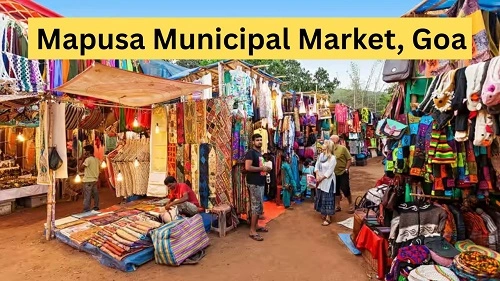
Mapusa Municipal Market, Mapusa is the everyday soul of North Goa. While beaches define Goa for tourists, this market defines Goa for locals. Located in the heart of Mapusa town, it is the most important trading hub for vegetables, fish, meat, spices, and daily essentials for the entire Bardez taluka.
This is not a tourist-style souvenir market. It is loud, crowded, and real. Fisherwomen auction their catch, farmers unload produce from nearby villages, and bargaining happens in Konkani, Marathi, and Portuguese-influenced slang. If you want to see how Goa actually lives, you start here.
Mapusa Municipal Market Quick Details
| Detail | Information |
| Location | Mapusa Town, North Goa |
| Market Type | Municipal wholesale & retail market |
| Famous For | Fresh fish, vegetables, spices, Goan sausages |
| Nearest Landmark | Mapusa Bus Stand |
| Best Time | 6:30 AM – 11:00 AM |
| Closed On | Open all days (Friday is the busiest) |
Mapusa Municipal Market History
Mapusa Municipal Market has existed in some form since Portuguese colonial times, when Mapusa was the administrative and trading center of North Goa. The market grew organically around the town square, serving inland villages and coastal fishing communities alike.
Over decades, it evolved into a structured municipal market while retaining its traditional open-auction style—especially in fish trading. Even today, much of the commerce happens through verbal bidding and long-standing buyer-seller relationships.
Friday market days trace their roots to weekly rural haats, when farmers from surrounding villages would converge in Mapusa to sell surplus produce.
Mapusa Municipal Market Shops (What to Buy & See)
This market runs on freshness and speed.
1. Fish Market
The most famous section. Early mornings see fresh catches like kingfish (Isvan), pomfret, mackerel, prawns, crabs, and squid arriving straight from coastal villages. Auctions happen fast and loud.
2. Vegetables & Fruits
Farmers sell locally grown vegetables, coconuts, bananas, jackfruit, cashew apples (seasonal), and leafy greens. Prices here are significantly cheaper than beachside areas.
3. Spices & Dry Goods
You’ll find dried red chillies, peppercorns, kokum, tamarind, and masalas essential to Goan cooking.
4. Meat Section
Fresh pork, beef, and chicken are sold daily—pork being especially important for Goan dishes like sorpotel and vindaloo.
5. Goan Specialties
Local chourico (Goan sausages), pickles, toddy vinegar, and homemade masala pastes are sold by small vendors.
Street Food & Local Snacks
Food stalls cluster around the outer lanes.
1. Goan Snacks
Fish cutlets, samosas, and bhaji-pavs are popular breakfast options.
2. Tea & Coffee Stalls
Strong tea and local filter coffee fuel traders and shoppers alike.
3. Lunch Counters (Nearby)
Simple local eateries serve rice, fish curry, and vegetable thalis by late morning.
Transport
Mapusa Municipal Market is extremely well-connected.
Bus
- The Mapusa Bus Stand is right next to the market, connecting Panaji, Calangute, Anjuna, Vagator, and Margao.
Taxi & Pilots
- Local taxis and motorcycle pilots are available throughout the day.
Parking
- Limited street parking. Friday mornings are chaotic—walking or using public transport is strongly recommended.
Mapusa Municipal Market Nearby Places to Explore
If you’re already in Mapusa:
- Mapusa Friday Market (Haat) – expands beyond the municipal building
- Anjuna & Vagator Beaches – 20–30 minutes away
- Calangute & Baga – major tourist beaches nearby
- Panaji City – Goa’s capital, about 13 km away
Best Time to Visit
- Arrive before 8:00 AM for the freshest fish and produce. Fridays are legendary but extremely crowded. Tourists should avoid late mornings unless comfortable with crowds and noise.
Conclusion
Mapusa Municipal Market, Mapusa is not polished or curated—and that’s exactly why it matters. This is where Goa feeds itself, negotiates daily life, and preserves its culinary identity.
If beaches show Goa’s beauty, Mapusa Market shows its backbone.