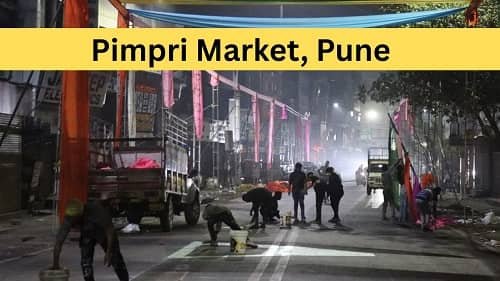
Pimpri Market, Pune is one of the most active and people-driven markets in the Pimpri–Chinchwad region. Located around Pimpri Camp, this market is not polished or curated—it’s raw, busy, and deeply functional. For locals, it’s the first stop for vegetables, clothes, household items, and quick meals. For small traders and vendors, it’s a daily battlefield of margins and movement.
Unlike the malls of Hinjewadi or Wakad, Pimpri Market represents old-school Pune commerce. Prices are sharp, bargaining is expected, and footfall never really slows down. It’s a market that runs on routine—morning vegetables, afternoon errands, and evening street food.
Pimpri Market Quick Details
| Detail | Information |
| Location | Pimpri Camp, Pimpri–Chinchwad, Pune |
| Market Type | Traditional high-street & wholesale-retail hub |
| Famous For | Vegetables, budget clothing, street food |
| Nearest Metro | Pimpri Chinchwad Metro (PCMC Line – nearby) |
| Nearest Railway | Pimpri Railway Station |
| Best Time | 9:00 AM – 1:00 PM & 5:00 PM – 9:00 PM |
| Closed On | Mostly open all days |
Pimpri Market History
Pimpri Market grew alongside the industrial rise of Pimpri–Chinchwad. As factories, auto plants, and worker housing expanded from the 1960s onward, the area needed a strong commercial core. Pimpri Camp became that nucleus.
Traders from Maharashtra, Karnataka, and North India set up shops, selling everything workers needed at affordable rates. Over time, the market expanded outward—absorbing vegetable mandis, cloth lanes, and service shops—without ever becoming formal or structured.
Even today, the market reflects its working-class roots: efficient, fast, and price-conscious.
Pimpri Market Shops (What to Buy & See)
Pimpri Market is broad and dense, with clear zones.
1. Vegetable & Fruit Market
This is the heart of Pimpri Market. Fresh produce arrives daily from nearby rural belts. Prices are among the lowest in the PCMC area, especially in the morning hours.
2. Clothing & Footwear
Budget shirts, jeans, sarees, nightwear, kids’ clothes, and seasonal garments dominate the inner lanes. Footwear shops sell daily-use sandals, shoes, and slippers at aggressive prices.
3. Household & Daily Goods
Steel utensils, plasticware, kitchen tools, buckets, storage boxes, and electrical items are widely available—often sold by weight or bundle.
4. Electronics & Repairs
Mobile phones, accessories, and quick repair shops serve factory workers and students from nearby colleges.
5. Services
Tailors, salons, cobblers, hardware stores, and medical shops make this a complete utility market.
Food & Street Life
Food is inseparable from Pimpri Market.
Street Food
Vada pav, misal pav, pav bhaji, bhajiyas, Chinese bhel, momos, and rolls dominate the evening scene.
Tea & Snacks
Chai stalls are everywhere—especially near the vegetable zone and bus stops.
Small Eateries
Local messes and restaurants serve Maharashtrian thalis, North Indian meals, and quick lunches for workers.
This is comfort food, not curated dining.
Transport
Pimpri Market is extremely well-connected.
1. Railway
Pimpri Railway Station is close and connects the area to Pune Junction and Lonavala routes.
2. Metro
The PCMC Metro Line has significantly improved access from Nigdi, Chinchwad, and central Pune.
3. Bus
PMPML buses from all parts of Pune and PCMC stop at Pimpri Camp and nearby junctions.
4. Parking
Very limited. Roads are narrow and congested. Two-wheelers, autos, and public transport are strongly preferred.
Pimpri Market Nearby Places to Explore
If you’re already in the area:
- Chinchwad Gaon – historic core and temple
- Auto Cluster Exhibition Center – industrial landmark
- Elpro City Square – mall nearby for AC comfort
- Nigdi – residential and commercial zone
Best Time to Visit Pimpri Market
Morning hours (9:00 AM – 11:30 AM) are best for vegetables and groceries. Evenings (6:00 PM – 9:00 PM) are lively but crowded. Weekends see heavy footfall.
Who Should Come Here
- Local residents and families
- Small retailers and vendors
- Budget-conscious shoppers
- Anyone who prefers real markets over malls
This is not a tourist market—and it’s not trying to be.
Conclusion
Pimpri Market, Pune is noisy, crowded, and relentlessly alive. It exists to serve people who need things today—not experiences, not branding, not luxury.
In a fast-modernizing city, Pimpri Market remains stubbornly real. And for Pimpri–Chinchwad, that honesty is exactly why it still matters.