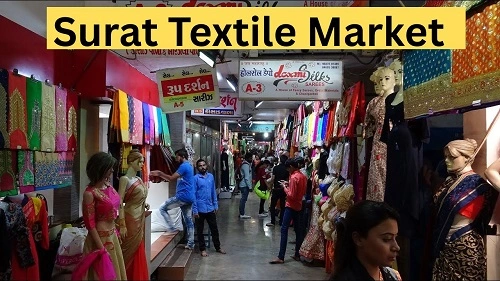
Surat Textile Market is not just a shopping destination—it is the engine room of India’s fashion economy. Known globally as the Silk City and the Textile Hub of India, Surat produces nearly 40% of India’s man-made fabric, shaping what the country wears every single day.
As of 2026, Surat’s textile trade has expanded into an almost city-sized network, with around 250 specialised textile markets and more than 80,000 shops. From budget sarees to high-end bridal lehengas, from raw fabric to finished garments, everything begins here before moving to the rest of India—and the world.
This is not a market you browse. This is a market that supplies markets.
Quick Details of Surat Textile Market
| Detail | Information |
| Location | Ring Road, Sahara Darwaja & Saroli areas, Surat |
| Market Type | Mega wholesale & manufacturing hub |
| Famous For | Synthetic sarees, georgette, chiffon, bridal lehengas |
| Nearest Railway | Surat Railway Station (2–3 km from Ring Road) |
| Best Time | 10:30 AM – 9:00 PM |
| Key Speciality | Man-made fibres (≈90% of India’s supply) |
History
Surat’s association with textiles dates back centuries, when it was a major port trading silk and cotton with Europe and the Middle East. Over time, the city adapted to changing technologies and markets, becoming the undisputed leader in synthetic and man-made fabrics.
The real transformation came in the late 20th century with the rise of power looms and mass production. Small family-run units grew into factories, factories into clusters, and clusters into vast organised markets.
By the 2020s, Surat had evolved into the backbone of India’s garment supply chain. In 2026, its importance grew further with the approval of a Textiles Export Facilitation Centre, strengthening Surat’s role in global exports to Europe and the US.
Shops (What to Buy & See)
Surat’s textile trade is spread across massive zones, each with its own focus and rhythm.
1. Ring Road Textile Markets
This is the traditional nerve centre. Famous complexes like Surat Textile Market (STM), Old Bombay Market, and Raghukul Textile Market dominate the area. These markets specialise in sarees, dress materials, and wholesale fabric sold in sets.
2. Saroli Textile Cluster
A newer and more organised zone featuring massive complexes like Landmark Empires and Shree Kuberji World. These markets are spacious, modern, and easier to navigate, making them ideal for large-volume buyers.
3. Umarwada & New Bombay Market
A favourite for wedding shoppers. This area focuses on designer lehengas, bridal wear, and premium ethnic outfits sold at retail-wholesale prices.
4. Fabric Innovation
Beyond traditional textiles, Surat leads in value-added fabrics—digital prints, laser-cut designs, sequins, and high-tech embroidery used by major Indian and international brands.
Transport
Surat is one of India’s best-connected business cities.
Train
Surat Railway Station is the main hub. Ring Road markets are just a 10-minute auto-rickshaw ride away.
Metro
The Surat Metro (Phase 1) has multiple operational stations, improving access between residential areas and textile zones.
Air
Surat International Airport connects the city with all major Indian metros, catering heavily to business travellers on short buying trips.
Road & Parking
Parking is difficult in the older Ring Road area. Buyers are advised to use parking facilities in Saroli markets or rely on public transport.
Nearby Places to Explore
If you have time between buying trips:
- Chauta Bazar – retail shopping and local street life
- Gopi Talav – restored heritage lake area
- Dumas Beach – a short drive for evening relaxation
Best Time to Visit
Weekdays from late morning to early evening are ideal. Most serious wholesale activity happens Monday to Saturday. Sundays see partial closures, especially in wholesale-only markets, making them unsuitable for business trips.
For first-time visitors, allocating at least 2–3 full days is recommended due to the sheer scale of the market.
Conclusion
Surat Textile Market is not about comfort, aesthetics, or casual shopping. It is about scale, speed, and supply. This is where India’s fabrics are born, priced, and distributed to the nation and beyond.
For retailers, wholesalers, designers, and exporters, Surat is not optional—it is essential. If you want to understand how India dresses itself, this is where the story truly starts.