




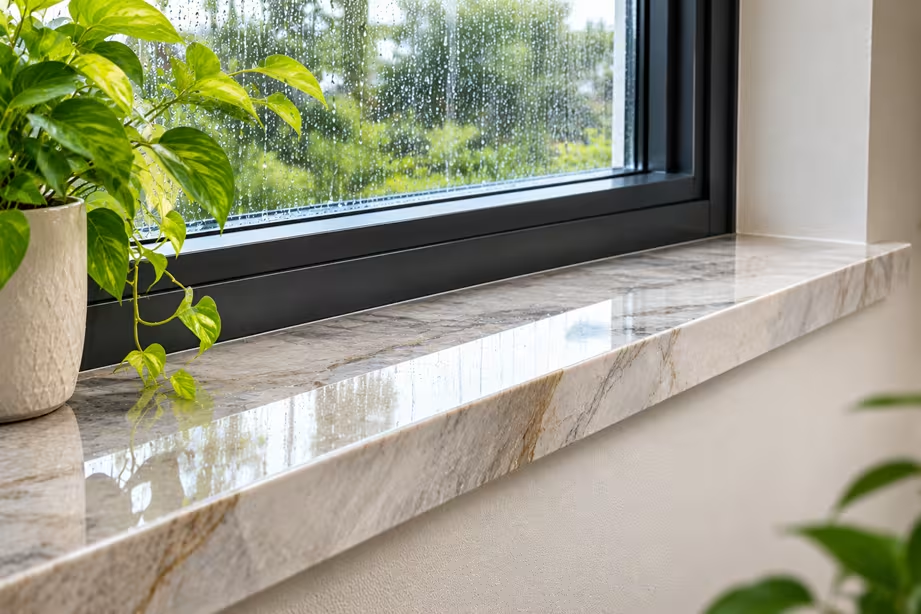
A window sill looks like a small detail, yet it quietly guards the wall around every window in a home. It sheds rainwater, handles condensation and takes the brunt of sun and weather day after day. The window ledge you choose does real work behind the scenes, and the right material keeps moisture out and the structure sound for years. Get it right, and this quiet feature protects the home long after construction ends.
What A Window Sill Protects
Before choosing a material, it helps to understand what this detail does. A sill finishes the opening and manages water on both sides, steering it away from the wall rather than letting it soak in.
Good protection shows up in a few clear ways:
- Rainwater guided safely away from the wall below.
- Moisture and condensation kept from reaching the structure.
- The frame and paintwork beneath the window shielded from damp.
- A tidy, lasting finish that withstands sun and weather.
Seen this way, the right window ledge is a small investment that protects a much larger one.
How The Wrong Material Lets Water In
A porous or poorly shaped sill can let water linger, and over time that moisture finds its way into the wall. Soft or absorbent materials may stain, crack, or hold moisture, putting the structure behind them at risk.
A protective sill works best when it offers:
- A non-porous body that water cannot soak into.
- A gentle slope and a drip edge that sheds rain away from the wall.
- A hard surface that resists frost, sun and daily wear.
- A durable finish that stays sound for decades.
Choosing a material with these strengths keeps water where it belongs and the wall dry.
Materials Worth Considering
The material sets both the protection and the look of a sill, and a few options suit the job particularly well. Each brings its own balance of durability, care and style.
- Natural stone such as granite, which is hard, weatherproof, and long-lasting.
- Engineered and sintered surfaces, which are non-porous and highly moisture-resistant.
- Timber, which looks warm indoors and needs a good seal against damp.
- Composite materials, which offer a stable, budget-friendly interior option.
For external sills that face the full weather, a non-porous, weather-stable surface gives the best protection and the longest life. The same thinking applies to a good door sill design, where you have to guide water at ground level away just as carefully.
Getting The Detailing Right
A sill protects best when you think through its shape and fit, not leave it to chance. A few deliberate choices make all the difference to how well it sheds water.
- Give external sills a clear slope so water runs off instead of pooling.
- Add a drip edge and a small overhang to keep runoff off the wall.
- Seal joints neatly where the sill meets the frame and the wall.
- Size the sill generously so it covers and protects the wall below.
A careful fabricator and installer bring these details to life, so review past work first. Thoughtful detailing, like a well-planned door sill design, turns a sill into real protection.
Interior And Exterior Sills
The demands on a sill change depending on where it sits, so each deserves its own consideration. An external sill faces rain, sun, and frost, so it needs a weather-stable, non-porous material and a profile that sheds water easily. An internal sill has a gentler life, where the focus shifts to a surface that resists condensation, cleans easily, and suits the room’s style.
Treating the two as separate jobs keeps each sill right for its setting. An external sill that manages water well protects the wall and paintwork behind it, while a tidy internal sill adds a finishing touch and a handy ledge to the room.
The Long-Term Value Of Getting It Right
A well-chosen sill quietly saves money over a home’s life. By keeping water out of the wall, it helps avoid damp patches, peeling paint and the repairs that follow, so a small, considered choice protects a much bigger investment.
A sturdy window ledge pays you back in a few ways:
- Less risk of damp reaching the wall and the frame.
- Fewer repairs to paintwork and plaster over the years.
- A finish that still looks smart long after installation.
Spending a little more on a durable, weatherproof sill at the start usually pays off over the years.
Durability And Easy Care That Protects For Years
A sill sits in one of a home’s most exposed spots, so a material that stays sound with little effort is a real asset.
A few qualities keep it protected and looking its best:
- A non-porous surface that resists water and staining.
- Strong resistance to frost, sun and daily wear.
- Colour that stays bright in sunny windows.
- Easy to clean with just a quick wipe.
For a sill that protects beautifully with minimal upkeep, manufacturers such as Neotra Advanced Surfaces offer non-porous, moisture-resistant, UV-resistant finishes suited to the sunniest, wettest spots in a home. Choosing a durable sill from the start keeps both the window and the wall behind it sound for years.
Conclusion
The humble sill affects far more than a window’s look. It guards the wall against water, resists moisture and weather, and keeps the structure sound for years. Understand its role, choose a durable, non-porous material suited to its position, and detail it carefully for water and slope. Do that, and this quiet feature will protect every window in the home for years.