


A builder’s reputation can influence almost every aspect of a homebuyer’s experience, from construction quality and possession timelines to maintenance arrangements and the handling of complaints. Yet many buyers spend more time comparing apartment layouts than investigating the company responsible for delivering their homes.
A well-designed sample flat, impressive advertisements, and attractive introductory prices can create confidence. None of these, however, establishes whether the developer has a dependable record of completing projects.
Researching a builder before booking a flat means examining the developer’s past performance, financial credibility, regulatory compliance, construction quality, and customer experiences.
In India, where residential projects may take several years to complete, this investigation can help buyers identify warning signs before making substantial financial commitments.
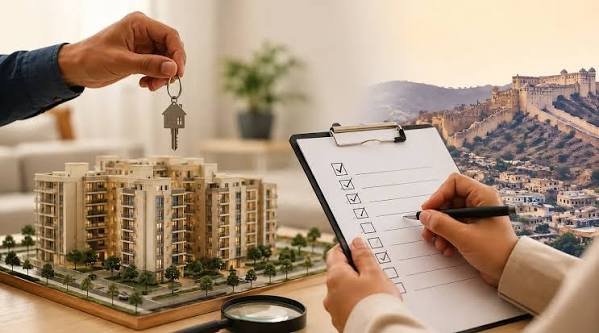
Start With the Builder’s Completed Projects, Not Its Advertisements
A developer’s completed buildings provide more useful evidence than promotional brochures.
Instead of relying exclusively on the company’s newest project, identify residential developments it delivered during previous years.
Look for patterns in completion timelines, construction quality, and resident satisfaction.
A developer that consistently completes projects close to its promised schedule may offer greater confidence than one with repeated unexplained delays.
However, a single delayed project does not necessarily establish that the entire company is unreliable.
Investigate the reasons behind delays, including regulatory approvals, litigation, financing difficulties, and construction-related problems.
What to examine in previous projects
- Original promised possession dates.
- Actual completion and handover dates.
- Availability of occupancy certificates.
- Condition of common areas and facilities.
- Quality of maintenance after possession.
- Complaints involving construction defects.
- Whether advertised amenities were delivered.
Visiting an occupied project can reveal details that are difficult to identify through online marketing material.
Speak to Residents Who Already Own Flats
Existing homeowners can provide practical information about a builder’s conduct after receiving payment.
Ask residents whether the developer addressed construction defects, completed promised facilities, and responded to maintenance complaints.
Questions about water supply, seepage, lift reliability, parking arrangements, and common-area management can be particularly revealing.
Try speaking with multiple residents rather than relying on one favourable or negative opinion.
Residents’ experiences may vary depending on the building, construction phase, and time of possession.
The objective is to identify recurring issues rather than collect isolated complaints.
Investigate the Builder’s RERA Record
The Real Estate (Regulation and Development) Act, 2016, provides an important framework for examining registered residential projects.
State Real Estate Regulatory Authority portals generally provide information about registered projects and their promoters.
Buyers should search for the specific project rather than assuming that a developer’s general reputation establishes regulatory compliance.
Depending on the authority and available disclosures, relevant information may include project registration particulars, declared completion dates, approvals, and construction updates.
Pay particular attention to differences between advertised promises and official project disclosures.
A RERA registration number is important, but registration alone does not guarantee timely completion or eliminate every financial risk.
Check Whether the Builder Faces Serious Legal Disputes
Litigation is not uncommon in the construction industry.
However, the nature and frequency of disputes can provide useful information about a developer’s business practices.
Buyers should investigate whether the builder has faced significant proceedings involving:
- Delayed possession.
- Misleading advertisements.
- Failure to deliver promised amenities.
- Land ownership disputes.
- Regulatory violations.
- Insolvency or financial distress.
- Non-compliance with regulatory orders.
Relevant information may be available through RERA authorities, consumer commission records, court records, and other official systems.
A pending complaint is not proof of wrongdoing. Buyers should distinguish allegations from final findings and examine the current status of proceedings.
Financial Stability Matters More Than Brand Popularity
A well-known developer may still experience financial difficulties.
Residential construction requires substantial capital for land acquisition, materials, labour, contractors, and regulatory obligations.
If a builder struggles to maintain financing, construction progress may suffer.
For listed developers, publicly available financial statements can help buyers examine debt levels, cash flows, and financial performance.
For private developers, obtaining equally detailed information may be more difficult.
Nevertheless, buyers can investigate the developer’s corporate identity, existing projects, financial disclosures where available, and reported financial difficulties.
A particularly important question is whether the project depends heavily on future bookings to fund ongoing construction.
Look Beyond the Builder’s Brand Name
Large real estate groups sometimes develop projects through separate companies or special-purpose entities.
Consequently, the brand advertised on a project may differ from the legal entity responsible for development.
This distinction matters because contractual obligations and regulatory responsibilities may rest with the specific promoter identified in official documents.
Before booking, confirm:
- The legal name of the project promoter.
- Its relationship with the advertised developer.
- The entity named in the agreement for sale.
- The project registration details.
- Whether any joint development arrangement exists.
Buyers should avoid assuming that every company using a familiar brand has identical financial resources or contractual responsibilities.
Examine Construction Progress Independently
A developer may describe construction as progressing rapidly, but buyers should assess whether the physical work supports that claim.
For an under-construction apartment, examine available progress reports and visit the project where permitted.
Compare construction progress with the declared completion schedule.
A project approaching its promised possession date while major structural or finishing work remains incomplete deserves closer examination.
Buyers can also consider an independent technical assessment when the financial commitment justifies the expense.
Treat Booking Pressure as a Warning Sign
Sales teams may emphasise limited availability, upcoming price increases, or special offers ending within hours.
Such marketing claims should not replace proper investigation.
Under Section 13 of RERA, a promoter cannot accept more than 10% of the apartment’s cost as an advance payment or application fee without first entering into a written agreement for sale and registering it as required.
Before paying a substantial amount, buyers should understand the booking terms, cancellation conditions, and refund provisions.
A trustworthy developer should be willing to provide relevant documentation and reasonable time for examination.
Frequently Asked Questions
Q1. How can I check whether a builder is registered under RERA?
A: Search the relevant State or Union Territory RERA portal using the project’s registration number, name, or promoter details. Confirm that the information matches the property being advertised.
Q2. Is buying from a famous builder always safer?
A: No. Brand recognition does not guarantee financial stability, timely possession, or construction quality. Buyers should investigate the specific project and legal promoter.
Q3. Can I find complaints filed against a builder in India?
A: Yes. Depending on availability, buyers can examine RERA proceedings, consumer commission records, court information, and relevant regulatory orders.
Q4. Should I visit a builder’s older projects before booking?
A: Yes. Completed projects can reveal maintenance standards, construction quality, possession history, and how the developer responds to residents after handover.
Q5. What is the biggest warning sign when researching a builder?
A: Repeated unexplained project delays, serious unresolved regulatory problems, and reluctance to provide essential documents deserve particular attention. Several warning signs appearing together warrant closer investigation before payment.