



Bharti Airtel — founded by Sunil Bharti Mittal in 1995 and headquartered in New Delhi — is India’s second-largest telecommunications company and one of Asia’s most significant telecom operators, serving over 550 million subscribers across India, Africa, and South Asia. From its origins as a single-city telephone service provider in Delhi, Airtel has grown into a multinational telecommunications powerhouse with operations across 18 African countries through Airtel Africa, a listed subsidiary on the London Stock Exchange. Airtel’s journey through India’s ferociously competitive telecommunications market — surviving the entry of Reliance Jio, the consolidation of multiple competitors, and multiple industry profitability crises — has produced a hardened, strategically focused company entering what may be its most financially rewarding period.
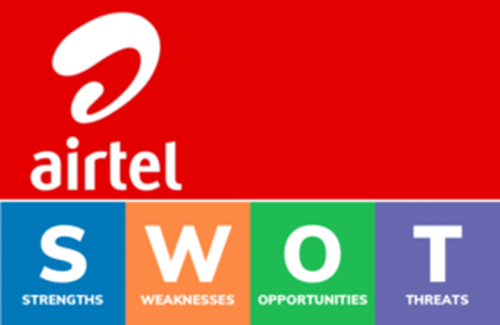
Strengths
Premium Brand Positioning and Customer Quality Airtel has deliberately positioned itself as India’s premium telecommunications brand — focusing on network quality, customer service, and higher-value subscribers rather than competing purely on price. This positioning creates a customer base with lower churn, higher average revenue per user (ARPU), and greater openness to premium add-on services. Airtel’s ARPU consistently exceeds the industry average — a structural advantage that generates superior revenue per unit of network infrastructure compared to mass-market competitors.
Network Quality and 5G Leadership Airtel’s network quality — consistently rated highest in independent speed and coverage assessments — is its most valued consumer-facing competitive advantage. The company’s early and aggressive 5G rollout across major Indian cities has reinforced its technology leadership positioning. For enterprise customers requiring guaranteed service quality, Airtel’s network reputation creates switching barriers that pure price competition cannot overcome.
Airtel Africa — Diversified Growth Platform Airtel Africa’s operations across 18 countries including Nigeria, Kenya, Uganda, Tanzania, and Madagascar provide Airtel with exposure to some of the world’s fastest-growing telecommunications markets. Africa’s young, urbanising, mobile-first population and its extremely low telecom penetration create a multi-decade growth runway. Airtel Africa’s mobile money platform — Airtel Money — is capturing the financial services opportunity created by Africa’s large unbanked population, adding a high-margin financial services layer to the telecommunications revenue base.
B2B Enterprise Services Airtel Business — the company’s enterprise telecommunications division — provides data connectivity, cloud services, cybersecurity, IoT, and managed services to Indian and multinational corporations. This B2B segment generates stable, long-term contract revenues with less price sensitivity than consumer segments and benefits from India’s growing digital infrastructure investment by businesses.
Improving Financial Health Airtel’s balance sheet and cash flow generation have improved dramatically since Jio’s disruptive 2016 entry compressed industry margins — a combination of ARPU recovery through price increases, operational efficiency improvements, and strategic capital allocation has restored Airtel to strong financial health with improving return on equity and debt reduction.
Weaknesses
Significant Debt Load Despite financial improvement, Airtel carries substantial debt from the capital-intensive 4G network build-out and spectrum purchases. Spectrum acquisition costs in India’s competitive spectrum auctions — combined with ongoing 5G network investment requirements — maintain leverage at levels that limit financial flexibility and create vulnerability if industry conditions deteriorate unexpectedly.
Subscriber Market Share Behind Jio Reliance Jio’s subscriber count significantly exceeds Airtel’s in India’s overall market — while Airtel’s premium positioning partly compensates through higher ARPU, the raw subscriber gap means Airtel’s network fixed costs are spread over a smaller base than Jio’s. This scale disadvantage in India’s domestic market limits Airtel’s ability to match Jio’s investment capacity across simultaneous technology upgrades, content investments, and new service launches.
Dependence on Indian Revenue Despite Airtel Africa’s growing contribution, the Indian telecommunications market remains Airtel’s primary revenue and profit driver. The India business’s health is directly tied to Indian regulatory decisions on spectrum pricing, interconnect charges, and tariff floor mechanisms — creating concentration risk that diversification into Africa partially but not fully mitigates.
Opportunities
5G Enterprise and IoT Revenue India’s 5G rollout creates revenue opportunities that have no equivalent in the 4G era — industrial IoT applications, private 5G networks for factories and campuses, vehicle connectivity, smart city infrastructure, and augmented reality applications each represent new B2B revenue streams for which Airtel’s enterprise relationships provide immediate commercial pathways.
Airtel Money and Digital Financial Services Airtel Payments Bank and its expanding digital financial services platform provide access to India’s massive financial inclusion opportunity — particularly in rural and semi-urban India where Airtel’s network coverage reaches populations with limited formal banking access. The convergence of telecom and financial services creates ARPU enhancement opportunities that pure telecommunications companies cannot access.
ARPU Growth Through Premium Services India’s telecommunications ARPU remains well below global averages — significant headroom exists for sustained ARPU growth as subscribers move from basic connectivity to data-rich applications, premium streaming, and enterprise services. Airtel’s premium positioning and brand strength place it advantageously for capturing disproportionate share of premium subscriber upgrade spending.
Threats
Reliance Jio’s Resource Advantage Jio’s backing by Reliance Industries — India’s most financially powerful corporation — provides it with virtually unlimited capital for competitive investments. Jio’s ability to cross-subsidise telecom from refining and retail cash flows, invest simultaneously in 5G, content, and digital services, and absorb periods of compressed telecom margins creates a structural competitive threat that no standalone telecom company can fully neutralise.
Regulatory and Spectrum Cost Risk India’s telecommunications regulatory environment — including spectrum auction pricing, AGR (Adjusted Gross Revenue) dues resolution, and interconnection regulations — creates ongoing financial uncertainty. Future spectrum auctions at elevated government reserve prices can force significant additional capital expenditure that pressures returns.
Technology Disruption Satellite internet services — including Elon Musk’s Starlink and Amazon’s Kuiper — could over time provide connectivity alternatives in rural and remote areas that reduce Airtel’s addressable market in geographies where its terrestrial network has pricing power.
Conclusion
Bharti Airtel’s SWOT analysis reveals a telecommunications champion that has survived and strengthened through one of the world’s most brutal competitive telecommunications battles. Its premium brand, network quality, Africa diversification, and enterprise strength create genuine competitive advantages. While the debt burden, Jio’s resource dominance, and regulatory uncertainty represent real risks, Airtel’s improving financial trajectory and the alignment of its strengths with India’s and Africa’s digital growth opportunities make it one of the emerging market’s most compelling telecommunications investments.