



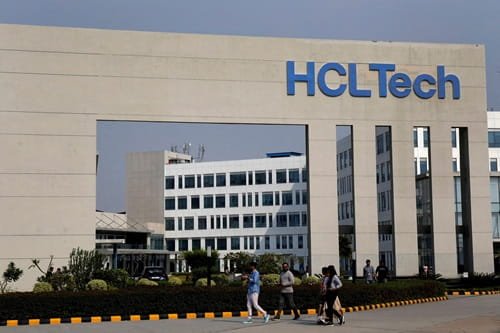
HCL Technologies Limited — founded in 1976 by Shiv Nadar as Hindustan Computers Limited, spun off from HCL Corporation as a separate IT services entity in 1991, and headquartered in Noida — is India’s third-largest information technology services company, generating annual revenues exceeding $13 billion and serving clients across 60 countries through a workforce of approximately 225,000 professionals. HCL Technologies has built its competitive differentiation on engineering services — particularly software product engineering, infrastructure management, and the distinctive Products and Platforms business that involves licensing and maintaining software products on behalf of global technology vendors — creating a service portfolio that is meaningfully differentiated from Infosys and Wipro’s more consulting-oriented positioning.
Strengths
Engineering Services Differentiation HCL Technologies’ heritage in hardware engineering — tracing to its parent HCL Corporation’s computer manufacturing origins — created genuine product engineering and software development capability that distinguishes it from pure services competitors. Its Engineering and R&D Services division serves aerospace, automotive, medical devices, semiconductor, and industrial manufacturing clients with embedded software development, product lifecycle management, and testing services that require domain depth beyond general IT consulting skills.
Products and Platforms Business HCL Technologies’ unique Products and Platforms segment — through which the company licenses, maintains, and develops software products originally acquired from IBM, Microsoft, and other technology vendors — creates recurring software revenue with predictable renewal streams and higher margins than traditional services. Products including IBM Notes, IBM Commerce, IBM Marketing, and the recently rebranded HCL Software portfolio generate substantial software licence and maintenance revenues that are fundamentally different from project-based IT services and create a more stable revenue floor.
Infrastructure Management Services HCL’s infrastructure management and cloud services division — managing data centres, networks, end-user devices, and cloud environments for global clients — is among India’s largest and most technically capable, with decades of operational experience managing complex enterprise IT environments. This infrastructure capability creates long-term managed services contracts with high switching costs that provide revenue predictability unavailable in project-based engagements.
Founder Leadership Continuity and Family Commitment HCL Technologies benefits from the Shiv Nadar family’s continued strategic involvement — Shiv Nadar’s daughter Roshni Nadar Malhotra chairs the company, and the family’s long-term ownership orientation provides strategic patience for investments in capability building and market development that professional management under quarterly earnings pressure might defer.
Weaknesses
Revenue Scale Gap Behind TCS and Infosys At approximately $13 billion in annual revenues, HCL Technologies is significantly smaller than TCS ($25+ billion) and Infosys ($18+ billion) — a scale gap that creates disadvantages in pursuing the very largest multi-hundred-million-dollar IT transformation contracts where clients prefer vendors with proven delivery across multiple concurrent mega-programmes.
Products Business Integration Complexity The acquired software products portfolio — while strategically differentiated — requires ongoing investment in product development, sales force specialisation, and customer support for legacy products whose user communities are declining as customers migrate to cloud-native alternatives. Managing declining legacy products while investing in next-generation versions creates complex resource allocation decisions.
Brand Premium Below TCS and Infosys HCL Technologies’ brand awareness among global enterprise technology decision-makers — while strong in specific domains — does not consistently command the same consideration in initial shortlisting that TCS and Infosys receive from their longer-established global client development programmes and broader consulting visibility.
Opportunities
Cloud and Hybrid Infrastructure Services The enterprise cloud migration and hybrid multi-cloud management opportunity — helping large corporations move from data centre infrastructure to AWS, Azure, and Google Cloud environments while maintaining hybrid connectivity — directly aligns with HCL’s infrastructure management heritage and creates significant revenue expansion from existing client relationships.
Artificial Intelligence in Engineering Services AI’s increasing role in product development — AI-assisted code generation, automated testing, predictive maintenance for industrial products, and software product feature acceleration — creates opportunities for HCL’s engineering services division to offer AI-augmented engineering that accelerates client product development cycles and creates higher-value engagements than traditional labour-based engineering services.
HCL Software Expansion HCL Software’s portfolio of enterprise tools — now rebranded and repositioned as modern cloud-delivered solutions — creates opportunities to expand the subscription software revenue base as existing on-premise licence customers migrate to cloud versions and new customers adopt the products through digital-first software sales channels.
Threats
Legacy Product Revenue Decline The acquired IBM software products’ user base is structurally declining as organisations migrate to modern cloud-native alternatives. If migration rates from HCL-managed legacy products to competing cloud solutions accelerate, the Products and Platforms revenue that currently enhances HCL’s margin profile could decline faster than growth in other segments compensates.
Competition for Engineering Talent Engineering services talent — embedded software engineers, mechanical engineering simulation specialists, and semiconductor design engineers — is globally competitive. GCC (Global Capability Centres) established by automotive, aerospace, and semiconductor companies in India increasingly compete for the same talent pool that HCL’s engineering services depend on, creating wage inflation and attrition risk.
Macro Sensitivity to Manufacturing and Telecom Spending HCL’s client mix is weighted toward manufacturing and telecommunications clients — both sectors that are particularly sensitive to economic cycles. Manufacturing capex and telecom network investment cuts during economic slowdowns directly impact HCL’s engineering services and infrastructure management revenues in these sectors.
Conclusion
HCL Technologies’ SWOT profile describes India’s most distinctively differentiated large IT services company — one whose Products and Platforms business and engineering services heritage create competitive positioning that genuinely differs from the consulting-oriented TCS and Infosys model. The AI and cloud opportunities are real and immediate. The legacy product management challenge is the most important strategic risk to monitor. For investors seeking IT sector exposure with unique portfolio differentiation and a founder-ownership quality discipline, HCL Technologies represents the most interesting large-cap Indian IT investment thesis.