



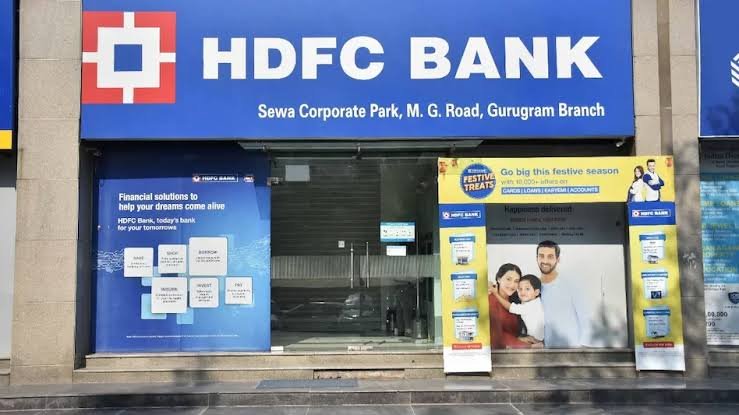
HDFC Bank — incorporated in 1994 as one of India’s first private sector banks following the Reserve Bank of India’s liberalisation of the banking sector — has grown from a relatively modest beginning into the country’s largest private sector bank by assets, market capitalisation, and profitability. Headquartered in Mumbai and serving over 85 million customers through a network exceeding 8,700 branches across India, HDFC Bank represents the gold standard of Indian private sector banking — a business that has delivered consistent growth, exceptional asset quality, and superior returns to shareholders across three decades of operation. Its 2023 merger with parent company HDFC Limited created India’s largest financial institution by combined balance sheet, reshaping the competitive landscape of Indian finance.
Strengths
Exceptional Asset Quality and Credit Risk Management HDFC Bank’s most enduring competitive advantage is its consistently superior asset quality — maintaining Gross Non-Performing Asset ratios significantly below industry averages across multiple economic cycles including the 2016 demonetisation shock, the 2018 NBFC liquidity crisis, and the 2020 COVID-19 pandemic. This credit discipline reflects deeply institutionalised underwriting standards, robust risk management frameworks, and a conservative lending culture that prioritises asset quality over short-term loan growth. The ability to grow the loan book rapidly while maintaining low NPAs is genuinely rare in Indian banking and reflects HDFC Bank’s operational excellence.
Diversified Revenue Streams HDFC Bank generates revenues across retail banking, wholesale banking, treasury, and financial services — each contributing meaningfully to total income. Fee income from transaction banking, credit cards, wealth management, and third-party product distribution provides recurring non-interest income that reduces dependence on the interest rate cycle. The bank’s credit card business — with one of India’s largest cardholder bases — and its cash management services for corporate clients create multiple revenue engines that insulate the bank from sector-specific slowdowns.
Technology and Digital Banking Leadership HDFC Bank has consistently invested in technology infrastructure — its mobile banking app, net banking platform, and API-based corporate banking services are consistently rated among India’s most sophisticated digital banking offerings. The bank’s early investment in digital channels significantly reduced its cost-to-serve while expanding its geographic reach beyond physical branch coverage.
Strong Brand and Customer Trust Three decades of consistent financial performance, minimal scandals, and high service quality have built an exceptional brand reputation among Indian retail and corporate banking customers. HDFC Bank’s brand trust translates into low-cost CASA (Current Account Savings Account) deposit mobilisation — retail customers park their primary banking relationships with HDFC Bank — which provides the bank with a structurally lower cost of funds than competitors who rely more on term deposits and bulk funding.
Weaknesses
HDFC Limited Merger Integration Complexity The 2023 merger of HDFC Limited — India’s largest housing finance company — into HDFC Bank created India’s largest financial institution but simultaneously introduced significant integration complexity. Absorbing a large, differently structured financial entity with different IT systems, customer profiles, and credit processes into a bank’s framework is a multi-year challenge. The merger also increased HDFC Bank’s Priority Sector Lending obligations and CRR/SLR requirements — creating short-term margin pressure as the combined balance sheet is reoptimised.
Rural and Semi-Urban Penetration Gap Despite its enormous network, HDFC Bank’s customer base and profitability remain disproportionately concentrated in urban and metropolitan India. In rural and semi-urban markets — where a large proportion of India’s population and future banking growth resides — public sector banks and small finance banks have stronger established relationships. HDFC Bank’s premium positioning and digital focus create structural friction in reaching lower-income rural customers who represent the next frontier of Indian banking.
Regulatory Scrutiny and Compliance Incidents HDFC Bank received a regulatory embargo from RBI in 2020 prohibiting new credit card issuance and digital banking launches following repeated technology outages — a significant reputational and business disruption. While the embargo was subsequently lifted, the incident highlighted vulnerabilities in the bank’s technology infrastructure robustness and its relationship with the regulator.
Opportunities
India’s Credit Penetration Growth Story India’s credit-to-GDP ratio remains significantly below that of comparable emerging and developed economies — a gap that represents decades of secular banking industry growth ahead. HDFC Bank’s brand strength, distribution network, and credit risk capabilities position it ideally to capture a disproportionate share of home loans, personal loans, business banking, and agricultural credit as India’s economy grows and formalises.
Wealth Management and Insurance Distribution India’s growing affluent and high-net-worth individual population represents an enormous opportunity for HDFC Bank’s wealth management, private banking, and insurance distribution businesses. The bank’s existing relationships with India’s most financially active customer segments create natural cross-selling pathways into higher-margin financial products.
MSME Banking Expansion India’s micro, small, and medium enterprise sector — employing hundreds of millions of people but historically underserved by formal banking — represents a massive credit opportunity. HDFC Bank’s growing MSME banking initiative, leveraging GST data and banking transaction history for credit assessment, can unlock significant new lending volumes with manageable risk.
Threats
Rising Competition From Fintech and Digital Banks Neo-banks, fintech lending platforms, and technology giants entering financial services are collectively disrupting the traditional banking value proposition — particularly in payments, personal loans, and savings products where HDFC Bank has historically generated significant fee income. UPI’s dominance in payments has reduced revenue from traditional transaction banking products.
Interest Rate Cycle Pressure HDFC Bank’s net interest margins are sensitive to changes in the interest rate cycle — periods of falling interest rates compress margins on its large floating rate loan book while deposit repricing lags, creating temporary NIM compression that affects profitability.
Talent and Leadership Succession The departure of long-serving MD Aditya Puri in 2020 and subsequent leadership transition under Sashidhar Jagdishan represents an ongoing test of HDFC Bank’s institutional depth versus founder dependence — a question that will be answered fully only across multiple business cycles under the new leadership team.
Conclusion
HDFC Bank’s SWOT profile describes India’s most professionally managed bank — a financial institution whose consistent excellence across credit quality, profitability, technology, and customer service has made it the benchmark against which all Indian banks measure themselves. Its strengths are deep and institutionalised. Its weaknesses are manageable with strategic focus. Its opportunities are vast and aligned with India’s long-term economic trajectory. Its threats are real but navigable for an organisation of its demonstrated capability and financial strength.