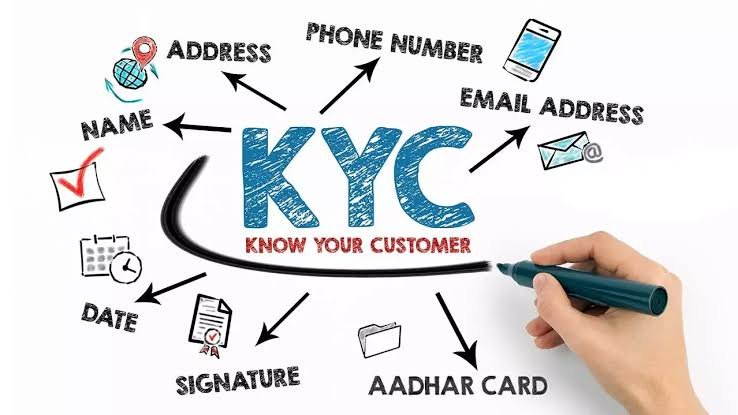




Opening a demat account in 2026 is largely a phone-based, paperless process, but the speed of that process depends entirely on having the right documents and details ready before you start. Most delays happen not because the broker’s system is slow, but because an applicant uploads a blurry PAN photo or forgets to link the correct bank account upfront. This guide walks through exactly what information and documents you need, so the account opening itself takes minutes rather than days.
| Requirement | Why It’s Needed | Format Accepted |
| PAN Card | Mandatory identity and tax link for all securities transactions | Digital upload or e-KYC verification |
| Aadhaar Card | Identity and address proof, enables e-KYC | Aadhaar number with OTP verification |
| Bank Account Details | Links funds for buying/selling and dividend credit | Cancelled cheque or recent bank statement |
| Signature | Required for account opening forms and DIS | Scanned or digital signature |
| Photograph | Identity confirmation | Passport-size photo, often captured via selfie |
| Income Proof | Needed for F&O/commodity segment activation | Salary slip, ITR, or bank statement |
| Nominee Details | Mandatory for all demat accounts | Name, relationship, ID proof of nominee |
The Core Identity Documents You’ll Need
Every broker, regardless of which one you choose, asks for the same foundational set of identity documents before anything else.
- PAN (Permanent Account Number) is the single most essential document, since it’s mandatory for every securities transaction in India and links your trading activity to your tax records.
- Aadhaar serves two purposes at once — it acts as address proof and, when linked to your registered mobile number, enables the OTP-based e-KYC process that has made account opening largely instant.
- A recent passport-size photograph is typically captured directly through the broker’s app via a live selfie, replacing the need to physically scan and upload one separately.
- Your signature, either scanned from paper or created digitally within the app, is needed for the account opening agreement and later for any physical Delivery Instruction Slip you might use.
Bank Account Information You’ll Be Asked For
Since every trade eventually involves money moving in or out, your bank details form a core part of the application.
- A linked savings bank account is required to fund your trading account and to receive proceeds whenever you sell securities or receive dividends.
- A cancelled cheque or a recent bank statement is the standard way to verify this account, confirming your name, account number and IFSC code match what you’ve entered.
- Some brokers also support instant bank verification through net banking or UPI, which skips the manual document upload step entirely and speeds up approval.
- It’s worth using a bank account you’ll keep active for the long term, since changing your linked account later, while possible, adds an extra verification step down the line.
Income Proof: When and Why It’s Required
Basic equity delivery trading doesn’t usually need income proof, but certain segments do, and it helps to have this ready in advance if you plan to use them.
- Futures and options (F&O) trading and commodity derivatives trading both require proof of income as part of SEBI’s suitability framework for these higher-risk segments.
- Acceptable documents typically include a recent salary slip, your latest Income Tax Return (ITR) acknowledgement, or a bank statement showing consistent account activity.
- If you don’t have a formal income document yet, many brokers also accept a declaration based on your existing demat holdings statement as an alternative proof of financial standing.
- If you’re opening an account purely for equity delivery or long-term investing, you can generally skip this step at the outset and submit it later if you decide to activate F&O or commodities.
Nomination: A Mandatory Step You Shouldn’t Skip
Nomination has become a compulsory part of demat account opening, and having the details ready in advance avoids having to pause the process midway.
- You’ll need your nominee’s full name, relationship to you, and a valid ID proof, most commonly their PAN or Aadhaar number.
- Multiple nominees are allowed on most platforms, along with the ability to specify what percentage of your holdings each nominee should receive.
- If you’d prefer not to name a nominee for any reason, brokers now require you to actively opt out in writing, rather than simply leaving the field blank.
- Keeping this information decided before you begin the application saves a step, since many platforms won’t let you complete account activation without either a nominee or a formal opt-out.
Additional Details Specific to Certain Investor Categories
A few categories of investors need to provide extra information beyond the standard checklist above.
- Minors can have a demat account opened in their name, but it must be operated by a guardian, who provides their own KYC documents alongside the minor’s birth certificate.
- NRIs need to provide additional documents, including proof of overseas address and their NRE or NRO bank account details, and not every broker supports this category, so it’s worth confirming this specifically before applying.
- Joint account holders, where supported, need KYC documents from all holders, not just the primary applicant.
- Non-individual entities, such as a Hindu Undivided Family (HUF) or a company, require separate documentation like a HUF deed or company incorporation certificate, making this a distinctly different process from individual account opening.
How the Digital Process Typically Flows
Understanding the sequence helps you know what to expect and when each document actually gets used.
- You begin by entering your PAN and mobile number, which the system cross-verifies against existing records.
- Aadhaar-based e-KYC follows, using an OTP sent to your Aadhaar-linked mobile number to confirm your identity and pull your basic details automatically.
- You then upload or link your bank account, typically through a cancelled cheque image or instant bank verification.
- A short video verification (In-Person Verification or IPV) is completed within the app, where you confirm your identity on camera, often while holding your PAN card.
- Finally, you review and digitally sign the account opening agreement, after which most brokers activate the account within a few hours to two working days.
Common Reasons Applications Get Delayed
Knowing where applicants typically slow down the process helps you avoid the same friction.
- Blurry or poorly lit document photos, particularly of PAN and the cancelled cheque, are among the most frequent causes of manual review delays.
- Mismatched names between your PAN, Aadhaar and bank account — even small variations like a missing middle name — can trigger additional verification steps.
- An Aadhaar number not linked to an active mobile number stops the OTP-based e-KYC step entirely, since there’s nowhere for the verification code to go.
- Incomplete nominee details, left for “later,” sometimes holds up final activation depending on the broker’s specific workflow.
Getting Ready Before You Apply
A small amount of preparation makes the entire process considerably smoother.
- Keep digital copies of your PAN, Aadhaar and a cancelled cheque saved and easily accessible on your phone or computer before you start the application.
- Confirm your Aadhaar is linked to your current active mobile number, since this is essential for completing e-KYC without delay.
- Decide on your nominee details in advance, including their ID proof, so you’re not pausing mid-application to track this down.
- Gather income proof ahead of time if you already know you’ll want F&O or commodity trading access, saving yourself a follow-up step later.
- Double-check that your name appears identically across PAN, Aadhaar and your bank account, since this single detail prevents a disproportionate share of verification delays.
Frequently Asked Questions
Q1. Do I need a PAN card if I already have Aadhaar for identity verification?
Yes, PAN is mandatory for every securities transaction in India regardless of what other identity documents you provide, since it’s specifically what links your trading activity to your tax records, while Aadhaar primarily serves identity and address verification.
Q2. Can I open a demat account without income proof if I only plan to invest in stocks for the long term?
Yes, income proof is generally required only for activating F&O or commodity derivatives segments, so if you’re opening an account purely for equity delivery or mutual fund investing, you can typically complete the process without it and add it later if your needs change.
Q3. What happens if my name is spelled slightly differently on my PAN compared to my bank account?
Even a small mismatch, like a missing middle name or a different spelling, can trigger additional manual verification, so it’s worth checking that your name appears consistently across all your documents before applying, and correcting any discrepancy with the relevant issuing authority if needed.
Q4. Is it possible to add or change my nominee after the demat account is already active?
Yes, nominee details can be updated after account opening through your broker’s platform, so an initial choice isn’t permanent, though completing it accurately at the time of opening avoids an extra step later.