




A demat account application being rejected rarely has anything to do with your eligibility to invest — in the vast majority of cases, it comes down to a specific, identifiable detail that didn’t quite match official records. Understanding exactly why rejections happen makes it far easier to either avoid them altogether or, if one does occur, fix the issue quickly and get your application approved on a fresh attempt. Here’s a clear look at the most common reasons behind a rejected application and how each one is typically resolved.
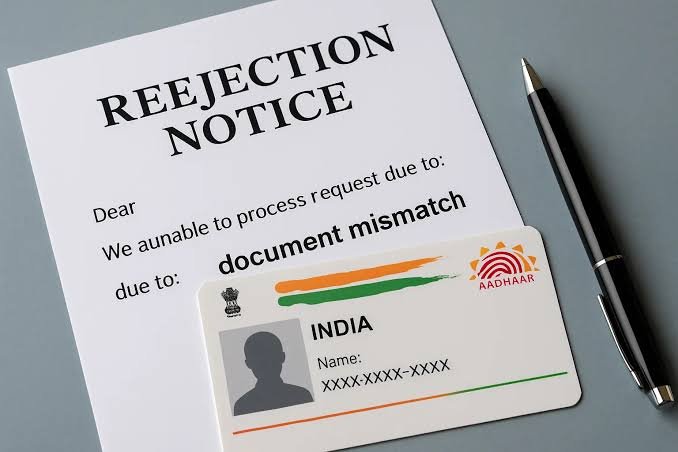
Mismatched Personal Details Across Documents
The most frequent reason an application doesn’t go through cleanly is a simple inconsistency between the documents you’ve submitted.
- A different spelling of your name, a missing middle name, or initials used inconsistently across your PAN, Aadhaar and bank account can prevent the system from confirming a clean match.
- Date of birth discrepancies, even a small typo in one document, can similarly stop an application from clearing automated verification.
- This typically happens because your PAN, Aadhaar and bank account were created at different times, often using slightly different name formats that were never fully aligned.
- The fix is to update the inconsistent document with its issuing authority, bringing all your records into alignment before reapplying, which resolves the root cause rather than just this one application.
Invalid or Inactive PAN
Since PAN anchors your entire financial identity for this process, any issue with it directly affects your ability to move forward.
- A PAN that’s marked inactive, under correction, or flagged by the Income Tax Department for any reason won’t clear the initial verification check.
- Entering your PAN number incorrectly, even a single digit off, also produces this same result, since the system checks it precisely against official records.
- Resolving this involves confirming your PAN’s current status directly through the Income Tax Department’s portal, and correcting any issue there before attempting the broker application again.
- Once your PAN is confirmed active and accurate, reapplying typically proceeds smoothly, since this step is usually the very first checkpoint in the process.
Aadhaar Not Linked to an Active Mobile Number
This is one of the more common technical reasons an application stalls, since the e-KYC process depends entirely on receiving a real-time OTP.
- If your Aadhaar-linked mobile number has changed or was never properly registered, the OTP has nowhere to be delivered, which prevents this verification step from completing.
- This can’t be fixed within the broker’s own application, since it requires an update directly with UIDAI, either online where eligible or at an Aadhaar enrollment center.
- Once your number is correctly linked, you can simply retry the e-KYC step, and in most cases, there’s no need to restart your entire application from the beginning.
- Checking this detail before starting an application is one of the easiest ways to avoid running into it partway through.
Poor-Quality Document Uploads
Sometimes the issue isn’t with the document itself, but simply how clearly it was captured during the upload process.
- Blurry photos, poor lighting, or a document photographed at an angle can make key details illegible to the automated verification system.
- This typically results in the specific document being rejected for that step, asking you to re-upload a clearer version, rather than the entire application being declined outright.
- Taking the photo in good natural light, holding the camera steady, and capturing the full document within frame resolves this in almost every case on the next attempt.
- If your broker supports scanning rather than photographing, using that option often produces a cleaner, more reliably readable result.
Duplicate or Conflicting Account Records
Occasionally, an application is affected by something tied to existing records rather than the current submission itself.
- If your PAN is already linked to an active demat account elsewhere with an unusual pattern of activity, this can trigger additional scrutiny as a routine anti-fraud measure.
- A bank account or mobile number already associated with multiple other demat accounts can similarly prompt a closer manual review before approval.
- In genuine cases, this is usually resolved through direct clarification with the broker’s compliance team, who can confirm the details and proceed once everything checks out.
- This kind of check exists specifically to protect account holders from identity misuse, rather than being a sign that something has gone wrong with your own application.
Incomplete Nominee Declaration
Since nomination is now a mandatory part of demat account opening, leaving this step incomplete can prevent final approval.
- Applications that don’t include either a nominee selection or a formal opt-out declaration typically can’t move to final approval, since this is treated as a required field rather than an optional one.
- The fix is simply to complete this step with your chosen nominee’s details, or actively confirm your choice to opt out, before resubmitting.
- Having your nominee’s name, relationship and ID proof ready in advance prevents this from being a last-minute hold-up during your original application.
Income Proof Issues for Segment-Specific Access
If you’re applying for access to F&O or commodity trading alongside your core account, a separate set of requirements comes into play.
- Missing, outdated, or unclear income proof documents can prevent these specific segments from being activated, even if your core demat account itself is approved without issue.
- This is generally limited to the specific segment you’re requesting, rather than affecting your basic equity delivery account.
- Submitting a clear, current salary slip, ITR acknowledgement, or bank statement resolves this cleanly, and you can always add these segments later if you’d rather start with basic trading access first.
What to Do If Your Application Is Rejected
A rejection is almost always a fixable, specific issue rather than a permanent barrier, and knowing the right next steps gets you back on track quickly.
- Check the specific reason provided, since most brokers communicate this clearly through the app, email or SMS, rather than leaving you to guess.
- Correct the identified issue at its source — whether that’s updating a document with its issuing authority, retaking a photo, or completing a missed step like nomination.
- Reach out to your broker’s support team if the reason isn’t clear, quoting your application reference number for the fastest, most specific response.
- Reapply once the underlying issue is resolved, since a previous rejection doesn’t create any lasting barrier to opening an account once the specific detail has been addressed.
Preventing Rejection From the Start
A small amount of preparation before you even begin meaningfully reduces the chance of running into any of these issues.
- Confirm your name and date of birth match exactly across your PAN, Aadhaar and bank account before applying.
- Verify your PAN is active and your Aadhaar is linked to a mobile number you currently use.
- Use clear, well-lit photos for every document you upload.
- Decide your nominee details in advance, so this step doesn’t get left incomplete.
- Gather income proof ahead of time if you already know you’ll want F&O or commodity access from the start.
Frequently Asked Questions
Q1. If my application is rejected once, can I apply again immediately?
Yes, there’s no waiting period or lasting restriction simply because of a rejected application — once you’ve corrected the specific issue that caused it, you can reapply right away, and a clean, well-prepared application typically clears without any further issue.
Q2. Will a previous rejection affect my ability to open an account with a different broker?
No, a rejection with one broker doesn’t create any record that affects your application with another, since each broker processes your submitted KYC details independently, so you’re free to try a different platform if you prefer.
Q3. How do I find out exactly why my application was rejected if the notification isn’t clear?
Contacting your broker’s support team directly, with your application reference number on hand, is the most reliable way to get a specific explanation, since they can see exactly which verification step didn’t clear and why.
Q4. Does a rejected application mean something is wrong with my PAN or Aadhaar permanently?
Not necessarily — in most cases, the issue is something fixable like a name mismatch or an outdated mobile number linked to Aadhaar, and correcting that specific detail with the relevant authority resolves the problem for this and any future applications.