




India’s electric vehicle revolution is accelerating at a pace that few predicted even three years ago — two-wheeler and three-wheeler EV adoption has crossed meaningful market penetration thresholds, electric passenger cars are gaining share in urban markets, and government policy through FAME subsidies, PLI schemes, and state-level EV promotion programmes has created an ecosystem where EV adoption momentum is self-reinforcing rather than purely subsidy-dependent. The fundamental infrastructure requirement enabling this EV transition is charging — and the charging station business has emerged as one of India’s most discussed entrepreneurial opportunities, attracting interest from petroleum retailers, real estate operators, technology entrepreneurs, and infrastructure investors simultaneously. Whether an EV charging station business is profitable in India in 2026 requires honest evaluation of current utilisation realities, revenue economics, capital requirements, and the competitive dynamics of a market that is simultaneously nascent and intensely contested.
The EV Charging Market Landscape in India
India’s public EV charging infrastructure remains substantially underdeveloped relative to the EV fleet growth — creating genuine long-term opportunity while presenting short-term utilisation challenges for early investors. The government’s target of achieving significant EV penetration across vehicle categories requires charging infrastructure expansion across urban corridors, highways, commercial complexes, residential societies, and workplace locations. FAME II and subsequent policy frameworks have provided capital subsidies for charging equipment and installation, reducing effective investment costs for early movers while simultaneously attracting large numbers of entrants who are competing for the same EV driver attention in markets where the EV population is still building toward utilisation thresholds that support profitability.
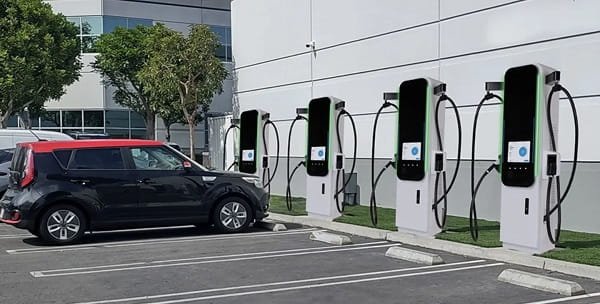
The charging ecosystem in India spans multiple formats — slow AC charging at 3.3-7.4 kW for overnight residential and workplace charging, fast DC charging at 15-60 kW for commercial public charging, and ultra-fast DC charging at 60-240 kW for highway and premium urban locations where minimising charging time is the primary value proposition.
EV Charging Station Key Financial Parameters
| Parameter | Slow AC Charger | Fast DC Charger (30 kW) | Ultra-Fast DC (60–120 kW) | Charging Hub (Multiple Units) |
| Equipment cost per unit | ₹30,000–80,000 | ₹2 lakh–6 lakh | ₹8 lakh–25 lakh | ₹15 lakh–1 crore+ |
| Installation cost | ₹20,000–50,000 | ₹50,000–2 lakh | ₹1 lakh–5 lakh | ₹3 lakh–15 lakh |
| Total capital per unit | ₹50,000–1.3 lakh | ₹2.5 lakh–8 lakh | ₹9 lakh–30 lakh | ₹18 lakh–1.15 crore |
| Electricity cost per unit | ₹6–10 per kWh | ₹6–10 per kWh | ₹6–10 per kWh | ₹5–9 per kWh |
| Charging price to customer | ₹12–18 per kWh | ₹15–22 per kWh | ₹18–28 per kWh | ₹15–25 per kWh |
| Daily utilisation — current market | 3–6 hours | 4–8 hours | 5–10 hours | 40–70% capacity |
| Monthly revenue — good location | ₹8,000–25,000 | ₹30,000–1.2 lakh | ₹1 lakh–4 lakh | ₹2 lakh–12 lakh |
| Gross margin on electricity | 40–55% | 42–58% | 45–60% | 42–58% |
| Net profit margin — established | 15–28% | 18–32% | 20–35% | 22–38% |
| Break-even period | 3–6 years | 3–6 years | 4–8 years | 4–8 years |
| DISCOM approval requirement | Yes | Yes | Yes | Yes |
| BEE empanelment for equipment | Required for FAME subsidy | Required | Required | Required |
Profitability Drivers and Strategic Advantages
Location as the Defining Variable: EV charging profitability is overwhelmingly determined by location — specifically the density of EV vehicles in the service catchment area, the daily traffic of potential charging customers, and the availability of dwell time that allows customers to charge while performing other activities. Locations near shopping malls, office complexes, highway dhabas, fleet operator depots, and residential societies with high EV ownership generate utilisation rates that support profitability. Installing charging infrastructure in locations with low current EV density but strong projected growth — corridors near new residential developments, industrial parks with EV fleet procurement plans — requires patient capital awaiting utilisation growth rather than immediate return generation.
Fleet Operator Contracts: Commercial fleet operators — electric auto-rickshaw operators, electric cab fleets, delivery vehicle operators, and e-bus operators — represent the highest-volume, most predictable charging demand available. A single electric auto-rickshaw fleet of 50 vehicles requiring daily charging generates consistent revenue that individual consumer public chargers cannot match for utilisation predictability. Building direct supply agreements with fleet operators — providing dedicated charging time slots, priority access, and fleet-rate pricing — creates contracted revenue that de-risks the utilisation uncertainty plaguing standalone public chargers.
Revenue Diversification Beyond Charging: Forward-thinking charging station operators are developing revenue streams beyond electricity sales — advertising revenue from digital screens at charging stations, parking fee collection during charging sessions, convenience retail sales to waiting EV drivers, and data monetisation from charging pattern analytics. These ancillary revenues improve overall station economics without additional charging infrastructure investment, potentially contributing 20-40% of total station revenue for well-positioned locations with significant footfall.
Government Subsidy and Incentive Capture: FAME II subsidies on charging equipment, state government capital subsidies, renewable energy banking benefits for solar-powered charging stations, and preferential electricity tariff rates for EV charging in several states collectively improve investment economics significantly for operators who navigate the subsidy landscape effectively. Solar-integrated charging stations that generate their own electricity at ₹2-3 per kWh through rooftop solar and sell to EV customers at ₹15-22 per kWh achieve gross margins of 80-85% on solar-generated units — dramatically superior to grid-power-dependent station economics.
Challenges Requiring Honest Assessment
Current utilisation rates are the most significant challenge facing India’s EV charging businesses in 2026 — with the EV fleet still building, many standalone public chargers achieve utilisation rates of 15-30% rather than the 50-70% rates required for strong profitability. Investors who modelled returns on optimistic utilisation assumptions without accounting for the 3-5 year fleet growth period required to reach economic utilisation thresholds have experienced disappointing early returns.
Electricity infrastructure adequacy — transformer capacity, cable sizing, and DISCOM connection reliability — varies significantly across locations and can require expensive upgrades that add substantially to effective investment costs. Grid power reliability for DC fast chargers that require consistent three-phase power supply remains a challenge in some locations.
EV Charging vs Alternative Clean Energy Business Opportunities
| Parameter | EV Charging Station | Solar Rooftop | EV Battery Swapping | EV Sales Dealership |
| Capital per unit | ₹50,000–30 lakh | ₹3 lakh–1 crore | ₹10 lakh–50 lakh | ₹25 lakh–2 crore |
| Revenue model | Per kWh charging | Feed-in tariff + self-consumption | Per swap fee | Vehicle margin + service |
| Government subsidy | FAME II — strong | PM KUSUM — strong | Limited | State EV incentives |
| Utilisation dependency | High — EV fleet density | Low — weather linked | High — fleet partnerships | Moderate |
| Net profit margin | 15–38% | 15–25% ROI | 18–35% | 8–18% |
| Break-even period | 3–8 years | 5–8 years | 3–6 years | 2–4 years |
EV charging station business is profitable in India for investors who select high-density EV corridor locations, develop fleet operator contracts for utilisation certainty, integrate solar generation for electricity cost reduction, and approach the business with 5-8 year capital patience aligned with the fleet growth trajectory that drives utilisation to profitability thresholds.