


Property prices in India are rising, but the pace of buying is no longer keeping up with every new project entering the market. This difference is becoming one of the most important developments in the residential property sector during 2026.
In some cities, premium apartments continue attracting buyers despite higher prices. Elsewhere, developers are facing slower sales, growing inventories, and increasing pressure to offer attractive payment arrangements.
For homebuyers and investors, the important question is not simply whether property prices are increasing. It is whether current prices are supported by sustainable demand.
The latest real estate market trends suggest that Indian residential prices remain firm, although increasing supply and affordability pressures could moderate future growth in selected locations.
Understanding the signals behind these trends can help buyers distinguish genuinely strong property markets from areas where asking prices may be running ahead of demand.
Property Prices Are Still Rising Despite Slower Sales
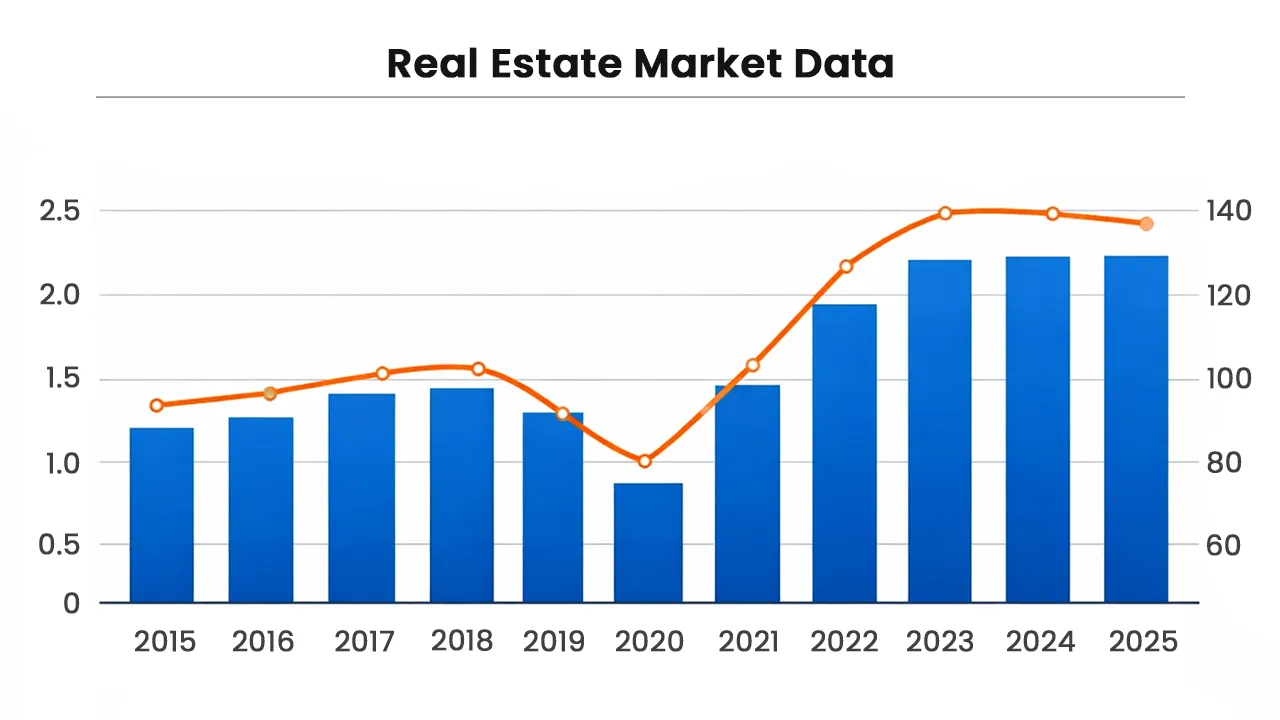
India’s residential property market recorded continued price appreciation during the third quarter of 2026.
According to ANAROCK’s residential market assessment, average housing prices across seven major cities increased approximately 7% year-on-year, reaching around ₹9,714 per square foot.
Delhi-NCR recorded particularly strong annual price growth of approximately 12%.
However, rising prices did not translate into equally strong sales growth.
Housing sales across the seven cities increased only 3% year-on-year during July–September 2026.
This difference suggests that developers are maintaining relatively firm prices even as buyers become more selective.
It also indicates that price appreciation alone is not sufficient evidence of a rapidly expanding property market.
The Supply-Demand Gap Is Becoming More Important
Developers launched approximately 1.14 lakh residential units across seven major cities during the third quarter of 2026.
This represented an annual increase of approximately 18%.
Meanwhile, sales reached around 1 lakh units.
When new supply grows faster than sales, the number of available homes can increase.
Indeed, unsold residential inventory rose approximately 12% annually to around 6.31 lakh units by September 2026.
This trend matters because sustained inventory accumulation can eventually affect pricing decisions.
Developers may initially respond through flexible payment plans, waived charges, or limited incentives rather than reducing advertised prices.
If inventory continues increasing, pricing competition could become more noticeable in oversupplied locations.
Premium Housing Is Influencing Average Property Prices
One important reason average housing prices are rising is the changing composition of new residential supply.
Developers have increasingly concentrated on higher-priced apartments.
During the third quarter of 2026, homes priced between ₹80 lakh and ₹1.5 crore represented approximately 34% of new launches across the seven major markets examined by ANAROCK.
Another 24% belonged to the ₹1.5 crore–₹2.5 crore category.
This shift can influence reported average prices even without equivalent appreciation across every existing property.
For example, launching more expensive apartments can raise a city’s average selling price while prices of comparable older apartments remain relatively stable.
Therefore, buyers should distinguish between:
- Average prices across an entire city.
- Prices of comparable properties in the same locality.
- New-launch prices and resale prices.
- Advertised rates and completed transaction values.
- Premium housing prices and affordable housing prices.
These comparisons provide a more meaningful picture of actual market movement.
Bengaluru and Hyderabad Show Different Growth Patterns
India’s property market cannot be understood through one national price trend.
Bengaluru recorded strong residential demand during the third quarter of 2026, with annual housing sales increasing approximately 12% in ANAROCK’s assessment.
Employment opportunities and demand for residential properties in established business corridors remain important influences.
Hyderabad recorded an even stronger annual increase in sales of approximately 15%.
However, Hyderabad also experienced a substantial increase in new residential launches.
When construction expands rapidly, future price performance depends on whether buyers can absorb the additional supply.
A city can therefore demonstrate strong current demand while simultaneously developing conditions that may limit future appreciation.
Why Higher Prices Are Creating Affordability Pressure
Property prices cannot increase indefinitely without regard to household income.
When housing becomes more expensive, buyers may need larger down payments and higher loan amounts.
This can reduce purchasing capacity, particularly among first-time homebuyers.
Affordability depends on several interconnected factors:
- Household income growth.
- Home loan interest rates.
- Existing financial obligations.
- Property registration expenses.
- Availability of appropriately priced homes.
- Employment stability.
- Monthly maintenance costs.
The affordable housing segment has already experienced weaker demand in several major markets.
If property prices continue increasing faster than household purchasing power, sales growth may remain constrained.
What Rising Inventory Means for Negotiations
Increasing unsold housing stock can improve buyers’ ability to compare available properties.
However, it does not automatically guarantee a market-wide price correction.
Developers with strong finances may prefer holding inventory rather than reducing prices.
Others may offer incentives to accelerate bookings.
Buyers should compare the effective transaction cost after considering discounts, payment schedules, parking charges, and other applicable expenses.
A promotional offer is valuable only when the underlying property is appropriately priced and legally compliant.
What Buyers Should Monitor Over the Coming Months
Rather than attempting to predict a nationwide property crash, buyers can focus on measurable local indicators.
Particularly useful signals include:
- Changes in actual registered transaction prices.
- Growth or reduction in unsold inventory.
- Number of competing projects in the locality.
- Rental demand and vacancy levels.
- New project launch activity.
- Changes in developer incentives.
- Home loan affordability.
For investors, rental income and potential resale demand should be evaluated alongside expected capital appreciation.
For end-users, affordability, construction quality, location, and long-term housing needs may matter more than short-term price predictions.
Frequently Asked Questions
Q1. Are property prices increasing across India in 2026?
A: Residential prices have generally increased across major tracked cities, although growth differs significantly between locations and property categories. National averages should not be treated as representative of every locality.
Q2. Will increasing unsold inventory reduce property prices?
A: Rising inventory can create downward pricing pressure when supply consistently exceeds demand. However, developers may initially offer incentives rather than reduce advertised prices.
Q3. Why are luxury property prices rising faster in some locations?
A: Premium housing prices can be influenced by affluent buyer demand, limited availability of desirable locations, construction costs, and the growing share of expensive projects in new supply.
Q4. Is 2026 a good time to purchase residential property in India?
A: The decision depends on affordability, property quality, financing conditions, and local market demand. Buyers should compare actual transaction values rather than relying exclusively on broad market forecasts.
Q5. Which indicators best predict future real estate price movements?
A: Transaction volumes, inventory absorption, household affordability, employment growth, infrastructure development, and changes in local housing supply provide useful insights. No single indicator can reliably predict future property prices.