



A buyer agrees to purchase a residential plot in Jaipur for ₹45 lakh. The seller accepts an advance payment, both parties sign an agreement, and the buyer receives a copy of the document. The transaction appears settled, but an important legal question remains: has ownership actually changed?
In India, signing an agreement to sell does not ordinarily transfer ownership of immovable property. The agreement records the parties’ commitment to complete a transaction, while a valid registered conveyance deed generally performs the legal transfer.
This difference explains why a title deed and a sale agreement cannot be treated as interchangeable documents.
Understanding what each document establishes can help buyers avoid ownership disputes, premature payments, and complications during property registration.
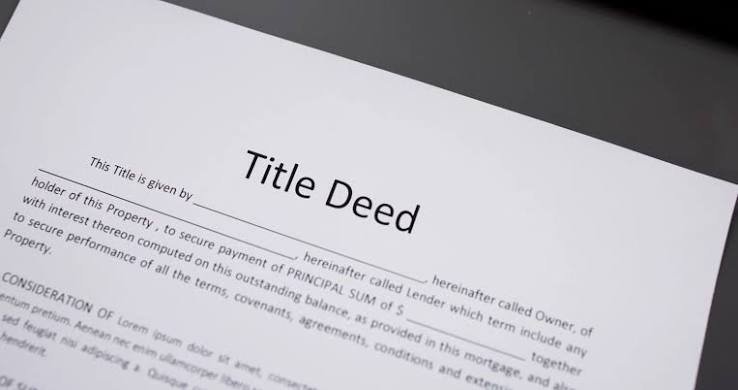
A Sale Agreement Records a Promise, Not Completed Ownership
An agreement to sell, often called a sale agreement, sets out the conditions under which a property transaction will take place.
It usually identifies the buyer, seller, property, purchase price, payment schedule, and expected completion date.
The agreement may also specify what happens if either party fails to fulfil their obligations.
For example, a seller may agree to transfer an apartment after receiving the remaining purchase amount.
Until the transaction is legally completed, the agreement generally creates contractual rights rather than ownership rights.
Section 54 of the Transfer of Property Act, 1882, specifically provides that a contract for sale does not, by itself, create an interest in or charge on the property.
This distinction is central to Indian property law.
What Does a Title Deed Actually Establish?
The expression title deed is commonly used for a legal document through which ownership or another recognised interest in property is established or transferred.
For purchased property, the relevant document is usually a registered sale deed or conveyance deed.
Other ownership situations may involve gift deeds, partition deeds, inheritance-related documents, or other legally effective instruments.
A valid registered sale deed can establish important facts about a completed property transfer.
These generally include:
- The identity of the buyer and seller.
- The property being transferred.
- The nature of the rights conveyed.
- The agreed consideration.
- The execution of the conveyance.
- The legal transfer intended by the parties.
- The registration particulars of the transaction.
However, a registered deed does not automatically guarantee that the seller possessed an undisputed title.
Ownership must still be examined through the relevant chain of documents and surrounding circumstances.
The Legal Difference Between Agreement and Conveyance
The distinction becomes clearer when the documents are compared directly.
| Particular | Agreement to Sell | Registered Sale Deed |
| Main purpose | Records terms of a proposed sale | Records and effects a completed conveyance |
| Ownership transfer | Does not itself transfer ownership | Generally transfers the rights legally held and conveyed by the seller |
| Payment details | Usually specifies payment obligations | Records consideration and relevant payment particulars |
| Legal importance | Creates contractual rights and obligations | Serves as an important instrument of ownership |
| Registration | Requirements depend on the document and applicable law | Generally compulsory for qualifying immovable property sales |
| Main buyer protection | Supports enforcement of contractual obligations | Establishes the completed transfer, subject to title validity |
A sale agreement remains important, but its legal function differs fundamentally from a conveyance deed.
Why Registration Makes Such a Difference
Property registration provides an official record of specified transactions.
Under the Registration Act, 1908, certain documents affecting immovable property require compulsory registration.
For an ordinary sale of immovable property valued at ₹100 or more, Section 54 of the Transfer of Property Act requires transfer through a registered instrument.
Registration also helps establish the existence and particulars of the transaction.
However, registration should not be confused with government certification of perfect ownership.
A registered document may still be challenged if the transaction involves fraud, lack of authority, defective title, or other legal problems.
Therefore, buyers should examine both registration status and the underlying ownership history.
Can a Buyer Claim Ownership After Paying the Full Price?
Payment alone does not ordinarily complete a property transfer.
Suppose a buyer pays the entire agreed consideration and receives possession, but the seller never executes the required registered sale deed.
The buyer may possess contractual or other legally recognised rights depending on the circumstances.
However, those rights should not automatically be equated with completed ownership.
The buyer may need to pursue appropriate legal remedies to secure execution of the conveyance.
This is why completing registration and obtaining the legally required transfer document is essential.
A Title Deed Cannot Replace Proper Title Verification
Even a registered sale deed should be examined alongside supporting property records.
Consider a seller who executes a registered deed despite having inherited only a partial ownership interest.
Registration does not automatically give that seller authority to transfer shares belonging to other lawful owners.
Similarly, a property may be subject to an existing mortgage or litigation.
Before purchasing, buyers should consider verifying:
- Previous ownership transfers.
- Relevant encumbrance records.
- Inheritance or succession claims.
- Existing mortgages.
- Applicable revenue and municipal records.
- Pending disputes.
- Necessary permissions and approvals.
The documents required depend on the property’s location, classification, and ownership history.
Where RERA Fits Into the Documentation Process
For residential projects covered by the Real Estate (Regulation and Development) Act, 2016, additional protections may apply.
Section 13 restricts promoters from accepting more than 10% of the apartment’s cost as an advance or application fee without first entering into a written agreement for sale and registering it as required by law.
However, this agreement is not the same as the final conveyance.
Section 17 separately addresses the promoter’s obligation to execute a registered conveyance deed in favour of the allottee, subject to applicable legal requirements.
Homebuyers should therefore distinguish the agreement stage from the eventual transfer of ownership.
Frequently Asked Questions
Q1. Is a sale agreement proof of property ownership in India?
A: No. A sale agreement generally establishes contractual rights and obligations. It does not, by itself, transfer ownership of immovable property.
Q2. Is a title deed the same as a registered sale deed?
A: A registered sale deed is one common type of title document. However, ownership may also arise through other legally recognised instruments or succession, depending on the circumstances.
Q3. Can a registered sale deed be legally challenged?
A: Yes. Registration does not eliminate disputes involving fraud, defective ownership, lack of authority, or other legal defects.
Q4. What happens if the seller refuses to execute the sale deed?
A: Depending on the agreement and circumstances, the buyer may seek remedies such as specific performance, refund, or damages. Applicable limitation periods and legal requirements must be considered.
Q5. Should buyers verify title documents before signing a sale agreement?
A: Yes. Examining ownership records before making substantial commitments can help identify legal risks and prevent disputes over the seller’s authority to transfer the property.