



A residential project in India may display the name of a well-known developer on its entrance gate, employ a separate construction company, and hire several contractors to complete specialised work. Yet buyers frequently describe everyone involved as the “builder.”
That casual use of terminology can create confusion when construction is delayed, defects appear, or questions arise about ownership and legal responsibility.
Builders, developers, and contractors perform different functions in real estate projects. Although their responsibilities sometimes overlap, they are not automatically interchangeable.
For Indian homebuyers, understanding these distinctions is particularly important when purchasing under-construction apartments, negotiating redevelopment agreements, or dealing with construction-related disputes.
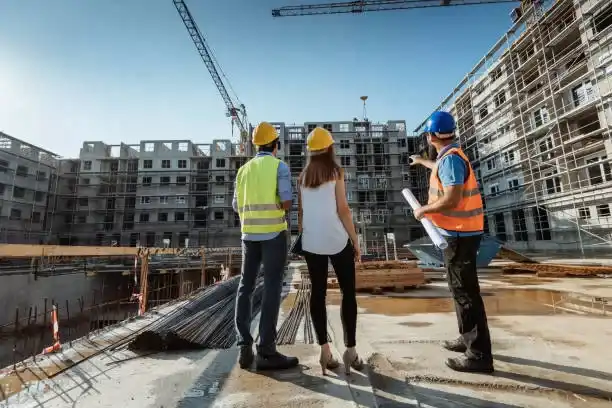
The Developer Creates the Real Estate Project
A real estate developer is primarily responsible for transforming a property opportunity into a commercially viable project.
The process often begins long before construction workers arrive at the site.
A developer may identify suitable land, evaluate market demand, arrange financing, obtain necessary permissions, appoint professionals, and plan the eventual sale or leasing of the property.
For example, a company planning a residential complex in Pune might acquire development rights over land, commission architectural designs, arrange project funding, and market apartments to prospective purchasers.
The developer coordinates these activities while managing commercial risks.
Typical responsibilities include:
- Identifying land and assessing development potential.
- Acquiring ownership or development rights.
- Arranging project financing.
- Coordinating statutory approvals.
- Appointing architects, engineers, and construction agencies.
- Marketing and selling eligible property units.
- Managing project delivery obligations.
A developer does not necessarily employ the workers who physically construct the buildings.
The Builder Focuses on Creating the Physical Structure
The term builder generally describes a person or business involved in constructing buildings.
A builder may undertake residential houses, apartment complexes, commercial buildings, or other construction projects.
Its work can involve coordinating labour, construction materials, equipment, site activities, and building execution.
However, the meaning of builder varies across India’s property industry.
Some companies operate as both developers and builders. They acquire land, market projects, and directly manage construction.
Others focus mainly on construction services for property owners or development companies.
This distinction explains why identifying a business as a builder does not, by itself, establish whether it owns the land or has authority to sell apartments.
Contractors Work Under Defined Agreements
A contractor is generally appointed to perform particular construction activities under an agreed contract.
The contractor’s responsibilities depend on the scope of work.
For example, a developer may appoint a main contractor to execute an entire residential building.
That main contractor may then engage subcontractors for specialised activities such as electrical installations, plumbing, waterproofing, or interior finishing.
Contractors may be responsible for:
- Completing specified construction activities.
- Providing labour, materials, or equipment as agreed.
- Meeting contractual quality standards.
- Following applicable safety requirements.
- Completing work within agreed schedules.
- Correcting defects covered by contractual obligations.
A contractor usually receives payment for performing construction work rather than earning revenue directly from selling property units.
However, contractual arrangements can differ considerably.
One Apartment Project Can Involve All Three
Consider a hypothetical apartment development in Hyderabad.
A real estate company obtains development rights over a parcel of land and plans a residential project.
It appoints architects and engineers, arranges financing, and begins marketing apartments.
That company functions as the developer.
A construction company is then appointed to execute the building work.
Depending on its role, the construction company may be described as the builder or main contractor.
Specialist contractors subsequently handle electrical systems, plumbing, lifts, and other installations.
Although these businesses contribute to the same project, their contractual responsibilities are different.
The developer may remain responsible to homebuyers for obligations arising under the sale agreement and applicable real estate law, even when construction activities are outsourced.
Why the Difference Matters Under RERA
India’s Real Estate (Regulation and Development) Act, 2016, makes the distinction particularly relevant.
RERA uses the legal concept of a promoter to identify persons responsible for specified real estate development activities.
Depending on the circumstances, a promoter may include a person who constructs or causes construction of apartments for sale, develops land into plots for sale, or otherwise falls within the statutory definition.
Where the person constructing a project and the person selling apartments are different, the law can treat both as promoters with applicable responsibilities.
Therefore, the business described as the developer in advertisements is not necessarily the only legally responsible party.
Homebuyers should examine the project’s RERA registration details, promoter information, and contractual documents.
The applicable legal position depends on the actual project structure rather than marketing terminology alone.
Who Is Responsible When Construction Goes Wrong?
Responsibility depends on the nature of the problem and the legal relationships involved.
A contractor may be contractually responsible to the party that appointed it for defective workmanship.
However, a homebuyer who purchased an apartment from a promoter may have statutory and contractual rights against that promoter.
Under Section 14(3) of RERA, qualifying structural defects and specified defects relating to workmanship, quality, or provision of services brought to the promoter’s notice within five years from handing over possession must be rectified without further charge within the prescribed period.
If the promoter fails to meet the applicable obligation, the allottee may be entitled to compensation under the law.
This does not mean every minor maintenance issue automatically qualifies as a statutory defect.
The circumstances, contractual terms, and relevant legal requirements matter.
Questions Buyers Should Ask Before Booking Property
The names displayed on project brochures should not replace proper verification.
Before purchasing an apartment, buyers should establish:
- Who is the registered promoter?
- Who owns the land or holds valid development rights?
- Which company is responsible for construction?
- Who will execute the agreement for sale?
- Which entity is responsible for possession and handover?
- Who must address qualifying construction defects?
- Are required project approvals and registrations available?
These questions are particularly useful in joint development arrangements, where a landowner and developer may have separate commercial interests.
The Same Distinction Applies to Independent Houses
The difference between these roles is not limited to apartment projects.
Someone constructing a house on personally owned land may appoint an architect and hire a building contractor.
In that situation, the homeowner acts as the project owner, while the contractor performs agreed construction work.
There may be no separate commercial real estate developer involved.
For individual construction projects, a detailed written agreement should specify materials, payment milestones, quality standards, completion schedules, and responsibilities for defects.
Clear contractual responsibilities can prevent disputes even when everyone involved informally uses the word builder.
Frequently Asked Questions
Q1. Is a real estate developer the same as a builder in India?
A: Not always. A developer generally manages project planning, financing, approvals, and commercial development, while a builder focuses on construction. Some companies perform both functions.
Q2. Can a contractor sell apartments directly to homebuyers?
A: A contractor does not automatically have authority to sell apartments merely because it constructs them. Selling rights depend on ownership, development agreements, authorisations, and applicable legal requirements.
Q3. Who is responsible for delayed possession, the builder or developer?
A: Responsibility generally depends on the registered promoter, agreement for sale, and applicable RERA provisions. A construction contractor’s separate agreement does not automatically determine the homebuyer’s legal rights.
Q4. Can a builder also be registered as a promoter under RERA?
A: Yes. A builder may qualify as a promoter when its activities fall within RERA’s statutory definition. Legal responsibilities depend on the actual project arrangement.
Q5. Should homebuyers investigate the construction contractor before purchasing?
A: Yes. Reviewing the contractor’s experience and construction record can provide useful information about execution quality. However, buyers should also verify the promoter, project registration, approvals, and contractual obligations.