



Huskur Fruit Market is not the kind of place most people casually stumble into. You come here on purpose. Usually very early. Sometimes half-awake. Often with a clear goal—buy fresh fruit, buy in bulk, and get out before the city fully wakes up.
Located near Huskur Gate and Electronic City, this market is one of Bangalore’s most important food supply points. It doesn’t sell an experience. It runs a system. Every apple, banana, and mango you see later in neighbourhood markets or juice shops likely passed through here first.
This is where Bangalore’s fruit day begins.
Located on the outskirts of the city
Huskur Fruit Market sits on Singena Agrahara Road in Gulimangala, close to Electronic City Phase 2. The location is practical, not accidental. Being on the southern edge of Bangalore allows large transport trucks to move freely without dealing with inner-city congestion.
Because of this positioning, farmers from nearby districts—Kolar, Ramanagara, Chikkaballapur, Krishnagiri, and parts of Tamil Nadu—bring their produce directly to the market. Shorter travel distance means fresher fruit and better prices.
The area around the market feels industrial and functional. There are warehouses, loading bays, and open yards. Everything here exists to keep produce moving efficiently.
Quick Details at a Glance
| Detail | Information |
| Location | Singena Agrahara Rd, Gulimangala (Near Electronic City Phase 2) |
| Market Type | Wholesale & retail fruit market |
| Famous For | Bananas, mangoes, imported fruits |
| Nearest Metro | Yellow Line – Bommasandra / Hosa Road |
| Best Time to Visit | 4:00 AM – 7:00 AM |
| Closed On | Open 24/7 (peak hours early morning) |
A Short History of Huskur Fruit Market
Huskur Fruit Market grew out of necessity rather than planning. As Bangalore expanded southward and Electronic City developed into a major tech hub, the city needed a large, organised space to handle fruit distribution without choking central markets.
What started as a functional mandi gradually expanded into one of the largest fruit trading hubs in South India. Over the years, infrastructure improved, shop numbers increased, and transport networks strengthened.
Today, Huskur is not just a Bangalore market. It acts as a regional transit point, supplying fruit across Karnataka and into Tamil Nadu.
What You Can Buy Here
This is a fruit-first market. Everything else is secondary.
Bananas (The Backbone)
Huskur is especially known for bananas. You’ll find multiple varieties daily:
- Yelakki
- Robusta
- G9
- Nendran
- Poovan
Many vendors specialise only in bananas, handling entire truckloads at a time.
Seasonal Fruits
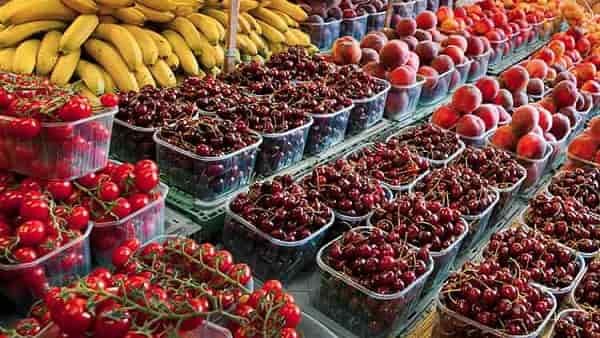
Oranges, grapes, papaya, watermelon, muskmelon, and pomegranate are consistently available depending on season and supply.
Imported & Exotic Fruits
Huskur also handles high volumes of imported fruits. Apples, kiwis, dragon fruit, blueberries, and imported oranges arrive regularly. Much of this stock is later sold at premium stores across Bangalore.
Mango Season
From April to June, the market transforms into a mango mandi. Alphonso, Badami, Raspuri, Totapuri—crates move continuously. Prices fluctuate rapidly based on quality, demand, and daily arrivals.
Wholesale vs Retail Buying
Huskur is primarily a wholesale market.
Most shops sell by the crate, box, or dozen. Retail buyers are welcome, but the real advantage lies in bulk purchasing. Small household buyers may not see dramatic price differences unless they buy larger quantities.
Early morning buyers get the best selection. By late morning, premium-grade fruit is usually gone or already loaded onto transport vehicles.
How the Market Functions Daily
Activity begins late at night. Trucks start arriving after midnight. By 3:30 AM, unloading is in full swing. Between 4:00 AM and 7:00 AM, the market is at peak intensity.
Deals are quick. Many transactions happen between regular buyers and sellers who know each other well. There’s little display and almost no browsing. Quality is judged fast. Decisions are made faster.
By mid-morning, activity slows. By afternoon, the market feels quiet—almost empty compared to dawn.
Transport & Connectivity
Reaching Huskur Fruit Market is much easier today than it was a few years ago.
- Metro: The Yellow Line, operational by 2025–26, connects Bommasandra and Hosa Road. From either station, the market is about a 10-minute auto ride.
- Bus: BMTC buses regularly serve Huskur Gate and Depot-38 routes. Common buses include 349, 349-J, and 600-F. The Sampige Nagara Gate stop is close to the entrance.
- Road: The market is just off Hosur Main Road, making it accessible from Electronic City, NICE Road, and southern suburbs.
Parking Situation
Parking is better than central city markets, but timing matters.
Early mornings are dominated by large transport trucks. Parking space exists, but it can be crowded and unorganised during peak hours. After 8:00 AM, parking becomes easier, though market activity reduces.
Two-wheelers are the most convenient option for short visits.
Nearby Places to Visit
If you’re already in the area:
- Electronic City – Cafes, restaurants, and offices nearby
- Narayana Health City – Major landmark close to the market
- D-Mart Bommasandra – Bulk grocery shopping option nearby
Things to Know Before You Go
- Visit early for best quality
- Expect bulk-focused pricing
- Wear sturdy shoes, especially during monsoons
- Carry cash along with UPI
- Be prepared for crowd and truck movement
This is a working mandi, not a leisure market.
Conclusion
Huskur Fruit Market is where Bangalore’s fruit economy quietly runs the show. It doesn’t advertise itself. It doesn’t slow down for visitors. It does one thing—move fresh produce at scale—and does it well.
If you want to understand how the city eats, start here. Just make sure your alarm is set early.