



Hatibagan Market is not a place people visit casually. It is a place North Kolkata grows up with. Generations have walked these lanes buying school uniforms, wedding sarees, puja clothes, and everyday essentials. Long before shopping malls existed, Hatibagan shaped how this part of the city dressed itself.
Located in the historic Shyambazar area, the market carries deep cultural memory. The name “Hatibagan” literally means Elephant Garden. In earlier times, elephants of the Nawab of Bengal were housed here. Today, there are no elephants—but the scale of trade is just as imposing.
This is not a polished shopping district. It is crowded, loud, and deeply traditional. And that is exactly its strength.
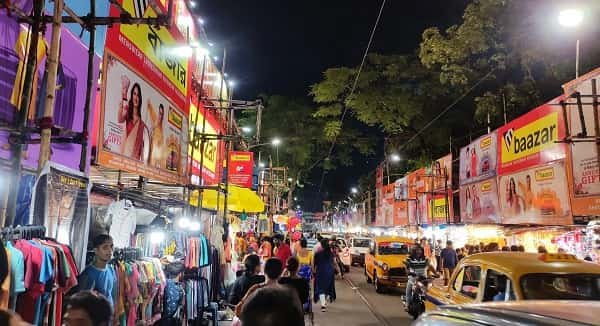
Located in the heart of North Kolkata
Hatibagan Market sits along Bidhan Sarani, close to Shyambazar’s five-point crossing—one of the busiest intersections in the city. The location keeps the market active from late morning till night.
North Kolkata’s old houses, theatres, and educational institutions surround the area. This ensures a steady flow of local shoppers rather than tourists. The market feels lived-in, not staged.
Quick Details at a Glance
| Detail | Information |
| Location | Bidhan Sarani, Shyambazar, North Kolkata |
| Market Type | Traditional textile, apparel & general market |
| Famous For | Bengal handloom sarees, jewelry, street food |
| Nearest Metro | Shyambazar Metro (Blue Line) |
| Best Time to Visit | 11:30 AM – 8:30 PM |
| Closed On | Open all days |
A Short History of Hatibagan Market
Hatibagan’s history stretches back to colonial Bengal. During Nawabi rule, the area served as a stable ground for elephants, which later gave the market its name. Over time, as Kolkata expanded northward, traders set up permanent shops, especially textile sellers.
The market has survived multiple historical disruptions—including a Japanese bombing during World War II and a devastating fire in 2012. Each time, Hatibagan rebuilt itself, largely through local effort rather than formal redevelopment.
That resilience is visible even today.
What You Can Buy Here
Hatibagan is first and foremost a textile market.
Sarees & Fabrics
This is one of the best places in Kolkata to buy authentic Bengali sarees. Tant cotton, Baluchari silk, Banarasi, and Dhakai Jamdani are widely available. Prices range from affordable daily wear to premium wedding collections.
Readymade Clothing
Salwar suits, kurtas, shirts, trousers, and children’s clothing fill both shops and pavements. Many stores cater specifically to middle-class family needs.
Jewelry & Accessories
Footpath stalls sell oxidised jewelry, bangles, bindis, handbags, and footwear. Bargaining is expected.
Street Food Around Hatibagan
Shopping here naturally turns into eating.
Gondhoraj lebu fuchka is a local favourite, adding a fragrant citrus twist to traditional pani puri. Kochuri–alur dom is available at almost every corner, especially in the mornings.
Nearby cabins and eateries serve classic North Kolkata dishes. Mitra Café, close to the area, is known for its Diamond Fry and fish preparations.
Transport & Connectivity
Hatibagan is extremely well connected, though often chaotic.
- Metro: Shyambazar Metro Station on the Blue Line is the closest. Gate No. 4 offers the easiest exit toward the market.
- Bus: Most buses heading toward Shyambazar 5-point crossing stop nearby.
- Tram: One of the few remaining areas where heritage trams still operate.
Parking Situation
Parking is extremely difficult. Roads are narrow and crowded throughout the day. Cars are best avoided. Metro, bus, or yellow taxis are the most practical options.
Nearby Places to Visit
- Star Theatre – Historic cinema near the market
- Shyambazar – Traditional neighbourhood and transit hub
- Galiff Street Pet Market – Sunday-only market nearby
Things to Know Before You Go
- Bargaining is expected at pavement stalls
- Evenings are the busiest
- Avoid Durga Puja week unless you enjoy extreme crowds
- Wear comfortable footwear
Conclusion
Hatibagan Market is not about convenience or aesthetics. It is about continuity. It continues to dress North Kolkata the way it has for decades—without changing its rhythm to suit trends.
If you want to understand the everyday culture of Kolkata, not the curated version, Hatibagan is where you go.