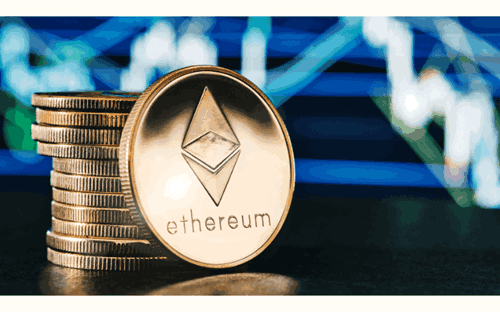




Bitcoin has completed one of the more extraordinary journeys in modern financial history — from an obscure cryptographic experiment launched in 2009 by an anonymous creator, to a trillion-dollar-plus global asset class held by sovereign wealth funds, major corporations, and tens of millions of individual investors worldwide. In 2026, with Bitcoin’s market capitalisation comfortably exceeding $1 trillion and institutional infrastructure — regulated ETFs, corporate treasury holdings, even discussions of strategic government reserves — more developed than at any previous point in its history, the question of whether Bitcoin deserves a place in a genuinely serious investment portfolio has moved from fringe speculation to mainstream financial planning consideration, even as the asset’s fundamental volatility and risk characteristics remain largely unchanged.
The honest answer: Bitcoin, approached as a small, deliberately sized component of a diversified portfolio, represents a reasonable consideration for investors with genuine risk tolerance and long time horizons — but it remains a fundamentally higher-risk, higher-volatility asset than conventional investments, with structural characteristics (sequence risk in retirement, India-specific tax and access limitations, persistent regulatory uncertainty) that require careful, honest evaluation before any allocation decision.

What Distinguishes Bitcoin From the Broader Cryptocurrency Category
Within the much larger universe of thousands of cryptocurrencies, Bitcoin occupies a genuinely distinctive position that deserves separate analysis from the broader crypto asset class. Bitcoin functions primarily as a digital store of value with a fixed, mathematically enforced supply cap of 21 million coins — a scarcity characteristic that anchors its investment thesis closer to “digital gold” than to the usage-driven, infrastructure-oriented value proposition of platforms like Ethereum, or the purely sentiment-driven dynamics of meme coins. This distinction matters because Bitcoin’s longer track record, deepest liquidity among all cryptocurrencies, and most developed institutional infrastructure collectively make it the most “established” entry point for investors specifically considering cryptocurrency exposure, even though it remains genuinely volatile by the standards of conventional asset classes.
Bitcoin’s Continuing Volatility Despite Institutional Maturation
Despite the genuine institutional progress of recent years, Bitcoin’s fundamental volatility characteristics remain largely unchanged from earlier market cycles. Its 30-day realised volatility consistently runs three to five times higher than major stock market indices — a structural feature stemming from Bitcoin’s relatively smaller market capitalisation compared to gold or major global currencies, thinner liquidity during off-peak trading hours, and substantial embedded leverage within crypto derivatives markets that can amplify price movements in either direction.
A single regulatory announcement — a statement from the US Securities and Exchange Commission, a shift in India’s RBI position on cryptocurrency, or an enforcement action from Chinese authorities — can still trigger price swings of 10% to 20% within hours, illustrating that despite genuine institutional maturation, Bitcoin remains considerably more reactive to headline and regulatory risk than established asset classes like equities or bonds. This volatility hasn’t diminished with institutional adoption — it has simply become more sophisticated in its drivers, as governments worldwide develop increasingly coherent (though still incomplete) crypto policy frameworks rather than issuing the blanket bans that characterised earlier regulatory approaches.
India’s Specific Tax and Access Framework
Understanding Bitcoin investment from an Indian perspective requires grappling with a tax and access framework that is genuinely more restrictive than what investors in several other major markets currently experience. Profits from Bitcoin transactions are taxed at a flat 30% rate under India’s Virtual Digital Asset (VDA) framework, established through the Union Budget 2022, with only the cost of acquisition deductible — critically, losses cannot be offset against gains from other crypto transactions or other income sources, a meaningfully harsher treatment than the loss-offsetting provisions available for conventional equity and mutual fund capital gains. A 1% Tax Deducted at Source (TDS) applies on certain crypto transfers under Section 194S, creating additional liquidity friction particularly for more active traders.
A specific, important structural limitation for Indian investors: India’s established retirement and long-term savings infrastructure — EPF, PPF, NPS, and most mutual fund and pension structures — currently does not permit direct Bitcoin exposure, and the regulated spot Bitcoin ETFs that have simplified custody, taxation, and inheritance planning for investors in markets like the United States are not domestically available in India. This means Indian investors holding Bitcoin directly must personally manage exchange selection, private key security, tax record-keeping, and succession planning — meaningfully more operational complexity than holding a conventional mutual fund through a standard demat account, and a genuine practical barrier that deserves serious consideration before committing meaningful capital.
The Sequence Risk Problem for Retirement Planning
A specific risk that deserves careful attention for any investor considering Bitcoin within long-term retirement planning is sequence risk. During working, wealth-accumulation years, Bitcoin’s volatility is genuinely more manageable because there is no immediate pressure to sell during downturns — time allows the investor to ride out volatile periods without locking in losses. In retirement, however, when regular withdrawals are required to fund living expenses, this dynamic changes fundamentally: if withdrawals must begin during a prolonged Bitcoin downturn, selling holdings to fund expenses locks in losses precisely when the asset might otherwise have eventually recovered. Given that Indian retirees typically depend on predictable monthly income for essential expenses, this makes Bitcoin genuinely unsuitable as a primary withdrawal or income-generating asset in retirement, even for investors who remain fundamentally bullish on the asset’s long-term prospects.
A “Bitcoin-positive but prudent” approach, frequently recommended by financial advisors who engage seriously with the asset class, treats Bitcoin explicitly as a long-duration growth engine rather than an income source — appropriate for a meaningful allocation during accumulation years, with disciplined rebalancing (trimming gains into more stable equity or debt holdings when Bitcoin significantly outperforms) and a gradual reduction in exposure as retirement approaches, ensuring essential expenses remain covered by stable assets that never need to be sold during a Bitcoin downturn.
Bitcoin vs Gold: Co-existence Rather Than Replacement
A frequently asked comparison deserves direct address: does Bitcoin replace gold as the preferred safe-haven or store-of-value asset? Most serious analysis suggests these assets serve genuinely different portfolio roles rather than competing in zero-sum fashion. Bitcoin offers superior portability and digital-native characteristics — easily transferable, divisible, and accessible globally without the physical storage and transport limitations of gold. Gold provides proven crisis performance over centuries and meaningfully lower volatility, having demonstrated consistent value preservation through numerous historical economic and geopolitical crises in a way that Bitcoin’s much shorter track record cannot yet match. Most analysts expect both assets to continue serving complementary rather than competing roles — Bitcoin as speculative growth diversification, gold as the more traditional, lower-volatility safe-haven — meaning the practical recommendation for most investors is holding both for their distinct purposes rather than choosing exclusively between them.
Recommended Allocation for Indian Investors
For Indian investors specifically, financial advisors who engage seriously with cryptocurrency generally recommend a modest, deliberately sized allocation — commonly cited in the range of 1% to 3% of total portfolio value for investors in their wealth-accumulation years. This allocation level is specifically calibrated to meaningfully improve a portfolio’s risk-adjusted growth potential (given Bitcoin’s genuine, if volatile, historical return profile) without threatening overall financial stability even in scenarios of severe Bitcoin price decline. This recommendation typically comes with the explicit caveat that families should be educated on access, security practices, and succession planning given Bitcoin’s unique custody requirements, and that investors must factor India’s specific punitive tax framework — flat 30% taxation with no loss offsetting — into any return expectations.
The Bull and Bear Scenarios
The constructive, bullish scenario for Bitcoin rests on continued institutional adoption deepening further, Bitcoin’s progressive integration into corporate treasuries and potentially sovereign reserves continuing to expand, and increasingly favourable, coherent regulatory frameworks emerging globally that enable broader mainstream participation without the uncertainty that has historically constrained institutional capital.
The genuine risk scenario involves regulatory setbacks in major markets, a prolonged macroeconomic environment unfavourable to risk assets broadly (which tends to disproportionately affect Bitcoin given its high-beta characteristics relative to broader market risk sentiment), or simply Bitcoin’s well-documented capacity for severe, multi-year drawdowns that could test the resolve of even genuinely long-term-oriented investors who have not sized their allocation appropriately relative to their actual risk tolerance and financial circumstances.
Final Verdict
Bitcoin in 2026 represents a genuinely more institutionally legitimate and infrastructurally developed asset than at any previous point in its history, supported by real, measurable adoption metrics, growing regulatory clarity (though still incomplete), and an investment thesis — digital scarcity and store of value — that is more coherent and defensible than the vast majority of alternative cryptocurrencies. For Indian investors specifically, this legitimacy must be weighed against India’s notably punitive tax treatment, the absence of domestic regulated Bitcoin investment vehicles comparable to international spot ETFs, and the genuine operational complexity of direct custody and succession planning. A small, deliberately sized allocation — most commonly cited in the 1% to 3% range of total portfolio value during wealth-accumulation years, with disciplined rebalancing and reduced exposure approaching retirement — represents a reasonable, considered approach for risk-tolerant investors with long time horizons, while treating Bitcoin as a primary investment vehicle, retirement income source, or large portfolio component remains genuinely inappropriate given its demonstrated volatility and the specific structural risks that institutional maturation has reduced but by no means eliminated.
FAQs
Q1. What percentage of my portfolio should be allocated to Bitcoin?
Financial advisors who engage seriously with Bitcoin generally recommend a small, deliberate allocation — commonly cited as 1% to 3% of total portfolio value for investors in their wealth-accumulation years — treating it as a higher-risk growth component rather than a core holding, with this allocation gradually reduced as retirement approaches to avoid exposing essential retirement income to Bitcoin’s volatility.
Q2. Why is Bitcoin considered unsuitable as a primary retirement income asset?
Bitcoin’s significant volatility creates genuine sequence risk during retirement: if regular withdrawals must begin during a prolonged price downturn, selling Bitcoin to fund living expenses locks in losses at precisely the worst time, potentially permanently impairing the asset’s ability to recover. India’s retirement infrastructure (EPF, PPF, NPS) also does not currently allow direct Bitcoin exposure, adding operational complexity for retirees who need predictable income.
Q3. How is Bitcoin taxed in India, and how does this affect investment returns?
Bitcoin profits are taxed at a flat 30% rate with no deductions beyond acquisition cost, and losses cannot be offset against other crypto gains or income from other sources — a meaningfully harsher treatment than conventional capital gains taxation on equity or mutual fund investments. A 1% TDS also applies on certain transfers, creating additional liquidity friction for active traders.
Q4. Should Bitcoin replace gold in my investment portfolio?
Most serious analysis suggests Bitcoin and gold serve complementary rather than competing portfolio roles. Bitcoin offers digital-native portability and a shorter but genuinely strong growth track record, while gold provides centuries of proven crisis performance and meaningfully lower volatility. The practical recommendation for most investors is holding both for their distinct purposes rather than choosing exclusively between them.
Q5. Are there regulated Bitcoin ETFs available to Indian investors?
No, not domestically. Unlike markets such as the United States, where regulated spot Bitcoin ETFs have simplified custody, taxation, and inheritance planning, Indian investors holding Bitcoin must do so directly through cryptocurrency exchanges, requiring personal management of security practices, exchange selection, and succession planning — meaningfully more operational complexity than holding a conventional mutual fund or ETF through a standard demat account.