


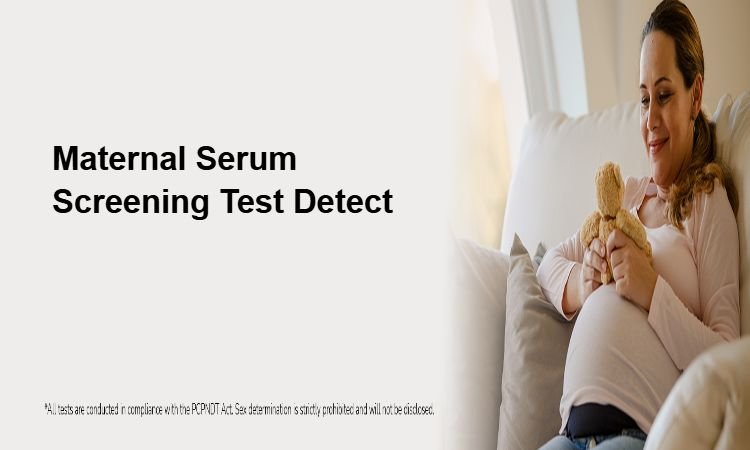
Prenatal testing is one of those subjects that sounds straightforward until you are actually in it, at which point the number of different tests, the different windows in which they happen, and the different things they are trying to find can feel genuinely confusing. The maternal serum screening test sits early in this sequence, and it is worth understanding what it actually does before the result arrives, because the way a result reads on paper does not always match what it means in practice.
One thing to hold onto from the beginning: this is a screening test, not a diagnostic one. That distinction is not a technicality. A screening test produces a probability. It does not produce a yes or no. A result that comes back showing increased risk does not mean a condition is present. It means the pregnancy falls into a statistical category where further investigation is warranted. Most pregnancies flagged by a screening test turn out to be unaffected once that further investigation happens.
What the Test Actually Measures
A blood sample from the pregnant person is tested for specific proteins and hormones. These substances, called biochemical markers, are produced by the placenta and the developing pregnancy in quantities that shift as the pregnancy progresses. The levels at specific points in pregnancy carry known statistical associations with certain conditions, which is what makes measuring them useful.
The markers tested depend on timing:
- First-Trimester Screening (10 to 13 Weeks): Looks at two primary markers: pregnancy-associated plasma protein A (PAPP-A) and the free beta subunit of human chorionic gonadotropin (free β-hCG). These two alone provide an initial picture, but their value increases considerably when combined with an ultrasound measurement of the fluid at the back of the baby’s neck (nuchal translucency). The combination produces a risk estimate that is meaningfully more accurate than any single measurement.
- Second-Trimester Quad Screen (15 to 20 Weeks): Measures four key biomarkers: alpha-fetoprotein (AFP), human chorionic gonadotropin (hCG), unconjugated estriol (uE3), and inhibin A. Each contributes something different to the overall profile. For instance, elevated alpha-fetoprotein points toward open neural tube conditions, whereas lower levels when combined with specific patterns in other markers contribute to the risk estimate for chromosomal conditions. Looking at one marker in isolation tells a partial story at best.
The maternal serum screening test through MedGenome covers these markers with reporting that integrates the individual values and the combined risk output for each condition being assessed, rather than leaving the interpretation to be worked out separately.
What It Is Looking For
The conditions that maternal serum screening is designed to pick up include:
- Trisomy 21 (Down syndrome)
- Trisomy 18 (Edwards syndrome)
- Trisomy 13 (Patau syndrome)
- Open Neural Tube Defects (ONTDs): Including spina bifida and anencephaly, detected specifically through the alpha-fetoprotein (AFP) component.
People sometimes assume the test checks for everything that could go wrong in a pregnancy. It does not. It checks for a defined set of conditions for which the biochemical markers carry reliable statistical associations. There are conditions it will not detect, and understanding that scope is part of understanding what a low-risk result does and does not mean.
What a High-Risk Result Actually Means
This is where a lot of the confusion and unnecessary distress tends to happen. A high-risk result means the probability of the screened condition in this pregnancy is above a defined population threshold. It does not mean the condition is present. The majority of pregnancies that receive a high-risk result go on to be confirmed as unaffected after further testing. That number is worth knowing before a result arrives, not after.
A high-risk result opens the next conversation rather than closing one. The options that follow typically include:
- Non-Invasive Prenatal Testing (NIPT): Utilizes cell-free fetal DNA (cfDNA) from a maternal blood sample to narrow the probability estimate further without procedural risk.
- Diagnostic Testing: Procedures such as chorionic villus sampling (CVS) or amniocentesis provide a definitive chromosomal answer.
Which route makes sense depends on the specific result, how far along the pregnancy is, and what level of certainty the family needs before making clinical decisions.
A low-risk result is reassuring, and for most people who receive one, it is accurate. However, it is not a guarantee. It means the probability of the screened conditions is below the threshold that warrants further investigation under standard clinical guidelines. A small residual probability remains a characteristic true of every screening test. The appropriate response to a low-risk result is reassurance, not absolute certainty.
The timing of the test within the broader arc of prenatal care matters too. A first-trimester result and a second-trimester result address overlapping but not identical questions, and in some programs the two sets of results are combined into an integrated calculation that is more accurate than either window alone. Whether combined or sequential screening is available depends on the clinical setting and how early prenatal care begins.