



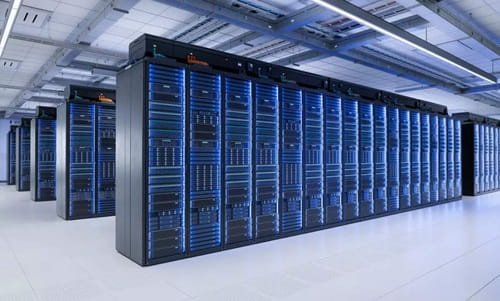
India’s digital economy has entered a phase of infrastructure-led growth whose most fundamental physical requirement is data centre capacity — the temperature-controlled, power-redundant, security-hardened facilities where the servers, storage systems, and networking equipment that power India’s digital services are housed. Every streaming video watched, every UPI payment processed, every e-commerce order fulfilled, every cloud-hosted enterprise application accessed, and every AI model inference computed requires physical data centre infrastructure operating continuously with near-perfect reliability. Whether a data center business is profitable in India in 2026 requires understanding a capital-intensive industry undergoing extraordinary growth — where profitability is genuine and substantial for well-capitalised operators but where the investment requirements and operational complexity create serious barriers for underprepared entrants.
India’s Data Center Market in 2026
India’s data centre market has experienced exceptional growth driven by converging demand forces that show no signs of moderation. Hyperscaler cloud adoption — with AWS, Microsoft Azure, and Google Cloud requiring enormous data centre capacity to serve Indian enterprise and government customers — represents the largest single demand driver. India’s data localisation requirements — RBI’s payment data storage mandates, SEBI’s financial data residency rules, and emerging personal data protection legislation — force organisations to store specific data types within Indian territory, creating captive demand for domestic data centre capacity. The explosive growth of AI workloads requiring GPU-intensive computing infrastructure has created a new high-margin data centre product category alongside conventional enterprise colocation.
India’s government has recognised data centres as critical infrastructure — providing Policy and regulatory support, land allocation assistance in dedicated data centre parks, and tax incentives in several states that improve investment economics for large-scale projects.
Data Center Business Key Financial Parameters
| Parameter | Edge / Small DC | Mid-Tier Colocation | Large Scale Hyperscale | GPU / AI Cloud |
| Capital investment | ₹5 crore–30 crore | ₹50 crore–300 crore | ₹500 crore–5,000 crore | ₹20 crore–500 crore |
| Power capacity | 100 kW–1 MW | 1 MW–20 MW | 20 MW–500 MW | 500 kW–50 MW |
| Colocation revenue per rack monthly | ₹30,000–80,000 | ₹25,000–70,000 | ₹20,000–60,000 | ₹1 lakh–5 lakh GPU rack |
| Power usage effectiveness target | 1.4–1.6 | 1.3–1.5 | 1.2–1.4 | 1.3–1.6 |
| Gross margin | 45–65% | 50–68% | 52–70% | 55–75% |
| Net profit margin — stabilised | 20–35% | 22–40% | 25–42% | 30–50% |
| Typical contract length | 1–3 years | 3–10 years | 5–15 years | 1–3 years |
| Break-even period | 5–8 years | 6–10 years | 8–15 years | 4–8 years |
| Key certifications required | Tier I–II Uptime | Tier II–III Uptime | Tier III–IV Uptime | Tier II–III |
| Power cost percentage of revenue | 20–35% | 18–30% | 15–28% | 20–35% |
| Staff — operations | 10–30 | 30–100 | 100–500 | 20–80 |
Profitability Drivers and Investment Thesis
Structural Demand Growth: India’s data centre market has demonstrated consistent double-digit growth for multiple consecutive years — driven by cloud migration, 5G deployment requiring edge computing infrastructure, digital government services, streaming media consumption growth, and AI workload expansion. This structural demand growth, anchored by legally mandated data localisation requirements for regulated industries, provides revenue visibility that justifies the long-term capital commitments that data centre development requires.
Long-Term Contract Revenue Stability: Data centre contracts — particularly hyperscaler and enterprise colocation agreements — typically span 5-15 years with guaranteed minimum consumption commitments and power purchase obligations. This contracted revenue structure creates cash flow visibility that enables debt financing with manageable risk profiles and investment planning across multi-year development cycles. Once a large enterprise or cloud provider deploys infrastructure in a data centre facility, the practical cost and operational disruption of migration creates strong customer stickiness that makes churn rare.
AI and GPU Computing Premium Segment: Generative AI’s explosive growth has created extraordinary demand for GPU-accelerated computing infrastructure — Nvidia H100 and H200 GPU clusters requiring specialised power density, cooling architecture, and network connectivity command colocation revenue 3-8 times conventional server rack pricing. Data centre operators with the technical capability to provide GPU-optimised colocation environments — high-density power delivery, liquid cooling infrastructure, and ultra-low-latency networking — access a premium revenue segment whose demand currently significantly exceeds available supply in India.
Renewable Energy Cost Advantage: Data centre operators who secure long-term renewable energy power purchase agreements — solar and wind PPAs at ₹3-4 per kWh versus grid power at ₹7-10 per kWh in many states — achieve structural operating cost advantages that improve net margins significantly over the long term. Several Indian states have established renewable energy procurement frameworks specifically supporting data centre power requirements — creating investment incentives that improve project economics for operators who structure power supply proactively.
Significant Challenges and Entry Barriers
Land acquisition in suitable locations — near reliable power grid infrastructure, fibre connectivity, and within reasonable distance of major enterprise customer concentrations while avoiding flood zones and seismic risk — represents a complex and often expensive process that delays project timelines and adds pre-development cost. Chennai, Mumbai, Delhi NCR, Bengaluru, Hyderabad, and Pune dominate India’s current data centre geography, but land costs in these cities have escalated significantly with data centre demand growth.
Power reliability — India’s grid reliability has improved substantially but remains imperfect — requires investment in Uninterruptible Power Supply systems, diesel generator backup capacity, and sophisticated power management infrastructure that represents 20-30% of total data centre capital expenditure. Maintaining Tier III or Tier IV certification — guaranteeing 99.982% and 99.995% uptime respectively — demands engineering redundancy at every critical system that significantly increases capital requirements versus non-certified facilities.
Data Center vs Alternative Infrastructure Businesses
| Parameter | Data Center | Telecom Tower | Logistics Warehouse | Cold Storage |
| Capital intensity | Very high | High | Moderate to high | High |
| Contract tenure | 5–15 years | 15–20 years | 3–10 years | 1–5 years |
| Net profit margin | 22–42% | 25–40% | 12–22% | 15–28% |
| Demand growth rate | Very high | Moderate | High | High |
| Technical complexity | Very high | Moderate | Low | Moderate |
| Government support | Strong — critical infrastructure | Strong | Moderate | Strong |
| Break-even period | 6–15 years | 8–15 years | 5–10 years | 5–10 years |
| AI demand leverage | Very high — GPU colocation | Low | Low | None |
Data centre business is genuinely and substantially profitable in India for investors with sufficient capital — typically ₹50 crore minimum for meaningful scale — technical operational expertise, patient investment time horizons accepting 6-15 year break-even periods, and the ability to navigate complex land, power, and regulatory environments. For investors with these capabilities, India’s structural data demand growth creates one of the most compelling infrastructure investment opportunities available in the current decade.