




India’s cleaning and personal care products market is one of the most consistently active consumer goods sectors in the country — driven by a population of 1.4 billion whose daily household cleaning requirements generate demand that never disappears regardless of economic cycles. Detergents — spanning laundry washing powders, liquid detergents, dishwashing bars and liquids, and surface cleaning formulations — are among the most essential household consumables purchased by Indian families across every income bracket, geographic region, and demographic group. Whether a detergent business is profitable in India in 2026 requires understanding which segment of this enormous but intensely competitive market an entrepreneur can realistically enter, compete in, and build sustainable margins within — because the detergent industry spans a spectrum from commodity powder manufacturing competing against entrenched FMCG giants to premium specialty formulations serving health-conscious urban consumers willing to pay significant premiums for differentiated products.
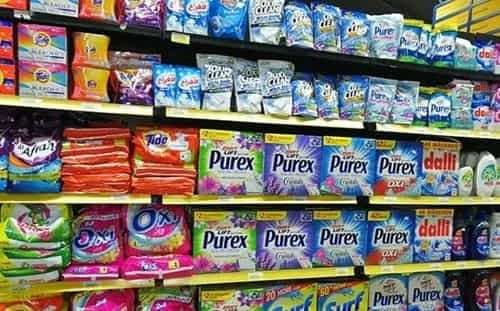
The Indian Detergent Market Landscape
India’s detergent market is dominated at the mass market end by multinational and large domestic FMCG companies — Hindustan Unilever’s Surf Excel and Rin, Procter and Gamble’s Ariel and Tide, Rohit Surfactants’ Ghari and Nirma, and Fena — whose manufacturing scale, distribution networks, and brand equity create formidable competitive moats in the standard washing powder and bar categories. New entrants attempting to compete head-on with these giants in mass market commodity categories face insurmountable scale disadvantages that make profitability genuinely difficult to achieve.
The profitable entry opportunities for small and medium detergent manufacturers lie in underserved market segments — regional markets where large FMCG companies have weaker distribution presence, institutional and commercial cleaning supply where bulk procurement creates direct sales opportunities without retail distribution challenges, premium and natural formulation segments where differentiated products command pricing that commodity competitors cannot approach, and private label manufacturing for modern trade retailers and e-commerce platforms seeking cost-efficient branded alternatives.
Detergent Business Key Financial Parameters
| Parameter | Small Scale Powder | Liquid Detergent Unit | Institutional Supply | Premium Natural Brand |
| Capital investment | ₹5 lakh–25 lakh | ₹10 lakh–50 lakh | ₹3 lakh–15 lakh | ₹5 lakh–30 lakh |
| Raw material cost per kg | ₹25–50 (surfactants, builders, fillers) | ₹40–80 | ₹20–45 | ₹60–150 (natural ingredients) |
| Selling price per kg — trade | ₹60–120 | ₹80–180 | ₹40–100 | ₹200–600 |
| Gross profit margin | 35–55% | 40–58% | 30–45% | 55–72% |
| Monthly production capacity | 5–30 tonnes | 3–20 tonnes | 10–50 tonnes | 1–8 tonnes |
| Monthly revenue potential | ₹3 lakh–25 lakh | ₹4 lakh–20 lakh | ₹4 lakh–30 lakh | ₹2 lakh–20 lakh |
| Distribution cost | 15–25% of revenue | 15–25% | 5–12% direct | 10–20% |
| Net profit margin | 12–25% | 15–28% | 15–28% | 30–50% |
| BIS certification requirement | IS 4955 for detergent powders | IS 14692 for liquids | As applicable | As applicable |
| GST rate | 18% on most detergents | 18% | 18% | 18% |
| Break-even period | 2–4 years | 2–4 years | 1–2 years | 1–3 years |
| Minimum staff | 8–15 | 6–12 | 3–8 | 4–10 |
Profitability Drivers and Strategic Opportunities
Regional Distribution Strategy: Large FMCG companies achieve their strongest distribution depth in urban and semi-urban markets but maintain weaker retail presence in rural districts, smaller towns, and geographically challenging regions — creating genuine market space for regional detergent manufacturers who develop hyper-local distribution networks covering kirana stores and wholesale markets within 100-200 kilometres of their manufacturing facility. Regional brands competing on price within local geographies can achieve 15-25% net margins without the advertising and distribution overhead that national brands require to maintain shelf presence across India’s entire retail landscape.
Institutional and Commercial Cleaning Supply: Hotels, hospitals, schools, restaurant chains, corporate campuses, and laundry service businesses require bulk detergent and cleaning chemical supply on contract terms that bypass retail distribution entirely. Institutional supply eliminates retailer margins, reduces packaging cost through bulk delivery, and creates contract-based recurring revenue with month-on-month stability. A medium-sized detergent manufacturer supplying 10-20 institutional clients in a city can generate ₹5-20 lakh monthly with net margins of 20-30% — better economics than retail distribution achieves without the distribution investment retail requires.
Premium and Natural Formulation Opportunity: India’s urban consumer market has developed a fast-growing segment of health-conscious buyers who actively seek plant-based, chemical-free, biodegradable, and fragrance-free detergent alternatives motivated by skin sensitivity concerns, environmental values, and the belief that natural formulations are safer for children’s clothing. Premium natural liquid detergents selling at ₹300-600 per litre — 4-8 times the price of standard powder equivalents — generate gross margins of 55-72% that commodity detergent manufacturing cannot approach. Building an authentic brand story around ingredient transparency, environmental credentials, and dermatologist-tested formulations attracts a customer segment with minimal price sensitivity and strong repeat purchase loyalty.
E-Commerce Channel Access: Amazon, Flipkart, and Jiomart have fundamentally changed the distribution economics for small detergent manufacturers — providing access to national customer audiences without the enormous sales force and retailer relationship investment that traditional FMCG distribution requires. Premium natural detergent brands in particular perform strongly on e-commerce channels where health-conscious consumers actively search for alternatives to mass market products and where product photography, ingredient storytelling, and customer review accumulation can build brand credibility rapidly.
Regulatory Requirements and Compliance
BIS certification under applicable Indian Standards is mandatory for most detergent categories sold in organised retail channels — IS 4955 for synthetic detergent powders, IS 14692 for liquid detergents, and additional standards for specialised formulations. Bureau of Indian Standards licensing requires factory inspection, product testing at BIS-recognised laboratories, and ongoing compliance audits that add cost and administrative burden but simultaneously provide quality credibility that institutional and modern trade buyers require before vendor qualification.
Chemical handling requirements for surfactants and processing chemicals require appropriate workplace safety protocols, proper ventilation systems, and chemical storage infrastructure that represent genuine investment rather than optional enhancements. MSME registration, GST registration, and factory licence under the Factories Act for units above specified worker thresholds complete the regulatory compliance framework.
Challenges That Require Serious Evaluation
The detergent industry’s most fundamental challenge is raw material price volatility — surfactants like linear alkyl benzene sulphonate and alpha olefin sulphonate are petroleum derivatives whose prices fluctuate significantly with crude oil market movements. Raw material cost increases that cannot be immediately passed through to price-competitive retail markets compress margins unpredictably — requiring working capital buffers and procurement planning sophistication that small manufacturers frequently lack.
Brand building in consumer detergent markets requires sustained advertising investment that strains small business cash flows — rural cable TV advertising, auto-rickshaw branding, and local newspaper campaigns represent the accessible awareness-building tools for regional brands, but consistent investment is necessary to build the household name recognition that drives repurchase in a category where consumers default to familiar brands.
Detergent Business vs Competing FMCG Manufacturing Opportunities
| Parameter | Detergent Manufacturing | Soap Manufacturing | Disinfectant Production | Agarbatti Making |
| Startup capital | Moderate | Low to moderate | Low to moderate | Very low |
| Raw material availability | Good — chemical suppliers | Good | Good | Good |
| BIS requirement | Yes — mandatory | Limited | Some categories | No |
| Gross margin | 35–72% | 40–65% | 45–70% | 55–75% |
| Competition intensity | Very high — FMCG giants | High | Moderate | Moderate |
| Premium segment potential | High — natural formulations | High | Moderate | Moderate |
| Net profit margin | 12–50% | 15–45% | 20–40% | 25–50% |
| Export potential | Moderate | Good | Good | Good |
Detergent business is profitable in India for manufacturers who deliberately avoid head-on competition with national FMCG giants — instead targeting regional distribution gaps, institutional supply contracts, or premium natural formulation segments where differentiation creates pricing power and margin sustainability that commodity market competition destroys.