



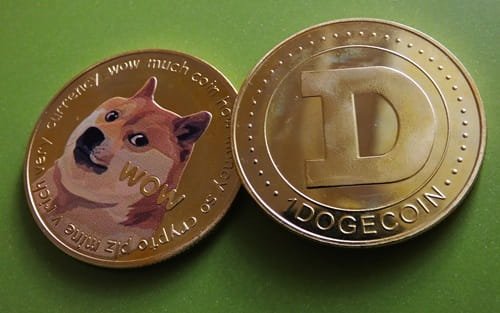
Dogecoin remains, more than a decade after its 2013 launch as a self-aware joke combining the Shiba Inu meme with the design conventions of a “serious” cryptocurrency, one of the strangest and most enduring assets in all of digital finance. Created in a single weekend by developers who never intended it to become a multi-billion-dollar asset, DOGE has nonetheless persisted through multiple market cycles, retained a market capitalisation hovering around $12-16 billion as of 2026 — consistently within the top ten cryptocurrencies globally by this measure — and continues to attract serious attention from retail investors asking, in 2026, whether this internet joke deserves a place in a real investment portfolio.
The short answer: Dogecoin is a high-risk, high-volatility speculative asset whose price is driven overwhelmingly by sentiment, celebrity influence, and broader crypto market cycles rather than conventional fundamentals — and while 2026 has brought some genuinely notable structural developments, the core investment case remains fundamentally unchanged from what it has been since 2021: this is speculation, not investment in any traditional sense.
What Is Dogecoin?
Dogecoin is a peer-to-peer cryptocurrency, technically a fork of Litecoin, using proof-of-work consensus. Unlike Bitcoin’s fixed 21 million coin supply cap, Dogecoin has no maximum supply limit whatsoever — approximately 5 billion new DOGE tokens are minted annually (roughly 10,000 DOGE per block), a deliberate 2014 design decision intended to keep mining incentives stable indefinitely. As of mid-2026, circulating supply sits at approximately 154-169 billion DOGE (sources vary slightly), with this structural, perpetual inflation representing the single most important fact any potential DOGE investor must understand before anything else.
DOGE’s Price Reality in 2026
Dogecoin has traded through 2026 in a generally consolidating range, broadly between $0.08 and $0.15 across various periods during the year, sitting roughly 80-88% below its all-time high of approximately $0.7316-$0.73, reached on May 8, 2021, during the famous Elon Musk and “Saturday Night Live”-fuelled rally. Trading volume has remained substantial — frequently exceeding $800 million to over $1 billion daily during periods of elevated volatility — reflecting genuine, sustained liquidity and ongoing investor interest despite the price’s significant distance from its historic peak.
The Genuinely Notable 2026 Development: Spot ETF Approval
The most structurally significant development for Dogecoin in 2026 is the launch of the 21Shares Dogecoin ETF (ticker: TDOG) on Nasdaq in January 2026 — the first US spot Dogecoin ETF to receive formal SEC approval and clearance, with backing from the Dogecoin Foundation itself. This represents a genuine institutional milestone: regulated, exchange-traded access to Dogecoin price exposure through a conventional brokerage account, without requiring direct cryptocurrency exchange interaction or self-custody.
This development matters because it removes a meaningful access barrier for institutional and conservative retail investors who were previously unwilling or unable to hold DOGE directly through crypto exchanges. Some analysts view this ETF approval as formal validation of Dogecoin’s status as a legitimate, if still highly speculative, asset class — a milestone that distinguishes it from the vast majority of other meme coins that lack any comparable institutional product. It is worth noting that this is distinct from a pure spot product in some of its mechanics — some structures hold a mix of direct DOGE and DOGE-linked instruments rather than pure spot exposure, a nuance investors should understand when evaluating the product.
The Elon Musk Factor: Still Central, Somewhat Diminished
No discussion of Dogecoin’s investment case can avoid its singular, defining relationship with Elon Musk, whose social media posts and public commentary have historically triggered price moves of 10-40% within hours, and whose involvement with the “Department of Government Efficiency” (sharing the DOGE acronym) during the 2024-2025 period sparked rallies exceeding 115% at points.
A consistent observation across 2026 market analysis is that Musk’s individual influence on DOGE price, while still real and immediate, has measurably diminished compared to the 2021 peak — moves that once triggered massive, sustained rallies now tend to produce smaller, shorter-lived price reactions. This may reflect market maturation, reduced novelty, or simply the difficulty of repeating an unprecedented viral moment, but it represents a genuine shift in DOGE’s price dynamics worth understanding.
The single most consequential unresolved catalyst for DOGE in 2026 is whether Musk’s “X Money” payment platform — which entered closed beta testing in early March 2026 with a public launch announced for shortly after — will integrate DOGE as a native payment option for X’s 600 million-plus user base. If this integration materialises, multiple analysts describe it as potentially the largest real-world utility unlock in Dogecoin’s entire history, with bull-case price targets reaching toward $0.50 to $1 contingent specifically on this catalyst. If X Money launches without DOGE integration, several analysts note that the primary structural bull case for Dogecoin largely collapses, leaving the asset to trade primarily on sentiment and broader crypto market correlation as it has historically.
The Structural Bear Case: Inflation Without End
Dogecoin’s permanently uncapped, inflationary supply model represents the most consistently cited structural weakness across virtually every serious analysis of the asset. With approximately 5 billion new DOGE entering circulation annually and no maximum supply ceiling, ever, this creates a persistent headwind requiring continuously growing demand simply to maintain price levels, let alone appreciate — a meaningfully different dynamic from Bitcoin’s fixed, increasingly scarce supply or even Ethereum’s variably deflationary fee-burning mechanism.
One prominent mainstream financial analyst’s bear case, predicting DOGE would fall toward $0.10 by end of 2026, rested explicitly on this structural argument: a memecoin lacking any DeFi ecosystem, smart contract functionality, or substantial active developer base cannot indefinitely sustain a multi-billion-dollar valuation purely on celebrity hype and community sentiment, particularly as the annual inflationary supply continues compounding. As of mid-2026, with DOGE trading in the $0.08-$0.10 range for periods, this bearish thesis has, to a meaningful degree, played out broadly on schedule.
Whale Concentration and Volatility Risk
On-chain data through 2025-2026 has revealed significant whale activity patterns that amplify DOGE’s already substantial volatility — documented instances include 310 million DOGE accumulated within a 48-hour window during one period, followed later by 1 billion DOGE sold over a subsequent seven-day window. With no staking lock-ups, no governance incentive structures, and no DeFi collateral utility tying large holders to longer commitment periods, significant DOGE holders retain the ability to exit positions instantly and at scale, creating genuinely outsized price volatility in both directions that smaller retail investors are largely unable to anticipate or hedge against.
Price Predictions for 2026: Another Wide Divergence
Consistent with the pattern seen across most speculative cryptocurrency assets, DOGE price predictions for 2026 from various analytical sources show meaningful divergence, though somewhat less extreme than some smaller-cap altcoins given DOGE’s larger market cap and more established trading history. Most mainstream technical and fundamental analyses converge on a base-case 2026 range broadly between $0.10 and $0.22, with a commonly cited base-case year-end target around $0.146-$0.15. More bullish scenarios, contingent specifically on the X Money DOGE integration materialising alongside broader favourable crypto market conditions, suggest potential targets in the $0.30-$0.50 range, with the most optimistic outlier projections reaching toward $0.75-$1.20 by 2030 under sustained, multi-year adoption scenarios. Reaching $1 specifically would require Dogecoin’s market capitalisation to exceed approximately $150-170 billion — a genuinely substantial valuation that most analysts characterise as possible only under strong, sustained bull market and adoption conditions extending into the 2028-2030 window, not a near-term base case for 2026 itself.
Who, If Anyone, Should Consider DOGE?
Dogecoin might hold narrow appeal for crypto investors specifically seeking exposure to meme coin sentiment cycles and celebrity-driven catalysts, who are willing to closely monitor the X Money integration development as a specific, identifiable catalyst, who understand and accept DOGE’s structurally inflationary supply as an ongoing headwind, and who allocate only capital they can genuinely afford to lose entirely given the asset’s well-documented volatility and history of dramatic boom-bust cycles. The genuinely positive development of regulated ETF access through TDOG makes DOGE somewhat more institutionally accessible than in previous cycles, but this access does not change the underlying speculative nature of the asset itself.
DOGE is unsuitable for investors seeking capital preservation, for those without the temperament to withstand significant drawdowns (DOGE has experienced 70%+ drawdowns within single years historically), and for anyone treating it as anything other than a small, high-risk satellite position within a broader, diversified portfolio.
The Honest Assessment
Dogecoin in 2026 occupies a genuinely unique position in cryptocurrency markets — simultaneously one of the most recognisable, liquid, and institutionally accessible meme coins (via the TDOG ETF), while remaining fundamentally driven by sentiment, celebrity influence, and speculative momentum rather than conventional technological utility or fundamental value drivers. The structural inflationary supply model remains an unaddressed long-term headwind. The X Money integration represents a genuine, specific, and closely watchable catalyst that could meaningfully shift the investment case if it materialises favourably — but its absence, or an unfavourable outcome, would leave DOGE trading primarily on the same sentiment-driven dynamics that have defined it since 2013. This remains speculation suitable only for capital genuinely earmarked for total-loss-tolerant risk, not a conventional investment by any reasonable definition.
FAQs
Q1. What is the X Money catalyst and why does it matter so much for Dogecoin’s price?
X Money is Elon Musk’s payment platform being integrated into the X (formerly Twitter) social media platform, which entered closed beta testing in early March 2026. If Musk integrates DOGE as a native payment option for X’s 600 million-plus users, multiple analysts describe it as potentially the largest real-world utility unlock in Dogecoin’s history. As of mid-2026, this DOGE integration remains unconfirmed, and its outcome is considered the single most consequential unresolved catalyst for DOGE’s price trajectory.
Q2. What is the TDOG ETF and how does it change Dogecoin investing?
TDOG is the 21Shares Dogecoin ETF, launched on Nasdaq in January 2026 as the first US spot Dogecoin ETF to receive SEC approval, with Dogecoin Foundation backing. It allows investors to gain regulated, exchange-traded exposure to Dogecoin price movements through a conventional brokerage account without directly holding or self-custodying the cryptocurrency, representing a genuine institutional accessibility milestone for the asset.
Q3. Why does Dogecoin’s unlimited supply matter for its long-term investment case?
Unlike Bitcoin’s fixed 21 million coin cap, Dogecoin has no maximum supply limit, with approximately 5 billion new DOGE tokens minted annually. This creates persistent, permanent inflationary pressure requiring continuously growing demand simply to maintain price levels, let alone produce sustained appreciation — a structural headwind that distinguishes DOGE from capped-supply cryptocurrencies and is frequently cited as the core bearish argument against DOGE as a long-term store of value.
Q4. How much has Elon Musk’s influence on Dogecoin’s price changed over time?
While Musk’s posts and commentary still trigger measurable price reactions, multiple 2026 analyses note that his individual influence has diminished compared to the unprecedented 2021 rally — price moves that once produced massive, sustained surges now tend to generate smaller, shorter-lived reactions. This may reflect market maturation or the practical difficulty of repeating a singular viral moment, representing a genuine shift in DOGE’s price dynamics.
Q5. What is a realistic price range for Dogecoin in 2026?
Most mainstream analytical sources converge on a base-case 2026 range broadly between $0.10 and $0.22, with a commonly cited base-case target around $0.15 by year-end. Bullish scenarios contingent on the X Money DOGE integration materialising suggest potential targets toward $0.30-$0.50, while reaching $1 would require sustained, multi-year adoption most realistically extending into the 2028-2030 window rather than representing a near-term 2026 outcome.