




Diamonds occupy a strange position in personal finance conversations. For most of the twentieth century, the global diamond industry built an extraordinarily successful marketing narrative around diamonds as eternal, scarce, appreciating treasures — “a diamond is forever” remains one of the most successful advertising campaigns ever created. That narrative shaped how generations of Indian families approached jewellery buying, often treating diamond purchases as investment decisions rather than purely aesthetic ones. In 2026, with the lab-grown diamond revolution fully underway and reshaping the entire category, that narrative deserves honest reexamination.
The short answer, stated plainly upfront: diamonds — whether natural or lab-grown — are not a good financial investment in the way gold, equity, or real estate are. They can be a meaningful purchase for personal enjoyment, sentiment, and lifestyle value. But anyone buying a diamond expecting it to appreciate and generate a return comparable to other asset classes is working from an outdated and largely inaccurate premise.
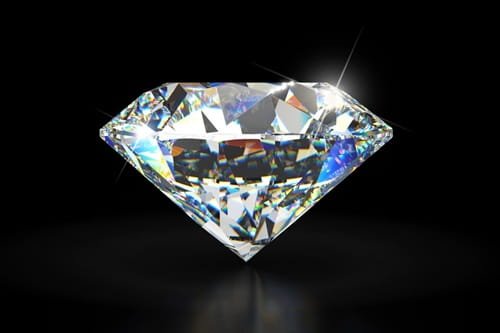
Natural Diamonds: The Resale Reality
Natural diamonds have traditionally been positioned as rare, geologically unique, and therefore valuable in a way that should theoretically support price appreciation. The reality of the secondary market tells a different story. When you purchase a natural diamond from a retail jeweller, you typically pay a significant premium over the diamond’s actual wholesale value — covering the jeweller’s margin, certification costs, design and setting charges, and retail overhead. The moment you walk out of the showroom, the diamond’s resale value can drop by 25% to 50% of what you paid, simply because you are now selling into a market where buyers expect wholesale-adjacent pricing, not retail pricing.
Typical resale values for natural diamonds range from 40% to 60% of original purchase price, depending on the stone’s quality, certification, and prevailing market conditions. A natural diamond purchased for ₹1 lakh might realistically fetch ₹60,000 to ₹80,000 if resold — and that assumes you find a buyer willing to pay close to fair wholesale value, which itself requires effort and the right channels.
The exceptions that genuinely do appreciate are rare, fancy-colour diamonds (pink, blue, certain intense yellows), exceptionally large or historically significant stones, and diamonds with documented provenance that attracts collector and auction-house interest. These represent a vanishingly small fraction of diamonds purchased by ordinary buyers, and they require specialist knowledge, often six and seven-figure capital, and access to international auction markets that are simply not relevant for the typical Indian jewellery buyer.
Lab-Grown Diamonds: Even Weaker Resale Case
Lab-grown diamonds have transformed the affordability equation dramatically. They are chemically, physically, and optically identical to natural diamonds — same hardness on the Mohs scale, same brilliance, same fire, verified by the same IGI and GIA certification processes that grade natural stones. The difference is entirely about origin and, consequently, price: lab-grown diamonds cost 60% to 80% less than natural diamonds of comparable specification. A 1-carat natural diamond costing ₹1.5 lakh to ₹3 lakh has a lab-grown equivalent priced at ₹25,000 to ₹40,000.
From an investment perspective, lab-grown diamonds are structurally weaker than natural diamonds, not stronger — and the reason is fundamental to how value works. Lab-grown diamonds are manufactured, not mined. There is no inherent scarcity constraint. As production technology improves and more facilities come online (India, with hubs like Surat, has become one of the world’s largest lab-grown diamond producers), supply increases and per-unit production costs fall. Lab-grown diamond prices have already dropped 20% to 30% between 2023 and 2025 as global production scaled, and continued downward pressure on uncertified or lower-grade stones remains likely even as certified premium stones stabilise.
Current resale values for lab-grown diamonds in India range from 10% to 30% of purchase price, with many smaller jewellers simply declining to buy them back at all in the open resale market. Some branded retailers offer structured buyback guarantees — up to 80% in select premium brand programmes — but this is a manufacturer-specific commercial policy, not a market-driven valuation, and it only applies if you purchased from that specific brand and follow their exchange terms exactly.
Why People Still Buy Diamonds
None of this means diamonds are a poor purchase — it means they need to be understood and budgeted for as a consumption and lifestyle category, not an investment category. Indian diamond buying remains deeply emotional and cultural: engagement rings, wedding jewellery, anniversary gifts, family heirlooms passed across generations. Over 55% of engagement rings purchased globally in 2026 now feature lab-grown centre stones — a dramatic shift reflecting younger buyers’ preference for larger, more brilliant stones at accessible prices over the traditional natural-diamond prestige narrative.
For couples planning weddings, lab-grown diamonds allow significantly larger and higher-clarity stones within realistic budgets — a 2-carat lab-grown solitaire costs roughly what a 0.5-carat natural stone of similar quality would cost. This “bigger and better for less” value proposition is winning over younger Indian buyers specifically because they are evaluating diamonds as lifestyle purchases rather than as stores of value.
How Diamonds Compare to Gold as an Investment
This comparison is instructive precisely because gold and diamonds are so often mentally grouped together in Indian financial culture, despite being fundamentally different asset classes.
Gold has deep, liquid secondary markets — any jeweller, anywhere in India, will buy back gold at a transparent price linked to the day’s market rate, typically deducting only modest making-charge losses. Gold’s value is driven by weight and purity, both objectively measurable. Diamonds have no equivalent transparent secondary market. Their value depends on the subjective interplay of the 4Cs (cut, colour, clarity, carat), certification quality, current fashion trends, and the specific buyer’s willingness to pay — none of which are as standardised or liquid as gold’s price-per-gram structure. This is why financial advisors consistently steer Indian investors toward gold, Sovereign Gold Bonds, or Gold ETFs for the “store of value” portion of their portfolio, and treat diamond jewellery purchases as a separate, consumption-oriented decision.
The Smart Approach to Buying Diamonds in 2026
If diamonds are not an investment, the financially sensible approach is to treat the purchase decision accordingly. For pure financial efficiency, lab-grown diamonds deliver dramatically more value per rupee spent — the savings of 60% to 80% relative to natural stones can be redirected into genuine appreciating assets like gold, equity mutual funds, or real estate, while still acquiring a beautiful, certified, large stone for personal wear.
For buyers who specifically want the resale optionality and traditional prestige association — particularly relevant for some family or community expectations around wedding jewellery — natural diamonds retain stronger (though still modest) resale value and cultural weight, justifying their premium for those specific buyers.
In either case, always insist on IGI or GIA certification, verify the girdle laser inscription matches the certificate, understand making charges separately from stone cost (making charges range 8% to 25% of gold value depending on design complexity), and compare buyback or exchange policies across retailers before purchasing if resale flexibility matters to you.
FAQs
Q1. Do natural diamonds appreciate in value over time?
Rarely, for typical retail-purchased diamonds. Most natural diamonds lose 25% to 50% of their retail value immediately upon purchase due to retail markup, and resale typically realises only 40% to 60% of original purchase price. Only exceptionally rare fancy-colour or historically significant diamonds appreciate meaningfully, and these require specialist auction market access that is irrelevant for ordinary buyers.
Q2. Are lab-grown diamonds a waste of money since they have low resale value?
Not if purchased for the right reason. Lab-grown diamonds offer genuine value as a lifestyle and consumption purchase — significantly larger, higher-quality stones at 60% to 80% lower prices than natural equivalents. They become a poor decision only if purchased with investment-return expectations, since their manufactured, non-scarce nature structurally limits resale appreciation.
Q3. Is gold a better investment than diamonds?
Yes, decisively, for anyone prioritising financial return and liquidity. Gold has transparent, standardised pricing and deep secondary markets across India where resale is straightforward. Diamonds lack this liquid resale infrastructure regardless of whether they are natural or lab-grown, making gold structurally superior as a store of value.
Q4. Should I buy natural or lab-grown diamonds for an engagement ring in 2026?
This depends on personal priorities rather than financial calculation. Lab-grown diamonds offer larger, higher-clarity stones at a fraction of the price and are increasingly the mainstream choice — over 55% of 2026 engagement rings feature lab-grown centre stones. Natural diamonds retain stronger traditional and cultural prestige and slightly better resale value for buyers who specifically value those factors enough to pay the premium.
Q5. What certification should I look for when buying diamonds in India?
Always insist on IGI (International Gemological Institute) or GIA (Gemological Institute of America) certification, which verifies the 4Cs and confirms whether the stone is natural or lab-grown. Check that the girdle’s laser inscription matches the certificate’s unique identification number, and request the certificate before finalising any significant diamond purchase.