



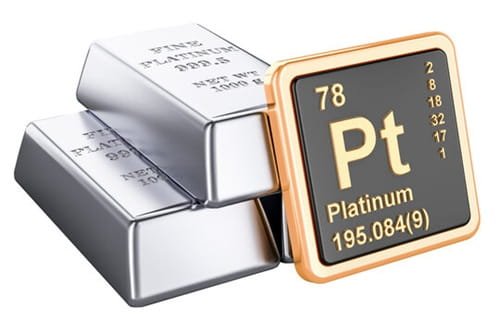
Platinum occupies an unusual space in the precious metals conversation — rarer than gold, with a price history far more volatile, and a demand profile driven primarily by industrial applications rather than the cultural and monetary store-of-value role that gold has occupied for millennia. In 2026, platinum is having a genuine moment: prices have surged dramatically, supply deficits have persisted for multiple consecutive years, and a new wave of investor attention is asking whether this represents a real opportunity or simply a cyclical spike that will eventually reverse.
The honest answer requires separating platinum’s industrial fundamentals from its investment characteristics, because the two tell somewhat different stories.
What Makes Platinum Different From Gold
Platinum is genuinely rarer than gold in absolute production terms — annual global mining output of platinum is roughly 200 tonnes compared to gold’s approximately 3,000 tonnes, meaning gold is mined at roughly fifteen times the volume of platinum. Supply is also far more geographically concentrated: South Africa alone produces over 70% of the world’s platinum, with Russia and Zimbabwe contributing most of the remainder. This concentration creates genuine supply vulnerability — labour disputes, infrastructure problems, or political instability in a small number of mining regions can meaningfully disrupt global supply in a way that gold’s more geographically distributed production cannot.
But the more fundamental difference is demand structure. Gold is primarily a monetary and store-of-value asset — central banks hold it as reserves, investors buy it as an inflation hedge, and Indian households buy it for cultural and ceremonial reasons largely independent of economic cycles. Platinum’s demand is overwhelmingly industrial: the automotive sector alone accounts for 36% to 44% of platinum demand, primarily through catalytic converters that reduce vehicle emissions. This means platinum behaves more like an industrial commodity whose price tracks manufacturing activity and automotive production cycles than like a traditional safe-haven asset.
Platinum’s 2026 Price Performance
The numbers tell a compelling recent story. Platinum surged nearly 50% in 2025, dramatically outperforming palladium’s roughly 8.7% gain over the same period. By April 2026, platinum prices crossed above $2,000 per troy ounce — a level not consistently sustained since 2008’s brief spike. Analysts project an average 2026 price around $1,670 to $1,718 per ounce, with some forecasts suggesting a potential annual high reaching $2,024.
This rally has been driven by a genuine supply-demand imbalance. The World Platinum Investment Council has documented a projected supply deficit of approximately 240,000 ounces for 2026 — the third consecutive year of meaningful deficit. Approximately 150,000 ounces of platinum remain locked in US exchange warehouses due to tariff-related concerns, creating an artificial supply constraint that, if resolved, could ease some price pressure. Meanwhile, an estimated 170,000 ounces of ETF profit-taking following 2025’s strong gains could create near-term downward pressure even as the longer-term structural deficit persists.
Why Platinum Demand Is Growing
Three structural forces are converging to support platinum’s medium-term demand outlook. The hydrogen economy is the most forward-looking driver: platinum is a critical component of Proton Exchange Membrane (PEM) fuel cells, the backbone technology for hydrogen fuel cell vehicles. The total cost of ownership for platinum-based fuel cell electric vehicles is expected to undercut battery electric vehicles by 2026 and traditional combustion vehicles by 2027 — a genuinely significant adoption inflection point if it materialises as projected.
The automotive sector, despite the broader shift toward battery electric vehicles, continues to require platinum for catalytic converters in the substantial fleet of petrol and diesel vehicles that will remain on roads globally for years. Stricter global emission standards have, somewhat counterintuitively, sustained rather than reduced platinum demand in this category. And industrial and jewellery demand — including a growing trend of platinum jewellery in markets like India, where it was previously a niche category relative to gold — adds an additional demand layer.
Platinum vs Gold: The Investment Comparison
For Indian investors specifically, the comparison matters because gold occupies such a dominant cultural and financial position. Gold offers superior liquidity — readily sold at any jeweller across India at transparent, market-linked prices. Gold has a far wider range of accessible investment vehicles in India: Sovereign Gold Bonds, Gold ETFs, digital gold platforms, and physical jewellery all provide multiple ways to gain exposure. Gold’s demand is driven by cultural and monetary factors that have proven remarkably stable across economic cycles in India specifically.
Platinum, by contrast, offers fewer accessible investment vehicles in the Indian market — platinum ETFs are far less developed than gold ETFs, and most retail exposure comes through physical bullion, jewellery, or futures contracts on exchanges like MCX, which require more market sophistication than buying a gold ETF unit. The government has mandated that qualified jewellers import platinum through the India International Bullion Exchange (IIBX), improving transparency but the retail ecosystem remains considerably less mature than gold’s.
Volatility is the most important practical distinction. Platinum’s price has shown dramatically larger swings than gold’s historically — it reached over $2,000 per ounce in 2008, then collapsed below $800 during much of the 2010s as automotive demand weakened, before recovering sharply from 2020 onward. Gold’s price trajectory, while not without volatility, has been considerably steadier and more consistently upward over the same multi-decade period. This makes platinum a higher-risk, higher-potential-reward asset relative to gold’s more conservative, stable profile.
The Case For and Against Platinum
The case for platinum investment rests on genuine scarcity (15 to 30 times rarer than gold by some estimates), persistent multi-year supply deficits, the hydrogen economy’s emerging demand tailwind, and current pricing that some analysts view as still undervalued relative to gold on a historical ratio basis — platinum has historically traded at a premium to gold and has only recently begun closing that gap from the discount position it held through much of the 2010s and early 2020s.
The case against platinum centres on its industrial demand dependency, which makes it considerably more sensitive to economic slowdowns and manufacturing cycles than gold. It generates no income or dividends. The market is smaller and less liquid than gold or silver, leading to wider bid-ask spreads and higher transaction costs for physical platinum. Storage costs for physical platinum further reduce net returns. And the limited availability of platinum-specific investment vehicles in India means most retail investors face a steeper learning curve and fewer convenient access points than they would with gold.
Recommended Allocation
Most financial advisors who discuss platinum as a portfolio component suggest a 5% to 10% allocation of an investor’s total precious metals exposure, treating it explicitly as a diversification and growth-oriented supplement to a gold-anchored core position rather than a replacement for gold. This reflects platinum’s higher volatility and the genuine but less proven nature of its long-term demand growth story compared to gold’s centuries-long track record as a store of value.
Is Platinum a Good Investment in 2026?
For investors with genuine risk appetite who understand platinum’s industrial demand drivers and are comfortable with higher volatility, platinum can be a worthwhile diversification addition to a precious metals portfolio in 2026 — current supply deficits and the hydrogen economy narrative provide a credible structural case. For conservative investors, or those seeking the stability, liquidity, and cultural reliability that gold provides, platinum should remain a small supplementary position at most, not a primary holding.
FAQs
Q1. Why does platinum trade at a different price than gold despite being rarer?
Platinum’s price reflects industrial demand cycles (primarily automotive and hydrogen fuel cells) rather than the monetary and cultural store-of-value demand that anchors gold’s price. Despite genuine rarity, platinum’s market is smaller, less liquid, and more sensitive to economic activity, which has historically caused it to trade both above and below gold depending on industrial demand conditions.
Q2. Can I buy platinum ETFs in India like gold ETFs?
Platinum ETFs are far less developed and accessible in the Indian market compared to gold ETFs. Most Indian retail exposure to platinum comes through physical bullion, certified jewellery, or MCX futures contracts, all of which require more market sophistication and carry different liquidity characteristics than gold ETF investing.
Q3. Is platinum riskier than gold as an investment?
Yes, generally. Platinum has historically shown significantly larger price swings than gold, driven by its dependency on industrial and automotive demand cycles. It collapsed from over $2,000 in 2008 to below $800 through parts of the 2010s, illustrating considerably higher volatility than gold’s steadier long-term trajectory.
Q4. What is driving platinum’s price increase in 2026?
A combination of factors: persistent multi-year supply deficits (projected at approximately 240,000 ounces in 2026), strong industrial and automotive demand, growing hydrogen fuel cell vehicle adoption that uses platinum-based components, and increased investor attention following 2025’s nearly 50% price surge.
Q5. What percentage of my portfolio should be in platinum?
Most financial advisors recommend platinum represent 5% to 10% of total precious metals allocation, functioning as a higher-risk, higher-potential diversification supplement to a gold-anchored core holding rather than a primary investment position, given platinum’s higher volatility and industrial demand sensitivity.