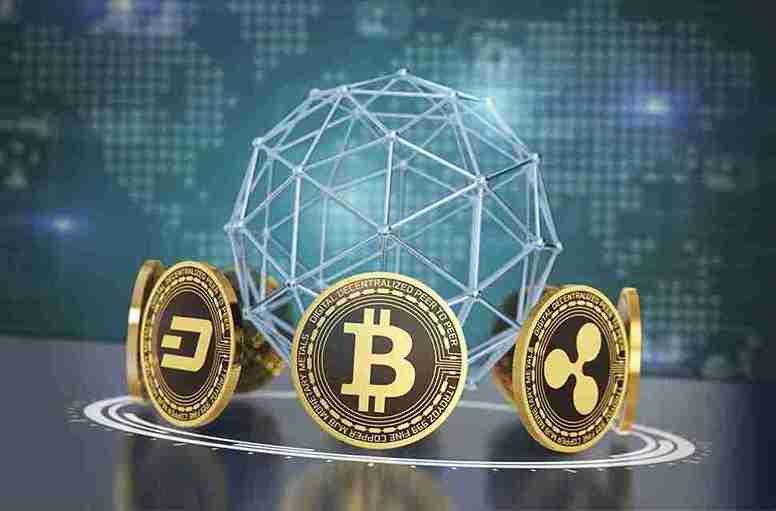




Crypto markets move fast, and for many Indian investors, it becomes difficult to separate real strength from daily hype. One day a token is trending on social media, the next day it crashes. One influencer says “buy the dip,” another says “this coin will go 100x.” In this noise, smart investors look beyond price and ask a more practical question: which crypto assets actually have strong fundamentals?
This is where Bitcoin, Solana and XRP often come into discussion. They are very different from each other, but each one represents a major strength trend in the crypto market. Bitcoin leads the store-of-value and institutional adoption trend. Solana leads the high-speed blockchain and consumer-scale application trend. XRP leads the payments, settlement and institutional finance trend.
For Indian readers, this topic matters because crypto investing is not just about buying a popular coin. It is about understanding why a project has demand, what problem it solves, how strong its network is, and whether it can survive market cycles. Price can rise or fall in the short term, but fundamentals decide whether an asset remains relevant in the long run.
What Does Fundamental Strength Mean in Crypto?
Fundamental strength in crypto means the real support behind a digital asset. It includes network usage, security, adoption, liquidity, developer activity, institutional interest, token economics, regulatory clarity and practical use cases.
A coin may pump because of hype, but that does not mean it has strong fundamentals. A fundamentally stronger crypto usually has a clear purpose, active users, deep liquidity, reliable infrastructure and long-term demand.
Bitcoin, Solana and XRP lead different parts of this fundamental strength story. They are not competitors in the same exact category. Instead, they show how the crypto market is becoming broader and more mature.
Bitcoin: The Leader in Trust, Scarcity and Institutional Demand
Bitcoin remains the most recognised crypto asset in the world. Its biggest strength is not speed or smart contracts. Its strength is trust, scarcity and network security.
Bitcoin has a fixed maximum supply of 21 million coins. This scarcity is one of the main reasons investors compare it with digital gold. In a world where currencies can be printed and inflation remains a concern, many investors see Bitcoin as an alternative store of value.
Another major strength is decentralisation. Bitcoin does not depend on one company, one founder or one central team. Its network has survived many crashes, bans, debates and market cycles. This long track record gives it credibility.
Institutional participation has also changed Bitcoin’s position. Earlier, Bitcoin was seen mostly as a retail or tech-community asset. Now, large funds, listed companies and regulated investment products have made Bitcoin part of mainstream financial discussion. This does not remove volatility, but it shows that Bitcoin has moved beyond being only an internet experiment.
Why Bitcoin Fundamentals Still Matter
Bitcoin’s fundamental strength comes from its role as the base asset of the crypto market. When investors think of crypto safety, liquidity and long-term survival, Bitcoin usually comes first.
It has the deepest market recognition, strong global liquidity, high security and a simple investment story. Even people who do not understand DeFi, NFTs or smart contracts can understand Bitcoin’s core idea: limited supply and decentralised value transfer.
However, Bitcoin is not risk-free. Its price can fall sharply. It may behave like a risk asset during global market stress. But compared to most crypto assets, Bitcoin’s fundamental base remains stronger because its value does not depend on one app, one game, one company or one trend.
Solana: The Leader in Speed, Low Fees and Real Usage
Solana represents a different kind of crypto strength. While Bitcoin is about store of value, Solana is about performance and usability. It is built for fast transactions, low fees and high-volume applications.
This matters because blockchain cannot become mainstream if every transaction is slow or expensive. For normal users, fees and speed are not small issues. If a payment, game, NFT trade or DeFi transaction costs too much, people stop using the network.
Solana’s strength is that it supports active on-chain activity at scale. It has become popular for DeFi, NFTs, meme coins, consumer apps, stablecoin movement and trading platforms. Its low-cost environment encourages experimentation, which attracts developers and users.
Why Solana Leads the Modern Blockchain Trend
Solana has become one of the strongest examples of a blockchain built for real-time activity. Traders like it because transactions are fast. Developers like it because apps can be built for large user bases. Users like it because small transactions are practical.
Another important factor is ecosystem growth. A blockchain becomes stronger when more builders, wallets, exchanges, infrastructure providers and financial applications join it. Solana has seen rising interest from developers, institutions and projects working on tokenised assets, payments and decentralised finance.
But Solana also has risks. In the past, it faced network reliability concerns and congestion issues. The real test for Solana is whether it can keep improving stability while handling heavy demand. If it succeeds, its fundamental strength can remain powerful because the market needs fast and affordable blockchain infrastructure.
XRP: The Leader in Payments and Settlement Use Cases
XRP has a very different identity from Bitcoin and Solana. It is mainly known for fast, low-cost transfers and payment settlement use cases. The XRP Ledger was designed to move value efficiently, especially where traditional payment systems are slow or expensive.
This is important for global finance. Cross-border payments can involve banks, intermediaries, delays and high charges. XRP’s fundamental story is linked to improving settlement speed and liquidity movement.
XRP also benefits from strong brand recognition in the institutional payment space. Ripple’s work with financial institutions has kept XRP and the XRP Ledger in serious conversations around payments, tokenisation and institutional blockchain use.
Why XRP Remains Fundamentally Relevant
XRP’s strength comes from its practical payment narrative. While many crypto projects struggle to explain real-world use, XRP has always had a clear direction: faster value transfer and settlement.
The XRP Ledger is also known for low transaction costs and quick settlement. This makes it useful for payment-style use cases, token movement and financial applications where speed matters.
Another important trend is institutional finance. As banks, fintech companies and financial platforms explore blockchain-based settlement, XRP’s ecosystem remains relevant. The focus on compliance, tokenised assets and institutional DeFi can support its long-term narrative.
Still, XRP has its own risks. Its price does not always move directly with institutional developments. Some investors also closely watch regulatory news and Ripple-related developments. So, while the fundamentals are strong in the payments category, investors should avoid assuming guaranteed price growth.
Why These Three Assets Lead Different Strength Trends
Bitcoin, Solana and XRP are often discussed together because they represent three major pillars of crypto.
Bitcoin represents trust, scarcity and long-term value storage.
Solana represents speed, scalability and active blockchain usage.
XRP represents payments, settlement and institutional finance.
This is why they lead fundamental strength trends in different ways. Bitcoin is not trying to be Solana. Solana is not trying to be Bitcoin. XRP is not trying to become a meme coin or gaming chain. Each asset has a clear category.
For investors, this makes comparison more meaningful. Instead of asking “which coin is best,” a better question is: “Which fundamental trend do I believe in?”
What Indian Investors Should Watch Before Investing
Indian crypto investors should not invest only because a coin is popular. They should check fundamentals carefully.
For Bitcoin, watch institutional demand, macroeconomic conditions, liquidity, halving-cycle impact and long-term adoption. For Solana, watch network stability, developer growth, real app usage, DeFi activity and stablecoin movement. For XRP, watch payment adoption, regulatory clarity, institutional partnerships and XRP Ledger development.
Also, Indian users must remember tax and compliance. Crypto gains in India are taxed under special rules, and proper records are important. Keep details of purchase cost, sale value, exchange reports, wallet transfers and TDS.
Crypto can offer opportunity, but it also carries high risk. Fundamental strength can improve long-term confidence, but it does not remove volatility.
FAQs
1. Are Bitcoin, Solana and XRP safe investments?
They are among the more established crypto assets, but they are not risk-free. Prices can fall sharply, and crypto markets are highly volatile. Investors should study fundamentals and invest only according to their risk capacity.
2. Why is Bitcoin considered fundamentally strong?
Bitcoin is considered strong because of its fixed supply, decentralised network, high security, global recognition and growing institutional adoption. It is widely seen as the base asset of the crypto market.
3. What makes Solana different from Bitcoin?
Bitcoin focuses mainly on decentralised value storage, while Solana focuses on fast, low-cost blockchain applications. Solana is used more for DeFi, NFTs, trading apps, stablecoin movement and consumer-scale blockchain activity.
4. Why does XRP remain popular among investors?
XRP remains popular because of its payment and settlement use case. Its network is designed for fast and low-cost transfers, and its ecosystem is closely watched for institutional finance and cross-border payment developments.