




India’s flower industry is a celebration of the country’s most fundamental cultural impulses — spirituality, festivity, love, and social bonding all expressed through flowers in ways that make floral consumption non-discretionary across every community and income bracket. Temple offerings, wedding decoration, garlands for honoured guests, funeral rituals, birthday celebrations, festival decoration, and the growing modern gifting culture collectively generate flower demand that flows continuously regardless of economic conditions. Whether a flower business is profitable in India in 2026 requires understanding which segment of India’s diverse floral economy — farming, wholesale trading, retail vending, floristry and decoration, or export — offers the strongest opportunity and how each navigates the extreme perishability that makes flower business management simultaneously challenging and rewarding.
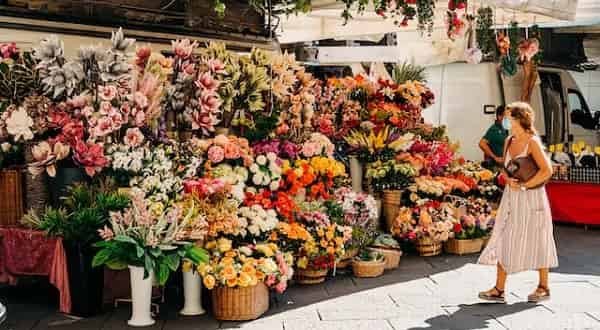
India’s Flower Industry Landscape
India is a major flower-producing nation — Bengaluru, Pune, Nasik, Chennai, and Hyderabad are significant cut flower production centres, while Tamil Nadu and Karnataka dominate jasmine and marigold production for religious and garland markets. India also exports cut flowers — roses, carnations, gerberas, and orchids — to European, US, and Middle Eastern markets, primarily through Bengaluru’s organised floriculture export sector. The domestic flower market encompasses bulk commodity flowers for religious use and garland making at one end of the spectrum and premium arranged floristry for weddings, corporate events, and gifting at the other — with margins and business models varying dramatically between these extremes.
Flower Business Key Financial Parameters
| Parameter | Street Flower Vendor | Retail Flower Shop | Wedding and Event Decoration | Online Flower Delivery |
| Capital investment | ₹10,000–50,000 | ₹1 lakh–6 lakh | ₹2 lakh–15 lakh | ₹3 lakh–20 lakh |
| Daily procurement cost | ₹500–3,000 | ₹3,000–20,000 | Event-based | ₹5,000–30,000 |
| Daily wastage percentage | 20–35% | 12–22% | 8–15% per event | 15–25% |
| Gross margin — bulk flowers | 30–50% | 30–55% | 40–65% | 35–55% |
| Gross margin — premium arrangements | Not applicable | 55–70% | 55–75% | 55–72% |
| Monthly revenue potential | ₹20,000–80,000 | ₹60,000–4 lakh | ₹1 lakh–20 lakh | ₹80,000–8 lakh |
| Net profit margin — established | 15–30% | 18–35% | 25–45% | 15–30% |
| Refrigeration requirement | None | Recommended | Event storage | Essential |
| Cold room investment | None | ₹40,000–2 lakh | ₹50,000–3 lakh | ₹1 lakh–5 lakh |
| Festival season revenue multiplier | 3–5x | 3–6x | 5–10x | 3–5x |
| Break-even period | 1–3 months | 3–10 months | 3–8 months | 6–18 months |
| FSSAI requirement | Not typically | Not typically | Not typically | Recommended |
Profitability Drivers and Strategic Opportunities
Wedding and Event Decoration — Highest Margin Segment: Wedding decoration is the most financially rewarding application in India’s flower business — transforming commodity flowers purchased at wholesale prices into immersive event experiences that command pricing of ₹50,000 to ₹50 lakh per wedding depending on scale and luxury positioning. The value creation is not the flowers themselves but the creative design, installation capability, and execution reliability that an experienced floral decorator brings to a wedding that represents one of the most important days in a family’s life. A medium-scale wedding decoration contract for ₹3-5 lakh with ₹1-1.5 lakh in flower procurement and ₹50,000-80,000 in labour generates net margins of 40-50% from a single event — equivalent to months of retail shop earnings.
Building relationships with wedding planners, banquet halls, hotel event departments, and direct bride and groom referral networks creates a consistent pipeline of high-value event contracts. Each successful wedding generates 3-5 referrals in India’s family and social network-driven wedding market — making customer satisfaction and visual documentation through strong photography the most important marketing investment.
Online Flower Delivery and Subscription: App and website-based flower delivery — tapping into gifting occasions including birthdays, anniversaries, Valentine’s Day, and sympathy flowers — serves the growing urban consumer who prefers ordering convenience over visiting physical shops. Building a local same-day delivery flower service with Instamojo or Shopify ordering, WhatsApp customer communication, and Instagram content marketing creates a scalable business model with average order values of ₹500-2,500 and repeat customer relationships that improve lifetime value. The gifting flower market’s concentration around specific calendar dates — Valentine’s Day, Mother’s Day, Diwali, and birthdays — creates revenue surge opportunities that well-prepared operations leverage for monthly income spikes.
Festival Season Revenue Maximisation: India’s festival calendar creates extraordinary flower demand concentration — Diwali, Dussehra, Navratri, Ganesh Chaturthi, Durga Puja, and regional harvest festivals generate marigold, rose, jasmine, and lotus demand that can exceed regular weekly demand by 500-800%. Flower businesses that manage pre-festival procurement intelligently — securing advance flower supply from growers at pre-negotiated prices before festival demand pushes market rates up — capture margin amplification during peak periods that competitors who procure at spot rates cannot achieve.
Managing Perishability in Flower Business
Flower perishability creates daily inventory management urgency that distinguishes flower business operation from most other retail categories. Cut flowers have shelf lives of 2-7 days depending on variety and storage conditions — making daily procurement calibrated to realistic sales volume essential for maintaining margins. Cold room storage extending flower life by 3-5 days provides valuable flexibility for event florists managing multiple event timelines simultaneously but requires capital investment that small street vendors cannot justify for daily fresh procurement operations.
Flower Business vs Competing Gifting and Decoration Businesses
| Parameter | Flower Business | Gift Shop | Balloon Decoration | Cake and Bakery |
| Festival demand surge | Extreme — 3–8x | Moderate | High — 2–4x | High — 2–3x |
| Perishability challenge | Very high | None | Low | High |
| Wedding market access | Very high | Low | Moderate | Moderate |
| Gross margin | 30–75% | 35–55% | 45–70% | 40–60% |
| Cold storage requirement | Recommended | None | None | Essential |
| Recurring demand | Daily religious use | Occasional | Event-based | Daily |
| Net profit margin | 15–45% | 20–40% | 25–50% | 18–38% |
| Startup capital | Very low to moderate | Moderate | Low | Moderate |
Flower business is genuinely profitable in India for operators who develop wedding and event decoration capabilities for premium margin access, manage perishability through disciplined daily procurement and cold storage investment, leverage festival seasons through advance sourcing intelligence, and build gifting-oriented online delivery services that monetise India’s enormous occasion-driven flower gifting culture.