



Is a truck transport business legal in India? Yes, and it’s one of the country’s most active commercial sectors, moving everything from raw materials to e-commerce parcels across state lines every single day. But “legal” here means navigating a genuinely multi-layered compliance system — vehicle registration, transport permits, and tax documentation all operate as separate, independently enforced requirements, and missing any one of them can bring an otherwise compliant truck to a complete stop at a checkpoint.
This is worth understanding clearly before you invest in a fleet, because truck transport sits at the intersection of two entirely different regulatory systems: the Motor Vehicles Act governing the vehicle and its right to operate, and the GST framework governing the tax trail of whatever the truck is actually carrying. Getting one right doesn’t cover the other, and enforcement checks — both at physical inter-state points and increasingly through digital tracking — verify both independently.
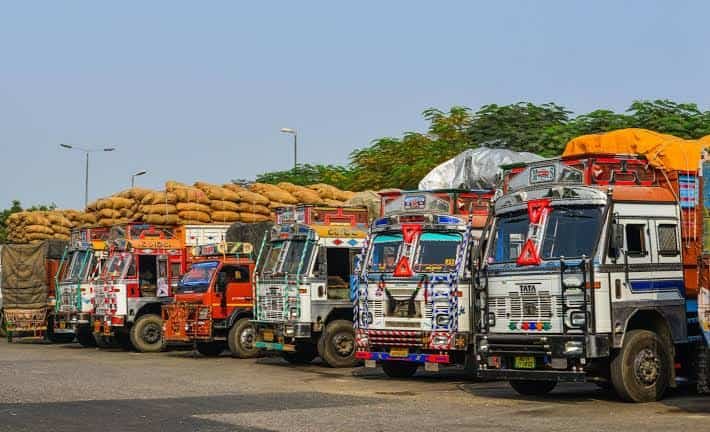
Vehicle Registration and Permits: The Starting Point
Every truck used commercially needs transport-class registration rather than private registration, following the same principle covered elsewhere for taxis and commercial vehicles generally. Beyond registration, operating a goods vehicle for hire typically requires a goods carriage permit issued under the Motor Vehicles Act.
There’s a genuinely useful exemption worth knowing here, though: under Section 66(3) of the Motor Vehicles Act, goods vehicles up to 7,500 kg gross vehicle weight (GVW) are exempt from the permit requirement itself. This matters considerably for smaller operators running light commercial vehicles, tempos, or mini-trucks — but the exemption covers the permit specifically, not the surrounding compliance. You still need:
- Transport-class vehicle registration
- A valid Fitness Certificate
- Commercial insurance
- A current PUC (Pollution Under Control) certificate
Several states have additionally exempted vehicles under this weight threshold from National Permit fees under a 2007 amendment, which meaningfully reduces the compliance and cost burden for operators running smaller delivery-focused fleets rather than heavy long-haul trucks.
The National Permit: Your Ticket to Interstate Operations
If your trucks operate beyond your home state — which describes most serious transport businesses — a National Permit becomes essential. This is an official authorisation issued by the Regional or State Transport Authority, and its core value is straightforward: one permit covers multiple states, a minimum of four including your home state, saving you from needing separate state permits every time a truck crosses a border.
The scale of this system gives a sense of how central it’s become to India’s logistics economy — over 18.7 lakh National Permit authorisations were issued in a recent 15-month period, generating more than ₹3,086 crore in revenue, processed through the digitised Vahan 4.0 system that’s made both payments and border checks considerably faster than the older paper-based process.
A few practical points about the National Permit:
- It applies specifically to goods-carrying vehicles — trucks, tempos, LCVs — operating beyond their home state, and to certain passenger vehicles under separate tourist permit rules
- Purely local, intra-state operations don’t need it — a state permit is sufficient in that case
- Regular fitness and insurance checks remain just as important as holding the permit itself; a valid National Permit doesn’t substitute for keeping these current
E-Way Bill: The Tax-Side Requirement Most New Operators Underestimate
This is genuinely where a lot of new transport operators get caught out, because it’s a completely separate compliance system from vehicle permits, governed by GST law rather than motor vehicle law. An e-way bill is a mandatory electronic document required for transporting goods valued above ₹50,000, and it needs to be generated on the government portal before the goods begin moving, not after.
The scale here is enormous — a record 140.6 million e-way bills were generated in a single month in early 2026, underlining just how embedded this system has become in everyday goods movement across India. A few operational realities worth understanding:
- Validity for standard road transport runs at one day per 200 km of distance travelled, extendable before expiry through the portal if needed
- Non-compliance carries genuine financial risk — penalties reaching ₹10,000 or the tax evaded, whichever is higher, and in more serious cases penalties can climb toward 200% of the tax payable
- Tax officers at checkpoints can demand the e-way bill at any moment — there’s no grace period or “generate it later” option once the vehicle is moving
- A missing e-way bill doesn’t just mean a fine — it typically means the consignment gets held or seized under Section 129 of the CGST Act until the paperwork is resolved, which translates into real delivery delays and business disruption beyond the penalty itself
This isn’t a hypothetical risk. Genuine cases of otherwise well-established businesses getting stopped at inter-state checkposts over a missing e-way bill happen regularly, and the resulting delay — sometimes days — often costs far more in lost business and damaged client relationships than the penalty itself.
Do You Need to Register as a Goods Transport Agency (GTA)?
This distinction matters specifically for how GST applies to your transport service, and it’s not automatic just because you own trucks. A Goods Transport Agency is specifically any person who provides road transport services for goods and issues a consignment note — that consignment note is the defining feature, not simply owning or operating trucks.
This distinction has real tax consequences:
- GST generally applies when a registered GTA provides transport services with a consignment note
- Services from unregistered individual truck owners who don’t issue a consignment note are generally exempt from this specific GST treatment
- Certain goods categories — agricultural produce, grains, milk — remain exempt from GST regardless of who’s transporting them
- Under the Reverse Charge Mechanism, when a GTA provides service to a registered business, the business hiring the transport often pays GST directly to the government rather than the transporter collecting it — a mechanic worth understanding clearly if you’re negotiating rates with corporate clients
Whether operating as a formal GTA benefits your specific business depends on your client mix and scale — smaller individual operators sometimes deliberately stay outside GTA registration specifically to keep their compliance simpler, while larger fleet operators generally find formal registration essential for serving corporate and institutional clients who expect proper consignment documentation.
Fitness, Insurance, and PUC: The Recurring Compliance Layer
Beyond the initial registration and permits, truck operation carries ongoing compliance obligations that need active management rather than one-time setup:
- Fitness Certificate renewal on the schedule your state RTO sets, confirming the vehicle remains roadworthy for commercial use
- Commercial insurance, meaningfully more comprehensive and expensive than private vehicle coverage, given the higher liability exposure of goods transport
- PUC certification, increasingly required to be digitally verifiable rather than a simple printed copy in several states now integrating environmental compliance with permit systems
Letting any of these lapse — even briefly — creates real exposure, since a lapsed fitness certificate or expired insurance discovered during a routine check or, worse, after an accident, can turn a manageable compliance gap into a serious financial and legal problem.
Registering the Business Itself
Beyond vehicle-specific and transport-specific requirements, the underlying business needs standard registration:
- A formal business structure — proprietorship for a small owner-operator setup, scaling to partnership, LLP, or private limited company as the fleet grows
- GST registration, generally necessary given how frequently transport businesses cross state lines and deal with taxable goods movement
- Shop and Establishment Act registration for your business premises or office
- Employment law compliance if you’re hiring drivers directly — minimum wage requirements, PF contributions, and ESIC where applicable
What Happens If You Skip Proper Compliance
The consequences compound depending on which specific requirement gets missed:
- Operating without proper transport-class registration or the required goods carriage permit exposes you to fines and potential vehicle seizure at checkpoints
- Missing or expired National Permit documentation for interstate operations creates delays and penalties at state borders, undermining the entire point of holding the permit in the first place
- A missing e-way bill halts goods movement entirely, with penalties reaching the tax evaded amount or ₹10,000, whichever is higher, plus the real business cost of delivery delays while the consignment sits held
- Lapsed fitness, insurance, or PUC certification can result in insurance claim denial precisely when you need coverage most — during an accident or serious incident
FAQs
Q1. My truck’s GVW is under 7,500 kg — do I really not need any permit at all?
You’re exempt from the goods carriage permit requirement specifically under Section 66(3), and often from National Permit fees too. You still need transport-class registration, fitness certification, commercial insurance, and PUC compliance regardless of this exemption.
Q2. Do I need to register as a Goods Transport Agency if I’m just running a couple of trucks independently?
Not necessarily. GTA status specifically depends on whether you issue consignment notes for your transport services. Smaller operators without this documentation practice often remain outside formal GTA classification, though this affects how GST applies to your services.
Q3. If my e-way bill expires mid-journey due to unexpected delays, what should I do?
Extend it through the government portal before it expires, if possible, since generation and extension both need to happen before or during transit, not after the fact. A lapsed e-way bill with goods still in transit creates genuine compliance exposure.
Q4. Does holding a National Permit mean I don’t need separate insurance or fitness checks?
No, these are completely independent requirements. The National Permit authorises interstate operation specifically, while fitness certification and insurance remain separate, ongoing obligations that need their own regular renewal regardless of permit status.