




Is a tea stall business legal in India? Absolutely — and it’s one of the easiest food businesses to make fully compliant, precisely because the government has built lighter, faster pathways specifically for small vendors like tea sellers. But “easy to run” and “automatically legal” aren’t the same thing, and a huge number of roadside tea stalls operate for years without realising they’re technically breaking the law on at least one front.
Walk down almost any Indian street and you’ll spot a tea stall — a kettle, a few glasses, a bench, maybe a small cart. The informality of the setup fools people into thinking the legal requirements are equally informal. They aren’t. A tea stall selling to the public for money is a food business under Indian law, full stop, and it falls under the same regulatory umbrella as a restaurant, just with a lighter compliance load.
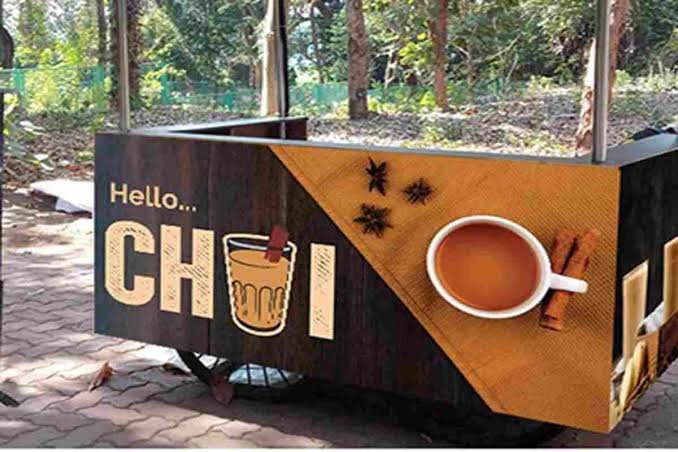
Where You Set Up Matters More Than People Realise
Before licensing even enters the picture, location determines a chunk of your legal standing. Tea stalls typically operate from one of three setups, and each carries different obligations:
- A fixed shop or kiosk on private or rented premises — straightforward from a permissions standpoint, since you control the space
- A stall on public land, footpath, or near a bus stand/station — this is where street vending law kicks in
- A mobile cart — treated similarly to street vending, with added considerations around parking and movement
If you’re operating on public land — a footpath, near a market, outside a railway station — you fall under the Street Vendors (Protection of Livelihood and Regulation of Street Vending) Act, 2014. This law exists specifically to formalise vendors like tea sellers, giving them a Certificate of Vending issued by the local Town Vending Committee. Operating in a designated vending zone without this certificate technically puts you at risk of eviction or confiscation, even if your food licensing is perfectly in order.
FSSAI Registration: Non-Negotiable, But Genuinely Simple for Small Stalls
Every tea stall in India needs FSSAI registration, regardless of size. The law makes no distinction between a five-star hotel and a roadside tea vendor when it comes to whether registration applies — only the category changes.
Here’s where it gets genuinely favourable for small operators: FSSAI has built an instant registration pathway specifically for micro food businesses like tea sellers, snack sellers, and hawkers. Under the Tatkal Licensing Scheme, an Aadhaar card alone is sufficient documentation for tea sellers and hawkers — no elaborate paperwork, no lengthy wait. You submit details on the FoSCoS portal, declare your eligibility, pay the annual fee, and the registration is often issued instantly on a self-declaration basis.
A few practical points worth knowing:
- Basic Registration is the category most single tea stalls fall under, meant for smaller-turnover operators
- Once turnover crosses the applicable threshold, you’re required to move up to a State License — and FSSAI’s newer system now handles this upgrade automatically and free of cost, transferring your existing 14-digit number rather than making you reapply from scratch
- Registrations issued from 1 April 2026 carry perpetual validity, meaning no repeated renewal every few years — though annual fee payments still apply and lapses can suspend your registration
One caveat worth flagging honestly: turnover thresholds for Basic Registration are reported inconsistently across sources, with some citing ₹12 lakh and newer 2026 guidance citing figures up to ₹1.5 crore. Given how directly this affects which category you fall into, confirm the current slab on the official FoSCoS portal rather than relying on any single guide, including this one.
Trade License: A Separate Requirement, Not a Substitute
This is the mistake that trips up more tea stall owners than almost anything else — assuming FSSAI registration alone makes them fully legal. It doesn’t. A trade license from your municipal corporation and an FSSAI registration are two separate requirements, issued by different authorities, and having one does not substitute for the other.
The trade license permits you to run a business from a specific location. It’s a municipal-level permission, distinct from FSSAI’s food-safety-focused registration. Depending on your city, you’ll apply to the local municipal corporation or nagar palika, and requirements around fees, inspection, and renewal vary by state and city.
Skipping the trade license, even with valid FSSAI registration, still leaves you exposed to:
- Fines from municipal inspectors
- Removal of unauthorised stalls, particularly in high-visibility areas near stations or markets
- Difficulty renewing FSSAI registration in some states where trade license documentation is requested as supporting proof
GST: Usually Not a Concern for a Single Tea Stall, But Know the Trigger Points
Most standalone tea stalls never cross into GST territory, simply because the turnover involved rarely approaches the mandatory threshold. GST registration becomes compulsory only once annual turnover exceeds ₹40 lakh for goods in most states, or ₹20 lakh in special category states — figures well beyond what a typical single-location tea stall generates.
That said, two situations override the threshold regardless of revenue:
- Supplying through a delivery or aggregator platform that requires a GSTIN before listing you
- Operating across state lines in a way that counts as inter-state supply
For the overwhelming majority of neighbourhood tea stalls, GST simply isn’t a live concern — but it’s worth revisiting the moment you consider expanding into multiple outlets or platform-based delivery.
What Actually Happens If You Skip Registration
The risks aren’t theoretical, and enforcement has genuinely picked up in recent years as FSSAI has pushed compliance drives targeting street food and beverage vendors.
- Operating without FSSAI registration can attract fines under the Food Safety and Standards Act, with harsher penalties if food quality or hygiene violations are found alongside the missing registration
- Municipal authorities can seize equipment or shut down an unlicensed stall, particularly during periodic compliance drives in cities
- Without a Certificate of Vending, vendors on public land face eviction risk regardless of how long they’ve operated in that spot
- Delivery and aggregator platforms won’t onboard unregistered vendors, cutting off a genuine growth channel for tea stalls looking to scale beyond foot traffic
Documentation Checklist for a New Tea Stall
Before you set up, it helps to have this ready rather than scrambling once you’re already selling:
- Aadhaar card (often sufficient alone for FSSAI Tatkal registration as a small vendor)
- A photograph of the stall with the shop name or address board visible, since this is commonly required during FSSAI application
- Proof of location — rental agreement for a fixed premises, or vending certificate documentation if operating on public land
- PAN card, particularly if turnover is expected to grow toward GST-relevant levels
None of this requires legal assistance for a small, single-location tea stall. The Tatkal scheme exists specifically to make this achievable without hiring a consultant, though it’s fair to say a lot of vendors still turn to local agents simply because they’re unaware the self-service route is this straightforward.
FAQs
Q1. Do I need FSSAI registration if my tea stall is tiny and I only sell to regular local customers?
Yes. There’s no exemption based on scale or customer familiarity. Any tea stall selling for payment counts as a food business, and FSSAI registration applies from the very first sale.
Q2. My tea stall is on a public footpath near a bus stand — what’s different about my legal requirements?
You additionally need a Certificate of Vending under the Street Vendors Act, issued by your local Town Vending Committee. This protects you from eviction and formalises your right to operate in that designated zone.
Q3. Can I get FSSAI registration without hiring an agent or consultant?
Yes, for small vendors like tea stalls, the Tatkal Licensing Scheme allows instant self-service registration on the FoSCoS portal using just an Aadhaar card, without needing professional help for a straightforward application.
Q4. If I add snacks or biscuits alongside tea, does that change my licensing requirements?
Not significantly at the small-vendor level — you simply add those categories to your FSSAI registration. It’s the turnover crossing a threshold, not the product range itself, that typically triggers a higher license category.