




Is adverse possession legal in India? Yes: the doctrine is part of Indian law through the Limitation Act, 1963, under which someone who openly and hostilely occupies another’s private land for 12 years, or government land for 30, can defeat the true owner’s right to recover it and, since 2019, can sue to have their title declared. It’s hard to prove and it never makes the occupation lawful from day one. This is general information, not legal advice.
The Essentials
- Private land: 12 years of qualifying possession, under Article 65 of the Limitation Act
- Government land: 30 years, under Article 112
- Effect: once time runs out, Section 27 extinguishes the owner’s right to the property
- Use in court: as a defence and, since Ravinder Kaur Grewal (2019), as a basis for a suit
- Burden: entirely on the person claiming, who must prove every element
Where the Doctrine Lives
India has no standalone statute on it.
- It comes mainly from the Limitation Act, 1963 through Article 65, Article 112 and Section 27, according to Aashayein Judiciary
- The statute doesn’t define adverse possession, which is a common law concept, with only the period prescribed by the law of limitation, according to the Supreme Court’s own discussion in Ravinder Kaur Grewal
- Article 65 allows a suit for possession based on title within 12 years from when the defendant’s possession becomes adverse to the plaintiff
- So the doctrine works through time bars, not through a procedure for claiming land
What You Must Prove
The classic formulation is demanding.
- Possession must be open, continuous, exclusive and hostile, with animus possidendi, meaning an intention to possess as owner, for the full statutory period, according to Lawful Legal
- The traditional Latin shorthand is nec vi, nec clam, nec precario: not by force, not secretly and not by permission, according to Indian Law Live
- The Supreme Court has repeatedly said adverse possession must be clearly proved and can’t be assumed, according to NoBrokerHood’s summary
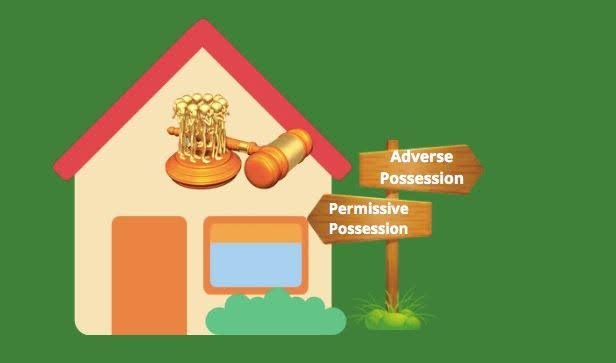
- Possession by permission, as a tenant or licensee, isn’t hostile, so those occupiers can’t claim it
The Clock Starts at Knowledge
The wording of Article 65 matters more than most people realise.
- The phrase “becomes adverse to the plaintiff” contemplates knowledge on the owner’s part, perceived from the claimant’s open, hostile and notorious acts asserting title, according to Indian Law Live’s May 2026 analysis
- The “animus” required is an intention to possess coupled with a conscious intent to dispossess the true owner
- So secret occupation or quiet occupation that looks permissive doesn’t start the 12 years running
The 2019 Shift: Sword as Well as Shield
The law changed in a big way in Ravinder Kaur Grewal.
- Before 2019, earlier decisions held adverse possession could be a shield for a defendant but not a sword for a plaintiff
- In Ravinder Kaur Grewal v. Manjit Kaur, (2019) 8 SCC 729, a three-judge bench overruled those decisions, holding that the plea can be used as a sword as well as a shield
- A person with 12 years of hostile, open and continuous possession can approach the court as a plaintiff to protect that possession if dispossessed, and to seek a declaration of title, according to NoBrokerHood and Lawful Legal
- The Court held that the word “title” in Article 65 includes title acquired through adverse possession, according to Aashayein Judiciary
Government Land
The State gets a longer clock and stricter scrutiny.
- Article 112 gives the Central or a State Government 30 years to sue for possession, according to Niyam
- A claimant against the State must prove 30 years of qualifying possession and clear animus, a bar most encroachers can’t clear, according to the same source
- Niyam adds that a 2023 Supreme Court ruling reaffirmed that a claimant must prove all the usual elements, including hostile intent against the government’s title, for the full 30 years
- Squatting on public land for three decades without proof of hostility earns nothing
What the Owner Loses
The consequence is severe.
- Section 27 extinguishes the owner’s right to the property if they fail to sue within time, according to Niyam
- That’s a loss of title, not just a loss of the right to sue, which is why the doctrine is controversial
- An owner who stays silent while someone openly treats the land as their own risks losing it
What the Occupier Still Needs to Do
Winning the argument isn’t the end.
- The occupier typically has to file a suit for declaration of title, as Ravinder Kaur Grewal now permits
- A decree then supports changes in revenue and registry records, which is a practical step the sources don’t describe in detail
- Meanwhile, the occupation isn’t made lawful retroactively, so an owner who sues within the period can still evict
Protecting Your Property
Owners have clear options.
- Sue for recovery within 12 years of the occupier’s possession becoming adverse, or within 30 for government land
- Document any permission you gave, since permissive use defeats a claim
- Inspect vacant land regularly and fence or mark it
- Keep records of notices and any written acknowledgement of your ownership
- Act promptly, because delay is exactly what the doctrine rewards
Claiming Land You Occupy
Occupiers face a high bar.
- Gather evidence of continuous occupation, such as tax receipts, utility bills, construction records and witness statements
- Show the possession was hostile and open, not by permission or rent
- Don’t acknowledge the owner’s title in writing, since that undermines the claim, though the sources I found don’t spell out this point
- Seek legal advice before filing, since courts apply strict scrutiny
The Policy Debate
The doctrine has critics.
- Critics say it rewards trespassers and penalises owners, especially absentee ones
- Defenders say it brings certainty and punishes neglect
- The Supreme Court has said the doctrine is a common law concept that survives alongside limitation law, according to the Ravinder Kaur Grewal judgment, so any change would have to come from Parliament or a future bench
Where the Sources Disagree
A few points differ.
- Some guides describe the rule as “12 years can take your land,” which oversimplifies, since the claimant must prove hostility and knowledge
- Dates for related decisions vary between secondary summaries
- Check the judgments themselves for exact wording
FAQs
Q1. Is adverse possession legal in India?
Yes. The Limitation Act, 1963 bars an owner’s suit after 12 years for private land and 30 for government land, and Section 27 extinguishes the owner’s right.
Q2. Can someone become the owner of my land after 12 years?
Only if they occupied it openly, continuously and hostilely, without your permission, for 12 years, and prove it in court. Permissive occupation, such as a tenant’s, doesn’t count.
Q3. Can an adverse possessor file a suit?
Yes. In Ravinder Kaur Grewal (2019), the Supreme Court held the plea works as a sword as well as a shield, allowing a suit for declaration of title.
Q4. How long for government land?
Thirty years under Article 112, and courts apply strict scrutiny to claims against the State.